No-Excavation Injection Waterproofing for Commercial Structures
A specialized waterproofing solution for active leaks and failed below-grade waterproofing where conventional exterior excavation may not be practical.
Nusite Group provides specialized injection waterproofing systems for commercial, institutional, and infrastructure projects throughout Toronto, the GTA, and Southern Ontario.
Using GTI-1000 Injectable Polymer Rubber Gel, our project teams can address certain below-grade water intrusion conditions from within the structure, providing an alternative where digging, exterior access, or conventional membrane replacement would create significant disruption.
Discuss Your Injection Waterproofing Project
Water intrusion in an existing commercial or institutional structure does not always mean extensive exterior excavation is the only option.
Where access is limited or excavation would create significant disruption, GTI-1000 no-excavation injection waterproofing may provide an alternative approach.
Nusite Group can review the existing conditions, identify the waterproofing challenge, and determine whether GTI-1000 or another commercial waterproofing system is appropriate for the project.
Restore Waterproofing Without Conventional Exterior Excavation
Accessing failed below-grade waterproofing from the exterior can be difficult on existing commercial and institutional structures. Excavation may interfere with occupied facilities, existing construction, hardscape, adjacent structures, or ongoing site operations.
No-excavation injection waterproofing provides another approach.
Rather than exposing the entire exterior waterproofing assembly, controlled access points are drilled through the structure toward the affected waterproofing layer. GTI-1000 Polymer Rubber Gel is then injected into the treatment area to restore waterproofing continuity around the leak pathway.
For property managers, facility managers, general contractors, and project teams, this approach can provide a specialized alternative where conventional excavation is impractical or disproportionately disruptive.
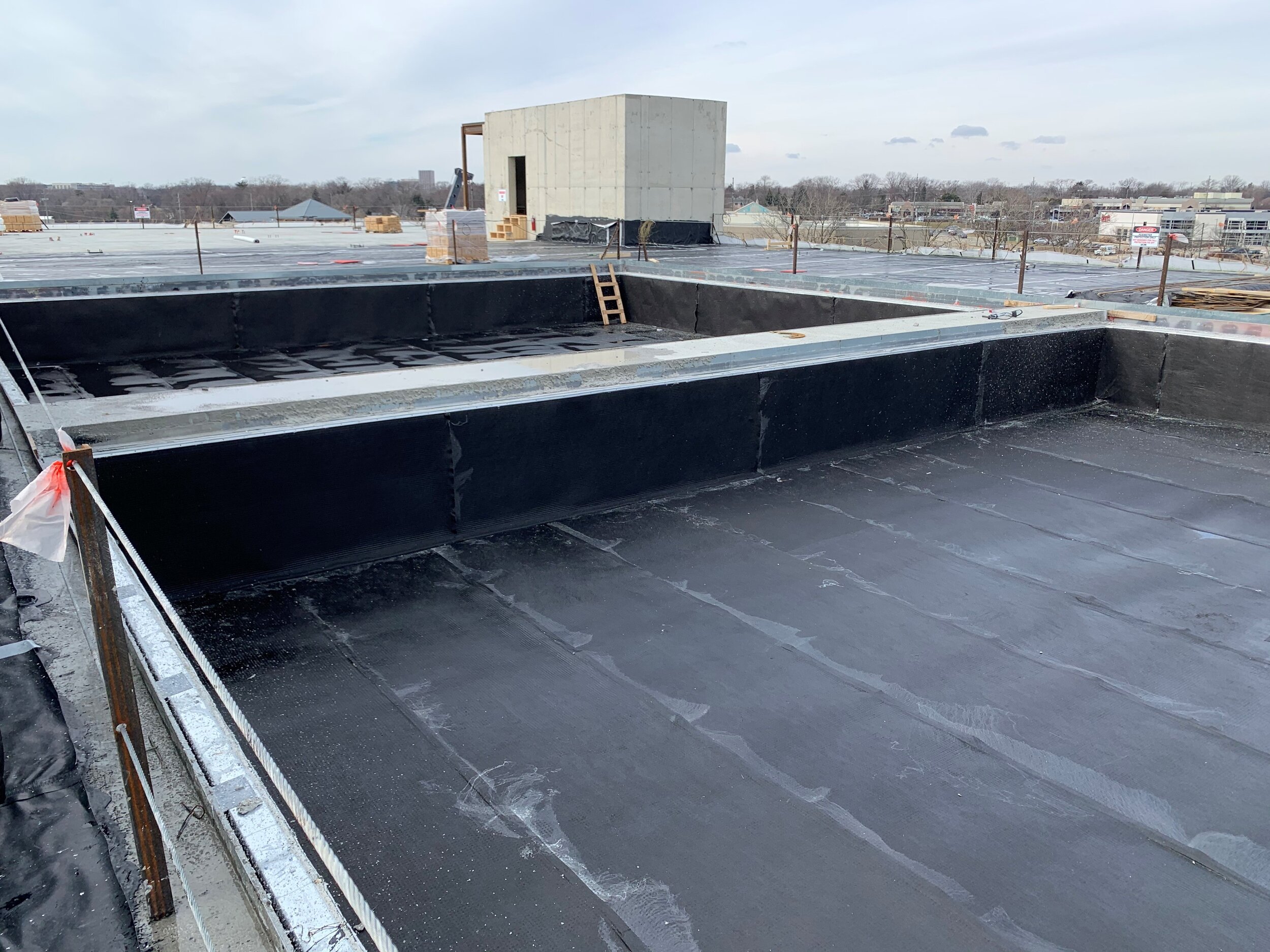
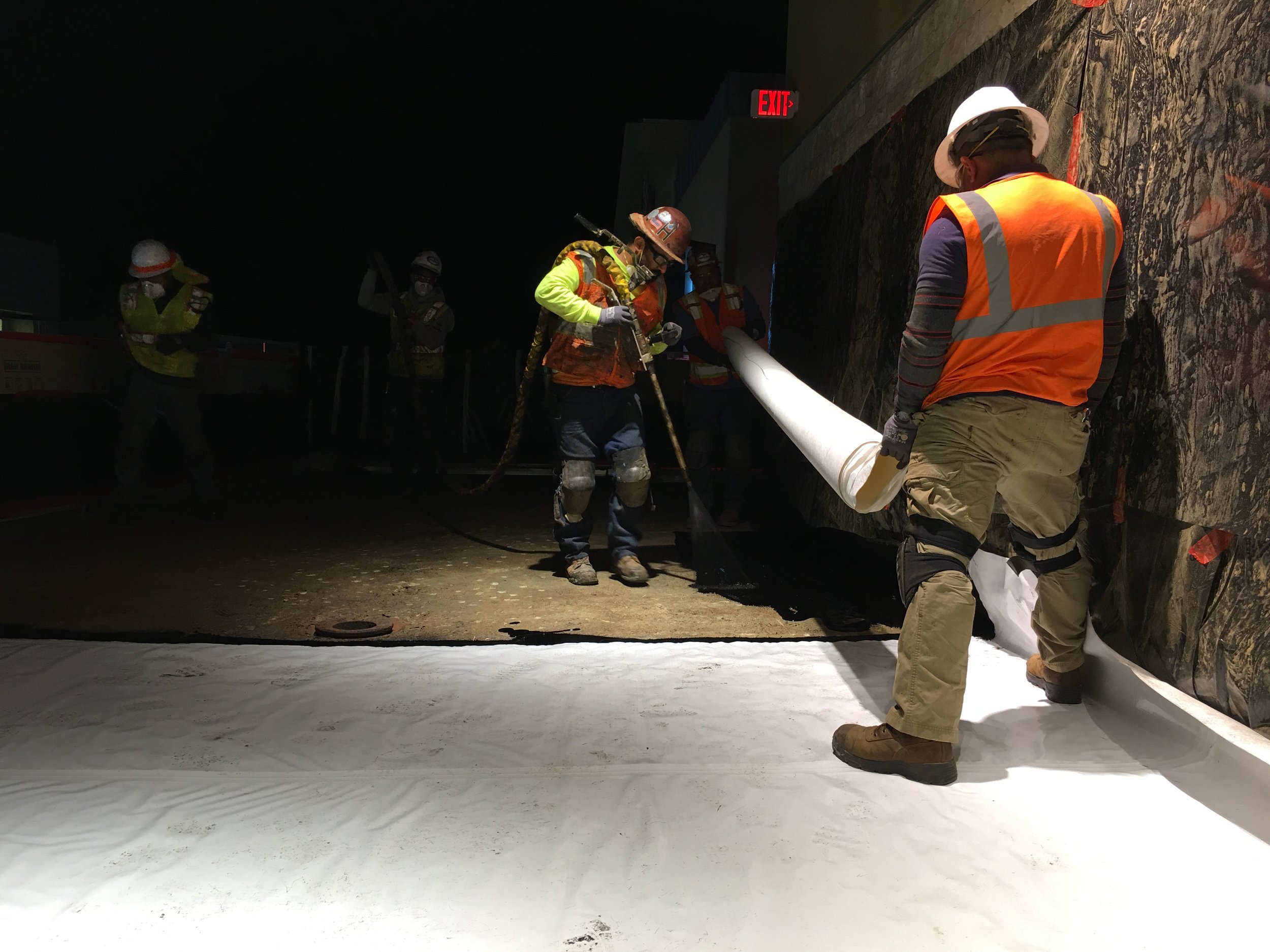
What Is GTI-1000?
GTI-1000 is a single-component injectable Polymer Rubber Gel manufactured by RE-Systems Group Americas for repairing water leaks and restoring damaged waterproofing membrane systems.
The material is highly flexible and is designed for injection into areas affected by water intrusion. Unlike rigid repair materials, GTI-1000 remains flexible and is designed to accommodate vibration and continued movement within the structure.
The material is also designed to perform in damp conditions and active water leakage environments.
Rather than simply sealing the visible interior surface, the GTI-1000 injection process can be used to reach the affected waterproofing area behind or beneath the structure.
This makes the system particularly useful for difficult commercial waterproofing conditions where direct exterior access to the existing waterproofing membrane is limited.
How GTI-1000 Injection Waterproofing Works
Every project begins with an assessment of the water intrusion, existing construction, waterproofing configuration, and surrounding site conditions.
Where GTI-1000 is determined to be an appropriate system, controlled access holes are drilled toward the affected waterproofing area and injection packers are installed.
GTI-1000 Polymer Rubber Gel is then injected slowly under controlled pressure through the access points.
The injection process is progressed through the treatment area to establish coverage around the affected waterproofing assembly. Once the injection work is complete, the access points are sealed.
The objective is not simply to fill a visible crack.
The GTI-1000 system is designed to address the area behind the structure where the waterproofing system has been compromised and water intrusion is occurring.
This distinction can be particularly important on large commercial structures where water can migrate through an assembly before becoming visible inside the building.
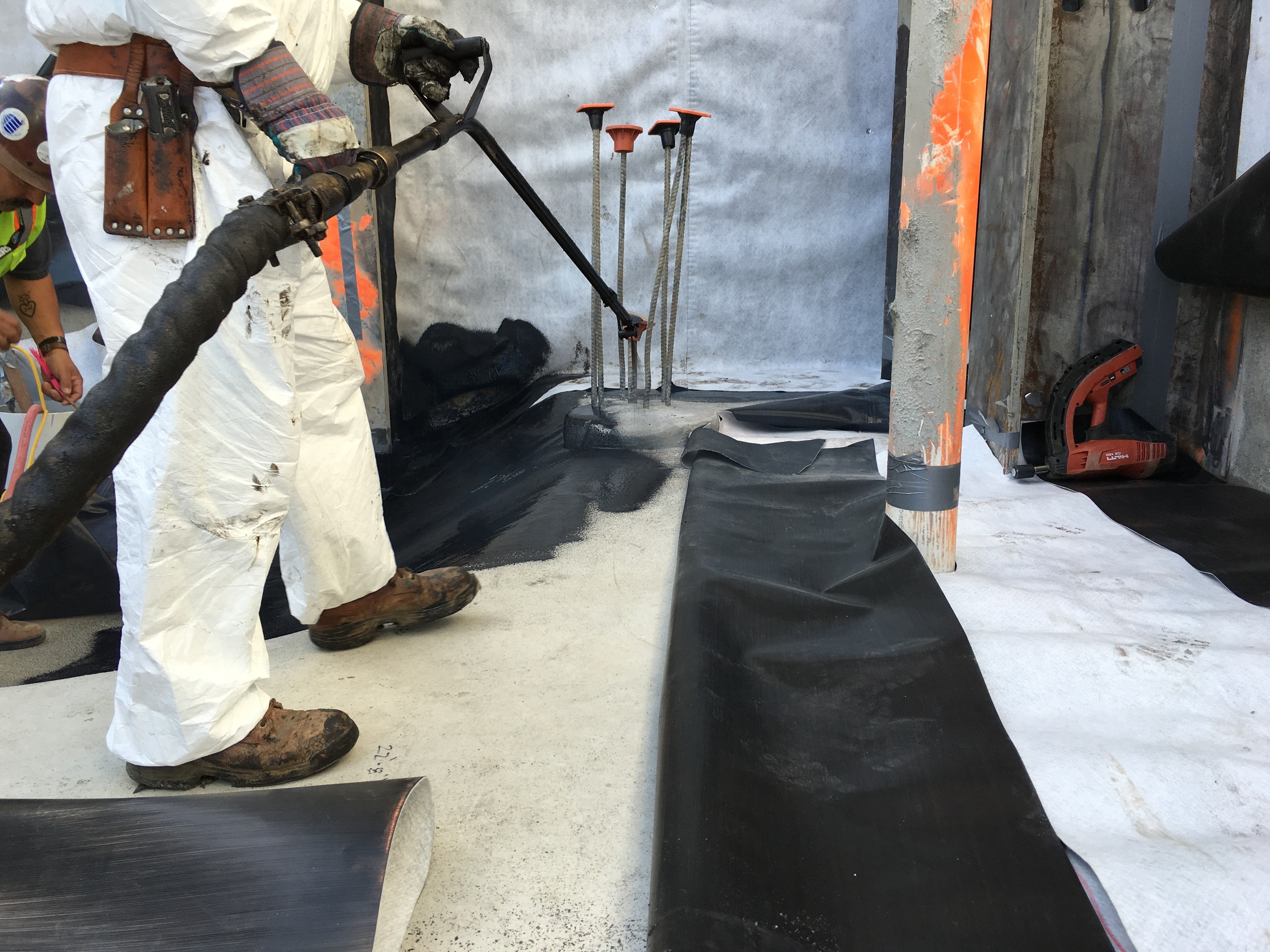
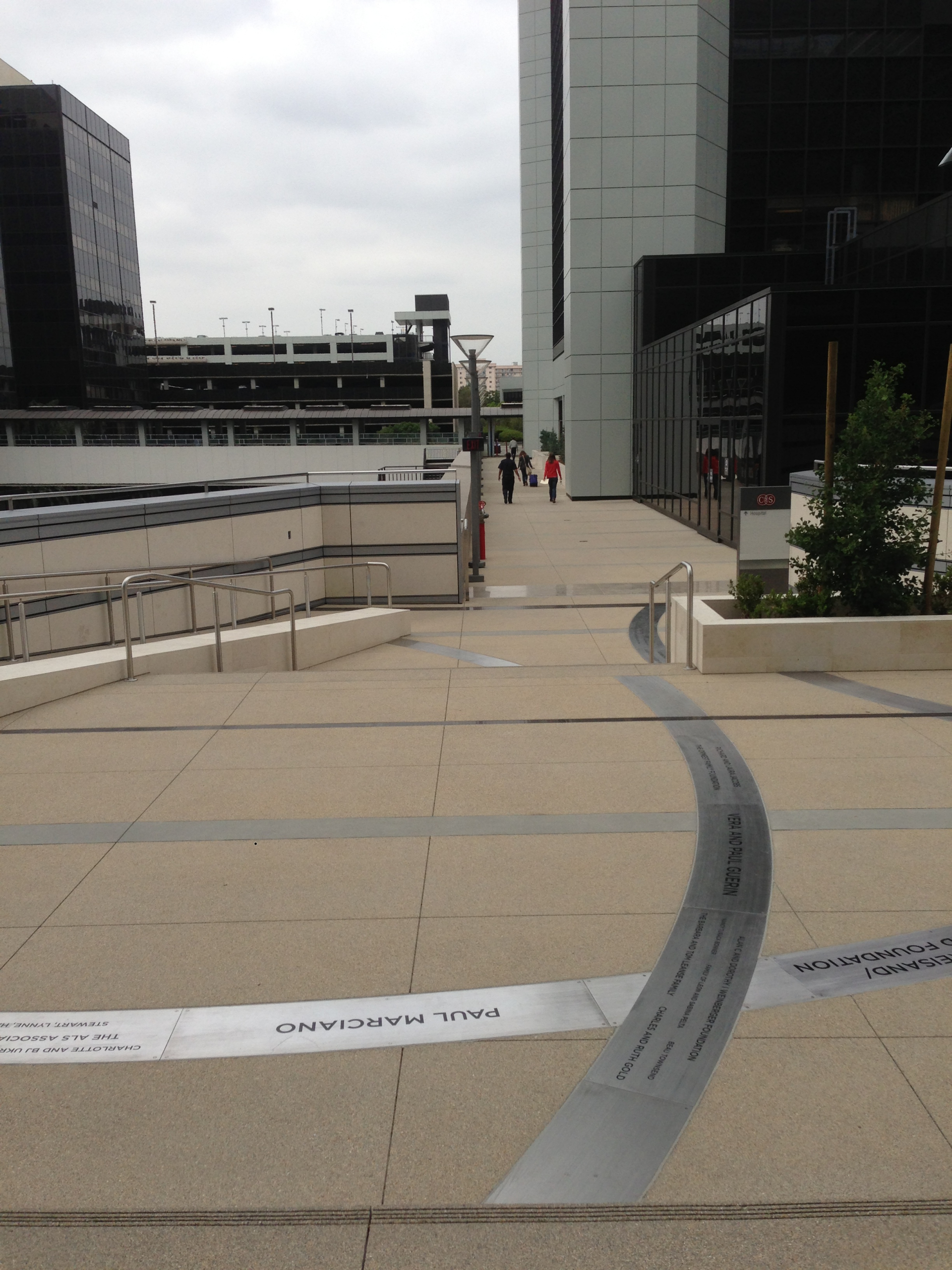
Commercial Injection Waterproofing Systems
Injection waterproofing is a specialized component of commercial building-envelope restoration.
Depending on the structure and the source of water intrusion, injection waterproofing systems may be used to address leaks associated with:
- Below-grade walls and slabs
- Construction joints
- Expansion joints
- Moving joints
- Concrete cracks
- Precast joints
- Pipe and service penetrations
- Existing waterproofing membranes
- Underground structures
- Areas experiencing active water intrusion
GTI-1000 expands the range of commercial injection waterproofing systems available to Nusite Group for conditions where access to the exterior side of a structure is restricted.
The appropriate waterproofing system depends on the existing construction, source of the water intrusion, substrate conditions, waterproofing configuration, movement conditions, and required long-term performance.
Commercial Applications for GTI-1000 Waterproofing
GTI-1000 can be used for both horizontal and vertical injection applications and for conditions ranging from limited leakage to active water intrusion.
Potential commercial and institutional applications include:
Underground Parking Structures
Injection waterproofing can be used to address leaking walls, slabs, joints, penetrations, and other areas where accessing the exterior waterproofing system would require significant excavation or disruption.
Below-Grade Commercial Structures
GTI-1000 provides another restoration option for compromised waterproofing systems where the exterior side of a foundation or structural wall cannot be readily accessed.
Plaza Decks and Podium Structures
Water migration through plaza decks and podium assemblies can be difficult to trace and repair. Injection waterproofing may provide a targeted approach to restoring affected waterproofing areas without removing large sections of the existing assembly.
Construction and Expansion Joints
Water intrusion frequently develops around joints that are subject to building movement. A flexible injection material can provide an alternative to rigid repair methods in appropriate conditions.
Pipe and Service Penetrations
Penetrations through below-grade structures can create vulnerable points within a waterproofing assembly. Injection systems may be used to address water migration around these locations.
Tunnels and Infrastructure
GTI-1000 can also be used in specialized infrastructure environments where excavation or access to the exterior side of the structure may be extremely difficult.
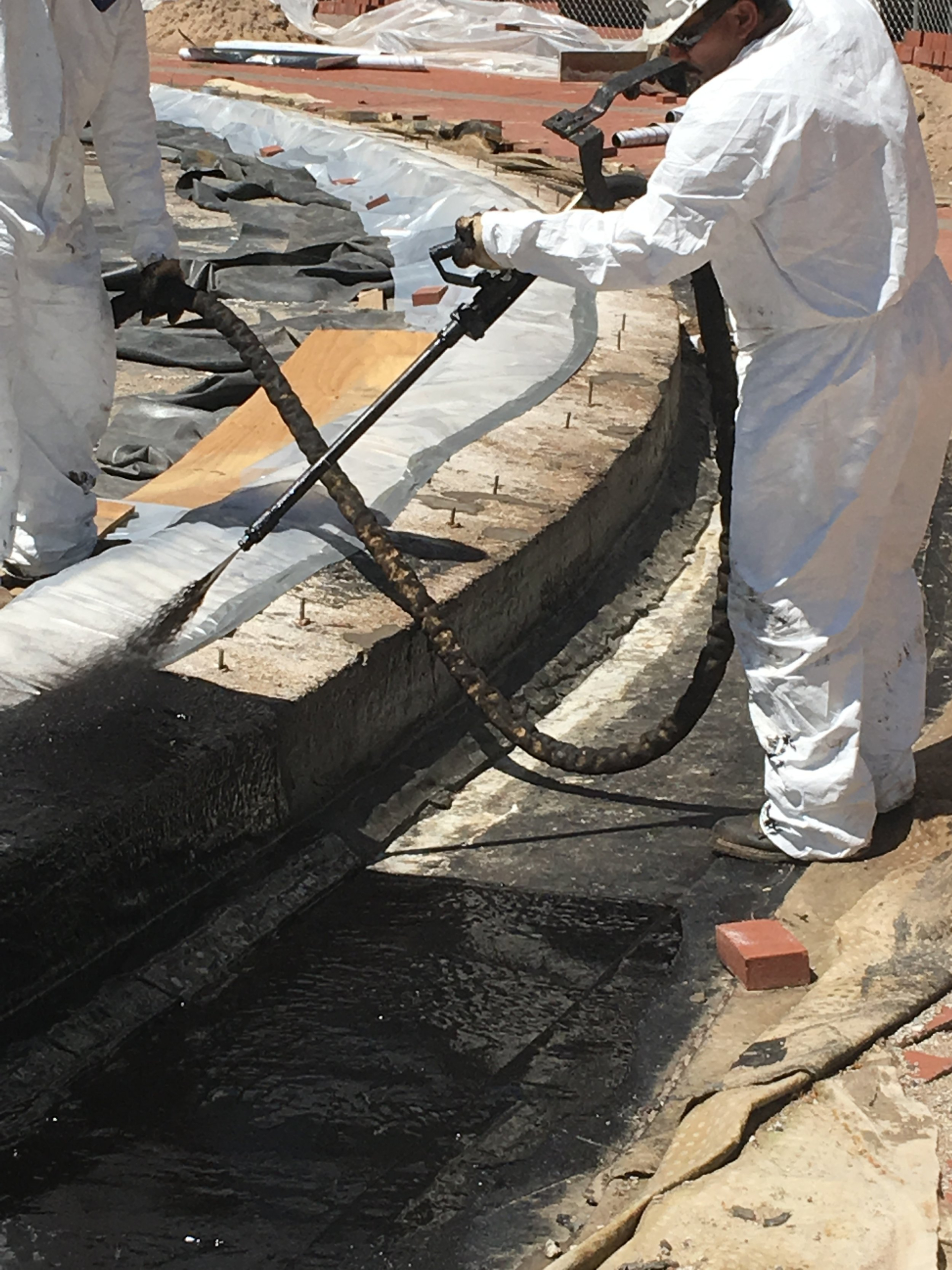
GTI-1000 vs. Conventional Crack Injection
Traditional crack injection is often understood as filling or sealing an individual crack in concrete.
GTI-1000 can be used differently.
The material can be injected through the structure toward the affected waterproofing layer, allowing the treatment to address conditions beyond the visible interior surface.
This makes GTI-1000 particularly relevant where the visible leak is only the point where water is entering the occupied space rather than the actual point where water first entered the building envelope.
Water can migrate along joints, interfaces, cracks, membranes, and other pathways before appearing inside a structure.
For this reason, effective commercial injection waterproofing requires an understanding of the entire waterproofing assembly rather than simply treating the visible symptom.
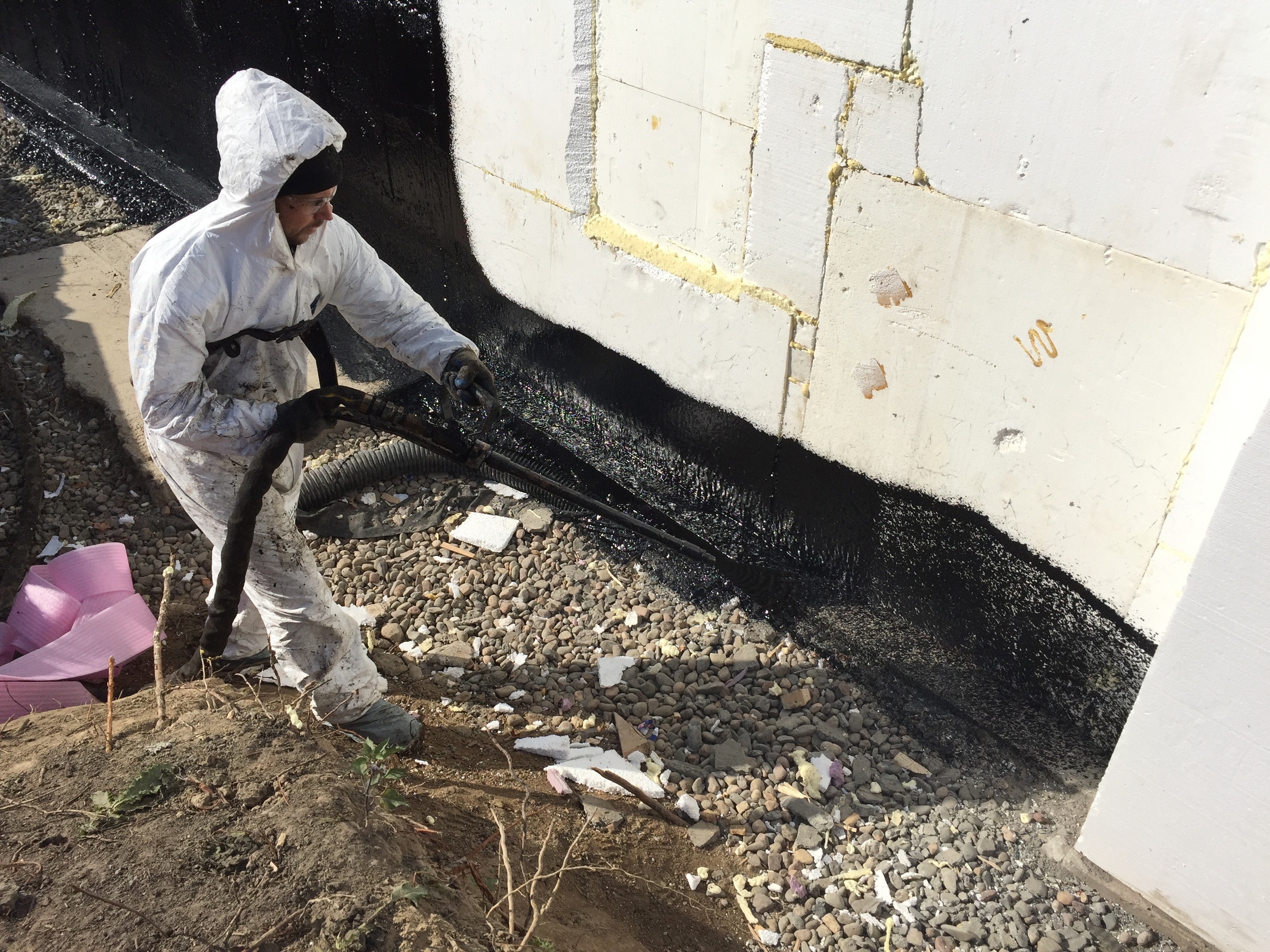
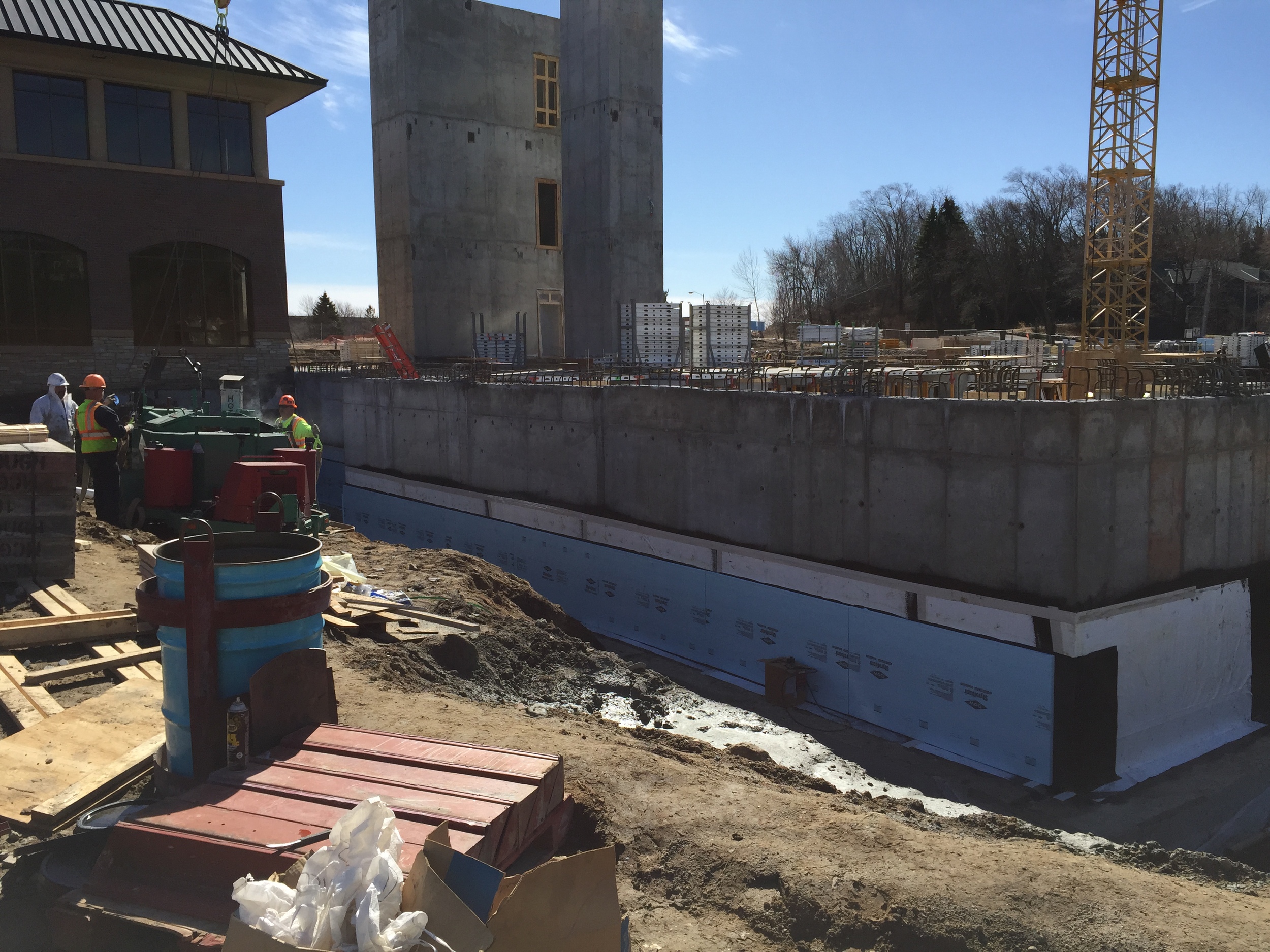
Benefits of No-Excavation Injection Waterproofing
For the right project conditions, GTI-1000 injection waterproofing can provide several practical advantages.
Reduced Excavation
Injection access can eliminate or significantly reduce the need to expose large sections of an existing below-grade waterproofing system.
Reduced Operational Disruption
Avoiding major exterior excavation can help reduce interference with parking areas, occupied facilities, pedestrian areas, hardscape, and surrounding building operations.
Access to Difficult Waterproofing Areas
Injection systems can provide access to waterproofing conditions that would otherwise be difficult or expensive to reach from the exterior.
Flexible Waterproofing Material
GTI-1000 is designed to remain flexible rather than forming a rigid repair, making it suitable for applications involving movement or vibration when project conditions allow.
Application in Wet Conditions
The material is designed for use in damp conditions and areas experiencing active water leakage.
Targeted Waterproofing Restoration
Rather than automatically removing and replacing an entire waterproofing assembly, injection allows project teams to target specific areas of failure where appropriate.
Injection Scope by Structure Type
Below-grade structures do not fail in the same way, and the injection scope differs accordingly. What they share is a condition that rules out conventional membrane replacement: the failed waterproofing layer sits beneath something that cannot practically be removed.
| Structure | Where the membrane typically fails | What sits above the failure | What stays in service |
|---|---|---|---|
| Underground and structured parking | Suspended slabs, slab-on-grade, construction and expansion joints, column bases | Traffic-bearing deck, occupied levels, ramps | Parking levels, vehicle access |
| Plaza and podium decks | Membrane plane beneath the wearing course or overburden | Pavers, soil, planters, hardscape, amenity space | Landscaping and amenity areas remain intact |
| Tunnels and deep structures | Segment joints, precast joints, construction joints under sustained head | Full depth of overburden — no exterior access exists | Tunnel operations |
| Elevator pits and penetrations | Pit walls and floor, pipe and service penetrations, wall-to-floor joints | Operating shaft and equipment | Elevator service, subject to contractor coordination |
| Foundation walls, zero lot line | Membrane plane against shoring or an adjacent structure | Neighbouring property or permanent shoring | Adjacent property undisturbed |
Parking Structure Membrane Restoration
Parking structures combine the conditions that shorten membrane life: chloride loading from tracked road salt, freeze-thaw cycling, thermal movement and repeated traffic loading. Leakage commonly appears at construction joints, expansion joints, column bases and cracks in suspended slabs, and it frequently shows on the level below rather than at the point of entry.
The operational constraint is usually what rules out open-cut repair. Excavating a traffic-bearing deck or removing a topping to reach the membrane takes levels out of service, consumes staging area, and on a revenue-generating structure removes stalls for the duration. Injection is performed from within the structure, which allows levels to be isolated and returned to use progressively rather than closed as a whole.
Plaza and Podium Deck Membrane Repair Without Removing Landscaping
On plaza and podium assemblies the membrane sits beneath the overburden — pavers, drainage layers, soil, planters, hardscape and in many cases mature landscaping or amenity space. Conventional replacement means removing and reinstating all of it, and the reinstatement is frequently the larger share of the cost.
Water entering a podium assembly also travels laterally along the membrane plane before appearing below, so the visible leak inside the parking level or lobby beneath is often well away from the breach. Injection is directed at the membrane plane itself and continues until counterflow confirms lateral distribution, which addresses the plane rather than the symptom. The surface above is not opened.
Tunnel and Deep Structure Leak Remediation
In tunnels and deep below-grade structures there is no exterior access to recover. Leakage concentrates at segment joints, precast joints and construction joints, and the structure is typically under sustained hydrostatic head rather than intermittent water.
These conditions also involve continuous movement and vibration, which is where a non-curing material differs materially from a rigid resin: it accommodates ongoing movement rather than resisting it, and does not fracture along the plane it was installed to seal. GTI-1000 is applied in horizontal and vertical injection and is rated by the manufacturer for structural movement with no permeability.
Elevator Pits and Service Penetrations
Elevator pits concentrate groundwater at the lowest point of a structure, and water reaching pit equipment is both a building envelope problem and an equipment and safety issue. Entry points are typically the wall-to-floor joint, cracks in the pit walls or floor, and pipe or service penetrations.
Work inside an operating shaft requires coordination with the building operator and the licensed elevator contractor, and the elevator may need to be taken out of service while the pit is accessed. Scheduling that coordination is part of the scope.
GTI-1000 Technical Properties
| Property | Result | Standard |
|---|---|---|
| Solids content | 75% | ASTM D1353 |
| Viscosity (pumped) | 150,000 cP | ASTM D2196 |
| Viscosity (static, in place) | 2,600,000 cP | ASTM D2196 |
| Flash point | No observable flash point | ASTM D56 |
| pH | 7.5 – 8.0 | — |
| Adhesion to damp surfaces | Rating of 1, no permeability | KS F 4935 |
| Structural movement | No permeability | KS F 4935 |
| Resistance to sulfuric acid | Under 1% weight change | KS F 4935 |
| Resistance to hydrochloric acid | Under 1% weight change | KS F 4935 |
| Resistance to nitric acid | Under 1% weight change | KS F 4935 |
| Resistance to sodium chloride | Under 1% weight change | KS F 4935 |
| Resistance to alkali | Under 1% weight change | KS F 4935 |
The two viscosity figures describe the working principle of the system. Under pump pressure the material flows at approximately 150,000 cP, allowing it to travel laterally along the membrane plane and seek the leak path. Once static, viscosity rises to roughly 2,600,000 cP, effectively immobile in place. The material distributes where it is directed, then stays there.
Published manufacturer test results. These figures describe laboratory performance of the material and are not performance criteria for installed conditions.
The Injection Process
Injection restoration is a controlled, sequenced operation. Execution quality determines whether the repair holds.
1. Assessment and layout. The failure mode is identified, the membrane plane located, and concrete thickness determined. Injection layout is planned against the leak pattern and the structure.
2. Drilling. Holes of 5/8-inch diameter are drilled through the concrete to the depth of the damaged waterproofing layer, at intervals of approximately 3.25 feet or adjacent to cracks, depending on conditions.
3. Packer installation. Injection packers are set to control flow and pressure at each port.
4. Injection. Material is injected slowly and at low pressure. Injection continues until counterflow is observed from adjacent drilled holes, confirming that the material has travelled laterally and re-established continuity across the membrane plane rather than filling a single void.
5. Sealing. The injection pipe is withdrawn and each hole is plugged with a rubber stopper and non-shrink mortar.
6. Verification. The sequence is repeated across the affected area and the repair is monitored.
Some conditions require an initial application of polyurethane or another material to fill excessive voids before the gel is injected. Determining whether that step is necessary is part of the assessment.
Equipment and crew requirements. GTI-1000 is a hot-applied material installed through a rotor/stator injection pump. It is not a cartridge-dispensed product. Correct execution requires the pump equipment, trained operators, and adherence to safe handling procedures for hot material. Nusite Group operates rotor/stator injection pump equipment in-house, so injection scopes are executed by our own crews rather than brokered to a third party partway through a project.
Why This System Suits Southern Ontario Conditions
Two environmental factors drive below-grade waterproofing failure in the GTA, and both are directly relevant to material selection.
Chloride exposure. Road salt tracked into parking structures over the winter season produces a sustained chloride environment that degrades many repair materials and drives reinforcement corrosion in the concrete around them. GTI-1000 is tested under sodium chloride exposure at under 1% weight change.
Freeze-thaw and structural movement. Cycling between freeze and thaw, combined with thermal movement and traffic loading in parking and deck structures, applies repeated strain at exactly the plane a membrane repair occupies. Rigid repairs are vulnerable to this cycling. A non-curing material that remains flexible and is rated for freeze/thaw and wet/dry cycling is better matched to the loading these structures actually experience.
FAQ
What is GTI-1000?
GTI-1000 is an injectable Polymer Rubber Gel manufactured by RE-Systems Group Americas for repairing water leaks and restoring damaged waterproofing membrane systems. It is a single-component, flexible material designed for specialized injection waterproofing applications.
Can GTI-1000 waterproofing be installed without excavation?
In appropriate conditions, yes. GTI-1000 can be injected through controlled access points in the structure toward the affected waterproofing area. This allows certain waterproofing failures to be addressed without exposing the entire exterior waterproofing assembly.
Is GTI-1000 a no-excavation waterproofing system?
GTI-1000 can provide a no-excavation or reduced-excavation waterproofing solution for certain applications. Whether excavation can be avoided depends on the structure, location of the waterproofing failure, accessibility, and overall project conditions.
Can GTI-1000 be used on active water leaks?
GTI-1000 is designed for injection applications that can include active water leakage conditions. The structure and source of the water intrusion should first be evaluated to determine whether the system is appropriate.
Where can GTI-1000 injection waterproofing be used?
Potential applications include underground parking structures, below-grade walls and slabs, tunnels, plaza decks, podium structures, construction joints, expansion joints, moving joints, concrete cracks, precast joints, and pipe or service penetrations.
Is GTI-1000 the same as polyurethane crack injection?
No. GTI-1000 is an injectable Polymer Rubber Gel designed for waterproofing restoration applications. Polyurethane, epoxy, polymer gel, and other injection materials have different characteristics and applications. The correct injection material should be selected based on the structure, movement, water conditions, and repair objective.
Does injection waterproofing only seal the visible crack?
Not necessarily. Depending on the application, GTI-1000 can be injected toward the affected waterproofing area behind or beneath the structure. This is important because the location where water becomes visible inside a building may not be the location where it originally penetrated the waterproofing system.
Is injection waterproofing suitable for every commercial water leak?
No. Injection waterproofing is one of several possible waterproofing approaches. The existing structure, waterproofing assembly, source of water intrusion, substrate condition, movement, access, and extent of failure should be assessed before selecting a repair system.
Does Nusite Group provide GTI-1000 injection waterproofing in Toronto?
Yes. Nusite Group provides commercial injection waterproofing systems, including specialized GTI-1000 applications, for qualifying commercial and institutional projects in Toronto and throughout the GTA and Southern Ontario.
Can a leaking parking garage membrane be repaired without removing the topping or closing the structure?
In appropriate conditions, yes. Injection is performed from within the structure, which means the traffic-bearing deck does not have to be opened and levels can be isolated and returned to service progressively rather than closed as a whole. Whether injection is suitable depends on the extent of the membrane failure, the substrate condition and the location of the water entry.
Can plaza or podium deck waterproofing be repaired without removing the landscaping?
That is one of the main reasons injection is considered for podium and plaza assemblies. The membrane sits beneath pavers, drainage layers, soil, planters and hardscape, and conventional replacement requires removing and reinstating all of it. Injection is directed at the membrane plane from below, leaving the surface above undisturbed.
Why does a podium deck leak appear somewhere other than the actual breach?
Water entering a podium or plaza assembly travels laterally along the membrane plane before it appears below, so the visible leak in the parking level or lobby beneath is often well away from the point where the membrane failed. This is why diagnosis of the membrane plane matters more than the location of the visible water, and why injection continues until counterflow confirms lateral distribution.
Is injection suitable for tunnels and deep structures under constant water pressure?
Tunnels and deep below-grade structures have no recoverable exterior access, and leakage typically concentrates at segment, precast and construction joints under sustained hydrostatic head. These structures also experience continuous movement and vibration, which is where a non-curing material differs from a rigid resin: it accommodates movement rather than resisting it. GTI-1000 is rated by the manufacturer for structural movement with no permeability.
Does work in an elevator pit require the elevator to be taken out of service?
Possibly. Work inside an operating shaft requires coordination with the building operator and the licensed elevator contractor, and the elevator may need to be taken out of service while the pit is accessed. Scheduling that coordination is part of the scope rather than something handled on site.
Commercial Waterproofing Contractor Serving Toronto and the GTA
Established in 1990, Nusite Group is a commercial waterproofing contractor specializing in large-scale waterproofing systems, concrete and structural rehabilitation, and commercial roofing.
Our waterproofing capabilities include specialized injection waterproofing systems for difficult below-grade conditions, active water intrusion, concrete cracks, construction joints, expansion joints, penetrations, parking structures, podium decks, and other complex commercial applications.
Nusite Group works with general contractors, project managers, property managers, facility managers, and commercial property owners to evaluate difficult water intrusion conditions and implement systems suited to the existing structure.
We are fully bonded, licensed across Ontario, and carry $10 million in liability coverage.
Serving the GTA and Southern Ontario.