
Preserving History: Key Considerations for Historic Building Restoration

Heritage buildings across the Greater Toronto Area represent irreplaceable cultural assets and substantial real estate investments—structures where architectural significance intersects with practical demands for continued commercial, institutional, or civic use. For property managers, facility directors, and general contractors responsible for historic office buildings, institutional landmarks, heritage industrial facilities, and designated heritage properties, restoration projects require balancing preservation standards with modern building performance requirements. When waterproofing failures, roofing deterioration, or concrete distress threaten heritage structures, intervention strategies must deliver technical effectiveness while respecting architectural character and heritage designation constraints.
Established in 1990, Nusite Group has delivered waterproofing, commercial roofing, and concrete rehabilitation solutions on heritage and existing buildings throughout the GTA and Southern Ontario. This technical overview explains critical considerations for historic building restoration, focusing on the waterproofing, roofing, and concrete challenges that define most heritage rehabilitation projects.
Understanding Toronto’s Heritage Building Stock
Toronto’s designated heritage buildings span multiple construction periods, each presenting distinct technical challenges. Victorian and Edwardian structures feature load-bearing masonry with lime mortar joints, minimal waterproofing, and original slate or metal roofing systems. Early modern buildings from the 1920s through 1940s introduced reinforced concrete and steel frames but still relied on limited waterproofing technologies and coal tar-based built-up roofing. Mid-century heritage properties from the 1950s through 1970s showcase brutalist and modernist concrete architecture, with experimental building envelope systems now experiencing significant deterioration.
These buildings commonly house institutional uses like universities, hospitals, and government facilities requiring operational continuity during restoration. Commercial heritage properties include historic office buildings and adaptive reuse projects converting industrial structures to modern occupancy. Industrial heritage buildings feature robust concrete and masonry construction with functional aesthetics and large roof areas creating waterproofing challenges.
The most significant challenge facing heritage building owners is accumulated deferred maintenance. Decades of postponed repairs create compounded deterioration where water infiltration affects multiple building systems simultaneously. Previous incompatible repairs often compound problems—Portland cement repointing in lime mortar masonry, modern waterproofing systems that trap moisture, and concrete patches using mismatched materials all accelerate deterioration rather than arresting it.
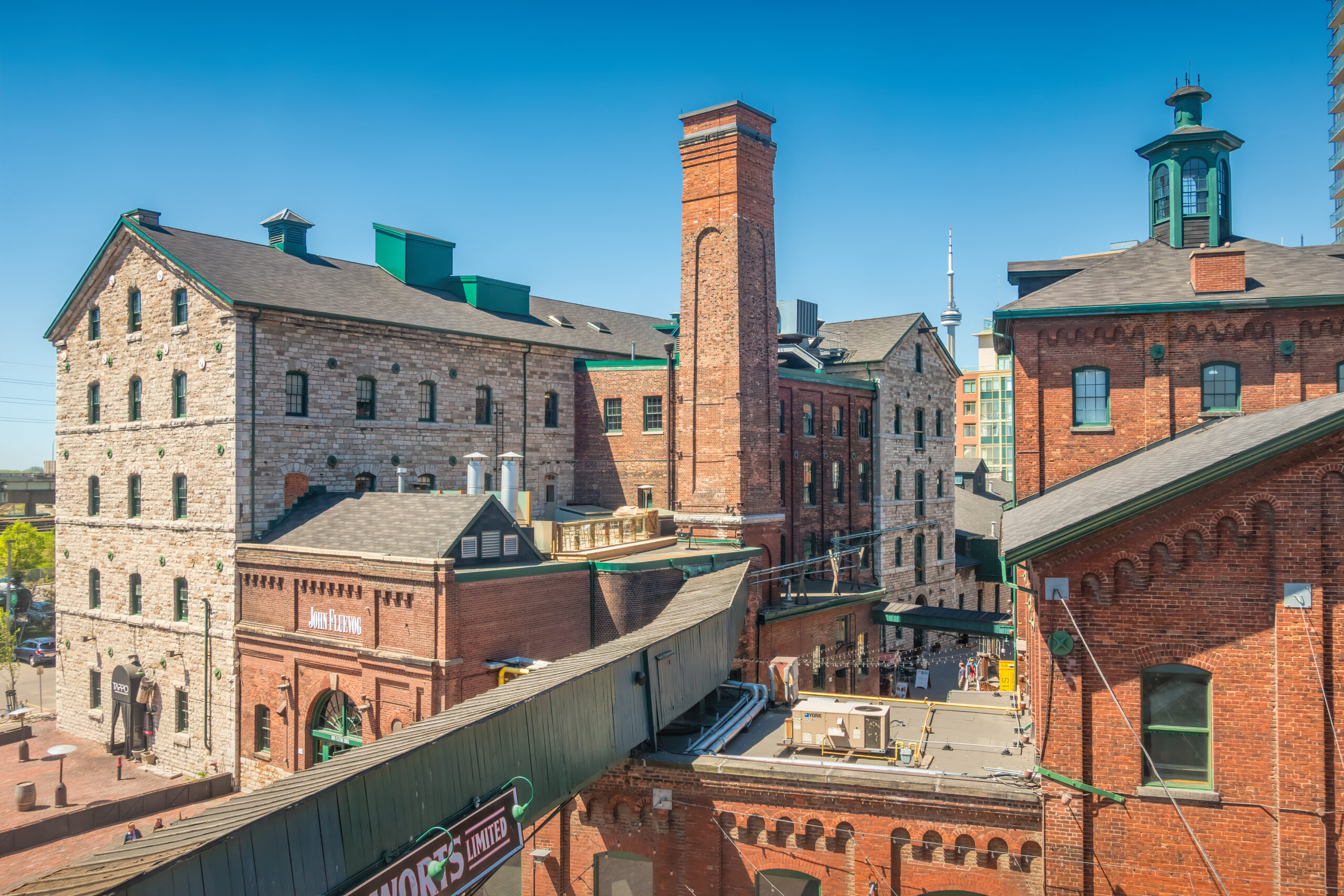
Heritage Waterproofing: Balancing Preservation and Performance
Understanding Historic Moisture Management
Waterproofing heritage buildings demands understanding how historic construction manages moisture differently than modern assemblies. Heritage masonry buildings were designed to absorb and release moisture through vapor-permeable materials. Original lime mortars, soft bricks, and porous stone allow water vapor to migrate through wall assemblies without causing damage. Modern interventions that seal these assemblies with impermeable materials trap moisture inside, leading to freeze-thaw spalling, salt crystallization, and accelerated deterioration.
Masonry Wall Waterproofing
The most common heritage waterproofing failure involves masonry wall systems. Proper restoration begins with comprehensive moisture mapping to identify infiltration pathways, followed by salt efflorescence analysis determining whether moisture originates from groundwater or precipitation. The restoration approach must address several critical components:
Repointing Requirements:
- Complete removal of deteriorated or incompatible mortar
- Lime mortar matching original composition, strength, and porosity
- Proper joint tooling replicating historic profiles
- Vapor-permeable materials allowing moisture migration
Breathable Waterproofing Systems:
- Silane/siloxane water repellents providing weather resistance while maintaining vapor permeability
- Cementitious crystalline waterproofing for below-grade masonry foundations
- Lime-based renders and stuccos for exterior wall protection
- Avoidance of impermeable coatings that trap moisture within masonry
Incompatible Portland cement repointing represents one of the most common heritage building failures—hard, impermeable mortar concentrates deterioration in softer, more porous historic brick or stone.
Foundation and Below-Grade Solutions
Foundation waterproofing presents particular challenges in heritage buildings that rarely incorporated effective dampproofing systems. Stone rubble foundations, brick foundation walls in direct contact with soil, and deteriorated mortar joints create chronic water infiltration issues.
Where excavation is feasible and permitted by heritage designation, exterior waterproofing provides optimal solutions through complete excavation exposing foundation walls, vapor-permeable membrane systems compatible with masonry substrates, drainage board and perimeter drainage installation, and foundation wall stabilization where necessary. However, heritage constraints, adjacent property conditions, and archaeological concerns often make excavation impractical.
Interior waterproofing solutions become essential when exterior access is restricted:
- Cementitious waterproofing systems applied to interior foundation surfaces
- Interior perimeter drainage capturing and removing infiltrating water
- Crystalline waterproofing penetrating masonry and self-sealing cracks
- Dehumidification systems managing residual moisture
For institutional and commercial heritage properties, these interior approaches often represent the only practical path to foundation moisture control without compromising heritage fabric.
Plaza Decks and Elevated Terraces
Heritage buildings frequently include elevated terraces, plazas, or roof decks over occupied areas. Original waterproofing systems, if they existed at all, have long exceeded service life. Water infiltration damages heritage interior finishes, decorative elements, and building systems below. Restoration requires complete removal to structural deck, concrete substrate repair with proper drainage slopes, modern waterproofing membranes, and careful reinstallation of historic paving materials. This work demands coordination between waterproofing performance requirements and heritage preservation standards, ensuring both technical effectiveness and architectural authenticity.
Commercial Roofing Restoration on Heritage Buildings
Historic Roofing Material Challenges
Heritage building roofs present unique restoration challenges because roofing materials often contribute to architectural character while protecting the structure from weather. Each historic roofing type requires specialized knowledge and approach.
Slate Roofing Considerations:
- Exceptional longevity (75-150+ years) but requires specialized repair skills
- Material sourcing challenges matching color, texture, and size
- Structural capacity verification for slate weight (800-1500 lbs per square)
- Flashing and underlayment rehabilitation without complete roof replacement
Clay and Concrete Tile Systems:
- Historic tiles may be unavailable, requiring salvage material sourcing or custom reproduction
- Underlayment replacement beneath tiles demands careful removal and reinstallation
- Flashing details at valleys, ridges, and penetrations require compatible materials
- Structural assessment verifying capacity for tile loads
Standing seam metal roofing in copper, terne-coated steel, or zinc requires assessment of coating integrity and decisions about repair versus replacement while matching historic profiles and seam configurations. Built-up roofing systems on flat or low-slope heritage roofs using coal tar pitch or asphalt have generally exceeded service life, requiring property managers to make decisions about complete removal versus recover approaches.
Restoration vs. Compatible Replacement
The restoration versus compatible replacement decision depends on whether roofing materials are character-defining features. True restoration maintains maximum original material through repair and selective replacement, matching historic materials and installation methods. This approach involves high material and labor costs justified only when roofing contributes significantly to heritage character.
Compatible replacement uses modern systems matching historic appearance, providing improved performance, reduced maintenance, and extended service life at lower cost. For non-character-defining roof areas, concealed modern commercial roofing systems like TPO, EPDM, or modified bitumen offer practical solutions requiring heritage approval only for visible elements.
Critical Integration Challenges
Roof rehabilitation must address several system-wide challenges beyond just the roofing membrane. Drainage systems in heritage buildings are often undersized by modern standards, with interior downspouts and scuppers concealed within walls. Insulation improvements meeting current energy codes must avoid condensation risks while maintaining roof profiles. Structural capacity verification ensures existing roof framing can support modern systems and current snow loads per Ontario Building Code requirements.
Flashing and termination details require particular attention. Modern flashing materials and methods must be adapted to heritage profiles, particularly where they integrate with masonry walls. Through-wall flashings in heritage masonry require careful execution to prevent water infiltration while maintaining architectural appearance.
Concrete Restoration in Historic Structures
Early Concrete Technology and Deterioration
Heritage buildings from the early-to-mid 20th century feature concrete technologies predating modern durability standards. Lower cement contents, variable aggregate quality, minimal air entrainment, and limited corrosion protection create vulnerability to multiple deterioration mechanisms:
- Freeze-thaw damage in exposed architectural concrete
- Reinforcement corrosion from carbonation or chloride intrusion
- Alkali-aggregate reaction in certain aggregate sources
- Surface scaling and spalling from weathering exposure
- Structural distress from inadequate original design or overloading
Many mid-century heritage buildings feature exposed concrete as character-defining architectural expression, particularly in brutalist and modernist designs where concrete finish, formwork patterns, and surface treatments define the building’s aesthetic.
Assessment and Repair Approach
Assessment begins with documenting original concrete appearance and using non-destructive testing like ground-penetrating radar and half-cell potential mapping to understand subsurface conditions without damaging historic fabric. Core sampling determines concrete strength and identifies specific deterioration mechanisms. Structural analysis verifies whether load capacity remains adequate for continued occupancy.
Repair approach selection requires balancing minimal intervention principles with structural necessity. Some heritage professionals advocate accepting weathered concrete appearance as part of building history, limiting repairs to structurally essential work. This approach suits brutalist architecture where concrete patina contributes to character. Comprehensive restoration through extensive spall repair and protective coatings may be appropriate where deterioration obscures original architectural intent.
Material Compatibility and Repair Methods
Material compatibility drives repair success. Repair mortars must match original concrete properties including strength, density, and porosity. Mortars significantly stronger than original concrete create stress concentrations and differential thermal movement. The repair strategy should include:
Compatible Repair Materials:
- Polymer-modified cementitious mortars matching heritage concrete strength
- Form liners replicating historic board-formed or textured finishes
- Pigmented mortars matching concrete color without surface coatings
- Vapor-permeable protective treatments allowing moisture migration
Structural Restoration Techniques:
- Spall repair removing only deteriorated material
- Reinforcement cleaning, corrosion treatment, and protection
- Epoxy injection for structural cracks restoring load transfer
- Polyurethane injection for waterproofing active leaks
When structural strengthening becomes necessary, carbon fiber reinforcement systems add capacity without altering appearance. Discrete steel reinforcement additions can be concealed within existing structure. Corrosion mitigation through cathodic protection systems or corrosion inhibitor application prevents ongoing reinforcement deterioration. These interventions require engineering coordination ensuring code compliance while preserving architectural character.
Regulatory Framework and Approval Processes
Municipal heritage designation under Parts IV or V of the Ontario Heritage Act requires Heritage Permits for alterations to designated properties. Heritage Toronto or local heritage committees review applications against character-defining elements identified in designation bylaws. Provincial designation through Ontario Heritage Trust or federal designation as National Historic Sites involves additional approval layers and potentially more restrictive intervention standards.
Property managers and general contractors should budget three to six months for heritage approvals before construction commencement. Applications require detailed scope documentation, proposed materials and methodologies, and often photographic simulations or physical mock-ups demonstrating proposed work. Public consultation periods for significant alterations extend review timelines.
The Parks Canada Standards and Guidelines for the Conservation of Historic Places in Canada establishes national conservation principles emphasizing minimal intervention, reversibility where feasible, and material compatibility. The Ontario Heritage Toolkit provides provincial guidance for heritage property management, including building condition assessment protocols and material-specific restoration guidelines.
Building code application to heritage properties involves balancing preservation with safety. Heritage buildings may qualify for equivalencies or alternative solutions demonstrating equivalent safety levels without full code compliance. Fire and life safety upgrades often become mandatory during major renovation. Accessibility improvements must balance heritage preservation with barrier-free access requirements. Structural safety verification, including current snow and wind load capacity, requires engineering sign-off regardless of heritage status.
Project Execution and Quality Control
Comprehensive documentation forms the foundation of successful heritage restoration. Pre-construction photographic surveys, measured drawings, material sampling, and condition assessments establish baseline records. Construction documentation including progress photography, as-built drawings, material certifications, and heritage monitoring reports verify compliance with approvals.
Phasing strategies prioritize building envelope protection preventing cascading water damage:
- Roof rehabilitation preventing water infiltration from above
- Exterior wall waterproofing and masonry restoration addressing vertical envelope failures
- Foundation waterproofing securing below-grade systems
- Interior finishes following only after building envelope integrity is restored
For occupied heritage buildings, zone-based phasing maintains partial operations while work proceeds. Seasonal scheduling addresses weather-dependent exterior work during favorable conditions.
On-site heritage supervision by qualified professionals monitors compliance with approvals and makes real-time decisions when unexpected conditions arise. Skilled trades with heritage restoration experience execute work meeting craft quality standards demonstrated through mock-ups and sample panels. Testing protocols verify waterproofing integrity through flood testing, concrete repair bond strength, and roofing water cutoff performance.
Budget Considerations and Cost Management
Heritage restoration involves cost premiums over standard construction. Specialty materials command 50 to 200 percent premiums over conventional products. Skilled trades with heritage expertise cost 25 to 75 percent more than standard labor rates. Lower productivity rates for hand craftsmanship, heritage consultant fees, extended approval processes, and substantial contingency allowances for unknown conditions all contribute to total project costs. Property managers should budget heritage restoration at 150 to 250 percent of comparable standard rehabilitation costs.
However, funding assistance programs help offset these premiums:
Available Funding Sources:
- Municipal heritage grant programs (Toronto Heritage Grant Program provides matching grants)
- Provincial and federal programs for significant properties
- Commercial heritage property tax rebates
- Federal tax incentives for income-producing heritage properties
Strategic intervention prioritization offers cost-effective approaches. Focusing immediate investment on building envelope failures causing water damage—roof rehabilitation, critical waterproofing, structural concrete repairs—prevents cascading damage requiring far more costly emergency intervention. Deferring aesthetic restoration of non-failing elements to future phases spreads capital investment over time. Utilizing modern concealed systems where permitted reduces costs while maintaining heritage character where it matters.
Nusite Group’s Heritage Building Expertise
With over 30 years of waterproofing, commercial roofing, and concrete rehabilitation experience, Nusite Group has contributed to heritage building restoration projects on institutional, commercial, and civic properties throughout the GTA and Southern Ontario. Our work supports preservation objectives while delivering modern building envelope performance.
We provide waterproofing, roofing, and concrete restoration systems compatible with heritage building materials and construction methods. Our technical approach balances preservation requirements with performance standards, material longevity, and operational budgets. We coordinate with heritage consultants and authorities, providing technical documentation supporting permit applications and implementing quality control satisfying heritage monitoring requirements.
Our project teams execute waterproofing and concrete rehabilitation in operational heritage buildings, coordinating with facility operations, protecting heritage interiors and finishes, and maintaining safety protocols for public buildings. Heritage restoration projects involve complex coordination between architects, structural engineers, heritage consultants, specialized trades, and building officials. Our experience working within these multi-discipline teams provides the collaboration essential to successful heritage building restoration.
Frequently Asked Questions
How do heritage designation requirements affect waterproofing and roofing restoration costs and timelines?
Heritage designation adds 20 to 50 percent to project costs through specialty materials, skilled labor premiums, approval processes, and heritage monitoring. Timelines extend three to six months for heritage approvals before construction and progress more slowly during execution due to careful workmanship standards. However, heritage grant programs may offset 10 to 25 percent of eligible costs. Property managers should engage heritage consultants early in planning, budget appropriately for heritage-compliant solutions, and anticipate extended project durations. Well-planned heritage projects deliver superior long-term building performance justifying premium costs through extended service life and preserved property value.
Can modern high-performance waterproofing and roofing systems be used on heritage buildings?
Yes, when appropriately specified and installed. Heritage standards require maintaining character-defining features and architectural appearance, not necessarily using historic materials throughout. Concealed modern waterproofing systems on foundations, below plaza decks, or in roof assemblies typically receive heritage approval because they remain invisible. Visible building envelope elements require heritage-compatible materials and finishes. General contractors should work with heritage architects to identify where modern high-performance systems are acceptable and where historic replication is required. This hybrid approach balances preservation with practical building envelope performance and budget constraints while satisfying regulatory requirements.
What happens if we discover unexpected deterioration during heritage building restoration?
Unknown conditions are common in heritage buildings and should be anticipated through substantial contingency allowances of 20 to 30 percent. Project procedures should address unforeseen conditions systematically: stop work and document discoveries, engage heritage consultants and structural engineers for assessment, develop remediation strategies compatible with heritage requirements, submit revised heritage permit applications if scope changes significantly, and implement approved solutions. Property managers should expect scope adjustments and budget increases on heritage projects. Experienced contractors maintain communication with heritage authorities and develop practical solutions balancing preservation with building performance and safety.
Are there cost-effective approaches to heritage building waterproofing and concrete restoration?
Yes, through strategic intervention prioritization and phased implementation. Focus immediate investment on building envelope failures causing water damage—roof rehabilitation, critical waterproofing, and structural concrete repairs threatening safety. Defer aesthetic restoration of non-failing elements to future phases when capital becomes available. Utilize modern concealed systems where heritage approval permits, avoiding premium costs for invisible work. Implement preventative maintenance programs extending intervals between major restoration cycles. Coordinate restoration with building upgrades or tenant improvements to leverage combined project efficiency. Property managers should develop ten to twenty year capital plans phasing heritage restoration investments, pursue available grant funding, and prioritize interventions preventing cascading damage.
Preserve Architectural Heritage with Technical Excellence
Nusite Group has delivered waterproofing, commercial roofing, and concrete rehabilitation solutions supporting heritage building restoration on institutional, commercial, and civic properties across the GTA and Southern Ontario since 1990. Our technical expertise enables heritage-appropriate interventions that preserve architectural character while ensuring reliable building envelope performance for continued use.
Fully bonded, licensed across Ontario, and insured to $10 million in liability coverage, Nusite Group operates as a dependable specialty contractor for property managers, heritage consultants, architects, and general contractors who require proven execution on heritage building waterproofing, roofing, and concrete restoration projects.
Request a consultation to discuss your heritage building’s waterproofing, roofing, or concrete restoration requirements or explore how Nusite Group can support your preservation project with technical solutions balancing heritage standards and modern building performance.


