Commercial concrete patios face intense wear and tear across the Greater Toronto Area. From restaurant terraces along King Street West to office building courtyards in Mississauga, outdoor commercial spaces endure punishing freeze-thaw cycles, heavy foot traffic, and exposure to de-icing salts that accelerate deterioration. For property owners managing hospitality venues, retail complexes, or multi-unit residential buildings, the question isn’t whether your concrete patio will show signs of damage—it’s when, and what you’ll do about it.

Rather than undertaking costly full replacements, savvy property managers throughout Toronto and the GTA are discovering that professional concrete resurfacing offers a cost-effective solution that extends the life of outdoor commercial spaces while enhancing their appearance and safety. Working with experienced commercial concrete contractors who understand the unique challenges of Toronto’s climate can transform a deteriorating patio into a revitalized asset that serves your business for years to come.

Understanding the Deterioration of Commercial Concrete Patios in Toronto

Toronto’s climate presents unique challenges for concrete surfaces. The combination of harsh winters, significant temperature fluctuations, and moisture exposure creates a perfect storm for concrete degradation. Understanding these factors helps property owners make informed decisions about maintenance and restoration.

Climate-Specific Damage Patterns

Commercial concrete patios in the GTA experience accelerated wear due to several environmental factors. Winter freeze-thaw cycles cause water to penetrate small cracks, expand when frozen, and gradually break apart the concrete matrix. This process repeats dozens of times each winter season, with Toronto typically experiencing 40-60 freeze-thaw cycles annually. Additionally, the de-icing salts commonly used throughout the region don’t just melt ice—they chemically react with concrete, causing surface scaling and spalling that compromises structural integrity.

High-traffic commercial spaces compound these issues. Restaurant patios serving hundreds of guests daily, retail plaza walkways, and building entrance areas experience constant abrasion that wears down protective surface layers, exposing the concrete to accelerated deterioration. UV exposure during summer months further degrades sealants and surface treatments, creating a year-round assault on your concrete investment.

The Cost of Neglect

Delaying repairs on deteriorating concrete patios leads to escalating problems. Surface cracks develop into structural issues, minor spalling becomes major concrete loss, and uneven surfaces create liability concerns. Property owners face potential slip-and-fall incidents, accessibility issues that may violate Ontario Building Code requirements, and aesthetic problems that impact customer perception and property values. What begins as a manageable resurfacing project can evolve into a complete replacement costing three to five times more than proactive restoration.

podium deck waterproofing

The Benefits of Commercial Concrete Resurfacing

Resurfacing provides commercial property owners with a strategic middle ground between ongoing patch repairs and complete patio replacement. This approach delivers multiple advantages that align with the practical needs of GTA businesses.

Significant Cost Savings

Working with a concrete resurfacing contractor typically costs 30-50% less than complete removal and replacement. Resurfacing avoids the expenses associated with demolition, disposal fees (which can be substantial in Toronto), extended downtime, and the installation of entirely new concrete structures. For a mid-sized commercial patio of 1,500-2,000 square feet, the cost difference can represent savings of $15,000-$25,000 or more, depending on the complexity of the project.

Minimal Business Disruption

Time is money in commercial operations. Concrete resurfacing projects completed by experienced commercial concrete contractors in Toronto typically require 3-5 days from start to finish, compared to 2-3 weeks for full replacement. This reduced timeline means shorter closures for restaurants, less disruption for retail tenants, and faster return to normal operations. Many resurfacing applications can even be scheduled in phases, allowing portions of your patio to remain operational during the restoration process.

Enhanced Durability and Performance

Modern resurfacing materials and techniques actually improve upon original concrete installations. High-performance overlay systems provide superior resistance to freeze-thaw damage, chemical exposure, and surface wear. Many products incorporate advanced polymers and additives specifically designed for Canadian climate conditions, offering better performance than traditional concrete in Toronto’s demanding environment. Properly installed resurfacing by qualified contractors can extend your patio’s functional life by 10-15 years or more.

Aesthetic and Functional Improvements

Resurfacing isn’t just about restoration—it’s an opportunity for enhancement. Contemporary resurfacing systems offer numerous decorative options including stamped patterns, custom colors, exposed aggregate finishes, and textured surfaces that improve slip resistance. Property owners can transform dated, worn concrete into attractive outdoor spaces that align with current design trends and brand aesthetics, all while improving safety and accessibility to meet Ontario Building Code standards.

The Commercial Concrete Resurfacing Process

Understanding the resurfacing process helps property owners set realistic expectations and make informed decisions when selecting contractors in the GTA.

Comprehensive Surface Assessment

Professional commercial concrete contractors begin with thorough evaluation of existing conditions. This assessment identifies the extent of damage, determines structural soundness, evaluates drainage patterns, and detects underlying issues such as foundation settlement or inadequate substrate preparation. For Toronto properties, contractors specifically look for salt damage, freeze-thaw deterioration, and moisture-related problems common to the region.

Reputable contractors provide detailed condition reports with photographic documentation, clear explanations of required repairs, and transparent pricing based on actual needs rather than generic estimates. This assessment phase is critical—attempting to resurface over fundamentally compromised concrete leads to premature failure and wasted investment.

Surface Preparation and Repair

Proper preparation determines resurfacing success. Contractors must thoroughly clean all surfaces, removing dirt, oils, previous sealers, and deteriorated concrete. Specialized equipment including shot blasters, scarifiers, or pressure washing systems create the proper surface profile for optimal bonding of new materials.

Structural repairs precede resurfacing. Contractors address significant cracks, spalling areas, and uneven sections using appropriate repair mortars and techniques. In Toronto, where freeze-thaw damage is prevalent, this often involves routing out deteriorated concrete, treating exposed rebar if corrosion is present, and rebuilding sections to restore structural integrity. Drainage improvements may also be incorporated to address water pooling issues that contribute to future deterioration.

Resurfacing Application

The application phase varies based on selected materials and project requirements. Common resurfacing systems used by commercial concrete contractors in the GTA include polymer-modified overlays, microtoppings, stamped overlay systems, and specialty coatings designed for high-traffic applications.

Most applications involve multiple steps: a bonding primer to ensure adhesion, the resurfacing material itself applied in appropriate thickness (typically 1/4 inch to 1 inch depending on the system), surface finishing to achieve the desired texture and appearance, and protective sealers to enhance durability and weather resistance. Temperature and humidity conditions must be appropriate during installation—a consideration that affects scheduling in Toronto’s variable climate, particularly during spring and fall months.

Curing and Protection

Proper curing is essential for achieving specified performance characteristics. Contractors must protect newly resurfaced areas from premature traffic, precipitation, and temperature extremes during the curing period. Most systems require 24-72 hours before light foot traffic and 5-7 days before full use. During this time, proper protection and favorable weather conditions are critical—factors that experienced local contractors account for when scheduling projects in the GTA.

Choosing the Right Concrete Resurfacing Contractor in Toronto

Selecting qualified concrete contractors separates successful resurfacing projects from disappointing failures. Commercial property owners should evaluate several key factors when making this critical decision.

Experience and Specialization

General contractors may offer concrete services, but commercial resurfacing requires specific expertise. Look for contractors with demonstrated experience in commercial applications, proven track record with projects similar in scale and scope to yours, and specific knowledge of Toronto building requirements and climate challenges. Contractors with 20-30+ years of experience in the GTA have weathered the full spectrum of local conditions and understand what works in this market.

Ask potential contractors about their experience with commercial properties like yours. A contractor specializing in residential driveways may lack the expertise required for high-traffic commercial applications subject to Ontario Building Code commercial standards.

Comprehensive Service Capabilities

The best contractors offer integrated solutions beyond simple resurfacing. Look for companies providing waterproofing applications to address moisture issues, foundation repair capabilities for underlying structural problems, commercial restoration experience for complex projects, and concrete repair services for comprehensive property maintenance. This breadth of expertise ensures contractors can address root causes of deterioration rather than simply covering symptoms.

Contractors offering multiple related services demonstrate commitment to the industry and investment in expertise, equipment, and training across complementary specialties—all indicators of professional operations capable of delivering quality results.

Materials and Methods

Professional contractors use proven, high-performance materials appropriate for Toronto’s climate. Inquire about specific products they recommend, why those products suit your application, warranty coverage for both materials and workmanship, and their experience with those systems in local conditions.

Be wary of contractors offering suspiciously low prices—they often achieve these prices by using inferior materials or cutting corners on preparation and application. Quality resurfacing requires investment in proper materials and adequate time for correct installation.

Licensing, Insurance, and References

Verify that contractors carry appropriate insurance coverage including commercial general liability and WSIB coverage for workers. Request and actually contact references from recent commercial projects, particularly those involving similar properties or applications. Professional contractors readily provide this information and welcome the opportunity to showcase their work.

Check online reviews and ratings, but recognize that complex commercial projects occasionally involve disputes even with excellent contractors. Look for patterns in feedback rather than isolated incidents, and evaluate how contractors respond to concerns—this reveals their commitment to customer satisfaction and problem resolution.

Maintaining Your Resurfaced Commercial Patio

Proper maintenance extends the life of resurfaced concrete and protects your investment. While professionally resurfaced patios are more durable than deteriorated concrete, they still benefit from proactive care.

Seasonal Maintenance for Toronto Climate

Toronto’s distinct seasons require adapted maintenance approaches. During winter months, use concrete-safe de-icing products rather than traditional rock salt—options like calcium magnesium acetate or specialty concrete-safe products minimize chemical damage. Promptly remove snow and ice to prevent repeated freeze-thaw exposure, and avoid metal shovels or sharp snow removal tools that can damage surface treatments.

Spring brings the critical post-winter inspection period. Examine surfaces for any damage that occurred during winter, addressing small issues before they expand. Pressure washing removes accumulated salt residue and winter grime. Summer and fall provide ideal times for reapplying sealers, typically required every 2-3 years depending on traffic levels and product specifications.

Regular Cleaning and Inspection

Establish routine cleaning schedules appropriate to your traffic levels and usage patterns. High-traffic restaurant patios may require daily sweeping and weekly thorough cleaning, while office building courtyards may need less frequent attention. Regular removal of debris, leaves, and standing water prevents staining and reduces deterioration.

Conduct quarterly inspections to identify emerging issues early. Look for cracks, surface wear patterns, drainage problems, areas where sealers have broken down, and any changes in surface texture or appearance. Early detection allows for minor repairs that prevent major problems.

Professional Maintenance Partnerships

Consider establishing relationships with commercial concrete contractors for ongoing maintenance services. Many contractors offer maintenance programs including periodic inspections, scheduled resealing, prompt repair of minor damage, and seasonal preparation and protection services. These programs provide peace of mind and often prove more cost-effective than reactive repairs when problems escalate.

Frequently Asked Questions About Commercial Concrete Resurfacing

How long does commercial concrete resurfacing typically last in Toronto’s climate?

With proper installation by qualified commercial concrete contractors and appropriate maintenance, resurfacing can extend your patio’s functional life by 10-15 years or more. The actual lifespan depends on several factors including traffic levels, maintenance quality, severity of winter weather exposure, and the specific resurfacing system used. High-performance polymer-modified overlays designed for Canadian conditions generally outlast standard cement-based products. Regular resealing every 2-3 years and prompt repair of minor damage significantly extends resurfacing longevity.

Can you resurface concrete in cold Toronto weather, or must we wait until spring?

Temperature significantly affects resurfacing success. Most concrete resurfacing materials require minimum temperatures of 10-15°C (50-60°F) during application and curing, which limits work during Toronto’s late fall through early spring period. The optimal window for resurfacing in the GTA typically runs from May through September when temperatures are consistently warm and precipitation is less problematic. However, some specialty cold-weather formulations allow work in cooler conditions. Professional contractors will advise on seasonal timing based on specific products, weather forecasts, and project requirements. Planning resurfacing during ideal weather windows ensures proper curing and maximum performance.

Is resurfacing suitable for all damaged concrete patios, or are some beyond repair?

While resurfacing addresses many common concrete issues, some conditions require more extensive intervention. Resurfacing works well for surface-level problems including minor cracking, scaling and spalling, discoloration and staining, rough or worn surfaces, and cosmetic deterioration. However, severe structural cracking, significant settlement or heaving, deep deterioration affecting concrete integrity, major foundation issues, or extremely damaged concrete may require partial or complete replacement. Professional assessment by experienced concrete resurfacing contractors determines whether your specific patio is a suitable candidate for resurfacing or requires alternative solutions. Honest contractors will recommend replacement when resurfacing would provide inadequate results or represent poor value.

What’s the difference between DIY resurfacing products and professional commercial applications?

Retail DIY resurfacing products available at home improvement stores target residential homeowners and small-scale projects. These products typically have limited durability under commercial traffic conditions, require ideal application conditions not always achievable for larger projects, lack the performance additives found in commercial-grade systems, and come with limited technical support and no professional warranty. Commercial concrete contractors use professional-grade materials with proven performance in high-traffic applications, have specialized equipment for proper surface preparation and application, bring expertise in addressing underlying issues and ensuring proper installation, and provide warranties backing their work. For commercial properties where durability, longevity, and professional results matter, the investment in professional installation delivers far superior value and performance compared to DIY approaches.

Partnering with Experienced GTA Concrete Contractors

Commercial concrete patio resurfacing represents a strategic investment for property owners throughout the Greater Toronto Area seeking to extend the life of their outdoor spaces while managing costs effectively. The harsh realities of Toronto’s climate demand professional solutions backed by expertise, proven materials, and quality workmanship that delivers lasting results.

Nusite Group brings over 30 years of experience serving commercial property owners across the GTA with comprehensive concrete, waterproofing, and restoration services. Our team understands the unique challenges Toronto properties face and provides customized solutions tailored to your specific needs, whether you’re managing a hospitality venue with high-traffic outdoor seating, a commercial complex requiring accessible and attractive common areas, or a multi-unit residential property seeking to enhance outdoor amenities.

We offer complete concrete restoration capabilities including surface resurfacing with high-performance systems, structural repair and waterproofing applications, foundation work addressing underlying issues, and ongoing maintenance support protecting your investment. Our integrated approach ensures we address not just surface symptoms but root causes of deterioration, delivering results that perform through decades of Toronto winters.

Don’t wait for minor concrete issues to become major problems requiring complete replacement. Contact Nusite Group today for a comprehensive assessment of your commercial patio and a transparent proposal outlining your options. Let our three decades of GTA experience work for your property, providing the trusted and competent concrete resurfacing contractors you’ve been searching for. Extend the life of your outdoor commercial space with professional resurfacing that delivers durability, aesthetic appeal, and value for years to come.
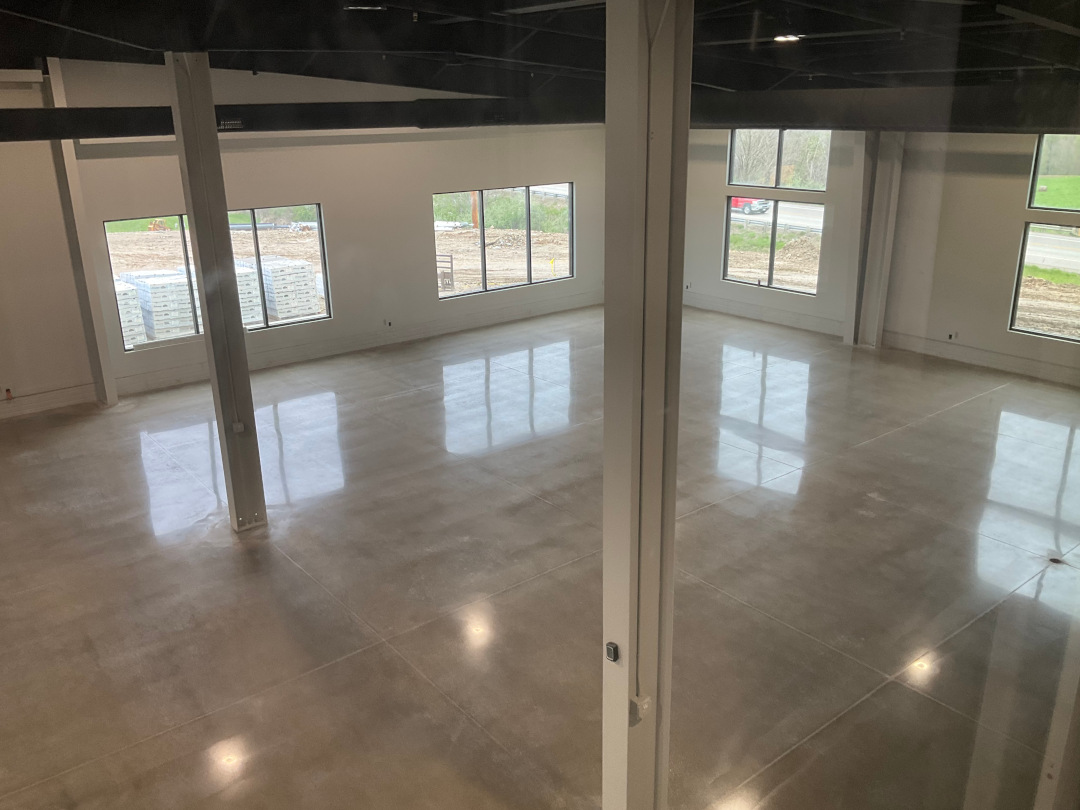
Walk into any modern retail space, industrial facility, or commercial building in Toronto, and you’ll likely encounter polished concrete floors that combine industrial aesthetics with practical durability. What many property owners don’t realize is that these impressive surfaces often started as worn, damaged, or outdated concrete slabs that were transformed through professional refinishing techniques.

Concrete refinishing has emerged as one of the most cost-effective and sustainable solutions for commercial and industrial properties throughout the Greater Toronto Area. Rather than tearing out and replacing deteriorated floors, refinishing breathes new life into existing concrete, creating surfaces that are stronger, more attractive, and better suited to the demanding conditions of GTA commercial operations.

For property owners managing warehouses in Brampton, retail centers in Mississauga, manufacturing facilities in Vaughan, or office buildings in downtown Toronto, understanding the benefits and possibilities of concrete refinishing can unlock significant value in your property investment.

Understanding Concrete Refinishing and Polishing

Concrete refinishing encompasses a range of restoration and enhancement techniques that repair, resurface, and improve existing concrete floors and surfaces. These processes can transform damaged, stained, or outdated concrete into high-performance surfaces that meet modern aesthetic and functional requirements.

Polished concrete represents the premium tier of refinishing, where specialized grinding and polishing equipment progressively refines the concrete surface to achieve varying levels of sheen—from subtle satin finishes to high-gloss mirror-like surfaces. This isn’t simply coating concrete with a topical sealer; it’s a mechanical process that densifies and hardens the concrete itself, creating a surface that becomes more durable with each level of refinement.

The refinishing process addresses multiple issues simultaneously. It removes surface damage, eliminates staining, levels uneven areas, and creates a protective barrier against future wear. For commercial concrete contractors working in Toronto, this means they can deliver results that often exceed the performance characteristics of brand new concrete installations.

Beyond polishing, refinishing techniques include epoxy coatings, urethane systems, and specialized traffic coating applications. Each approach offers distinct advantages depending on your facility’s operational requirements, aesthetic preferences, and budget considerations.

new polished concrete flooring in gta

Key Benefits for Commercial and Industrial Properties

Enhanced Durability and Longevity

Polished and refinished concrete surfaces dramatically outperform untreated concrete in durability. The mechanical polishing process densifies the concrete matrix, reducing porosity and creating a surface that resists abrasion, impact damage, and chemical exposure. For industrial facilities in the GTA handling heavy equipment traffic, this translates to floors that maintain their integrity for decades rather than years.

Toronto’s harsh climate makes this durability particularly valuable. Refinished concrete withstands the moisture, salt, and freeze-thaw exposure that enters buildings on vehicles and foot traffic during winter months. Unlike tile, vinyl, or carpet, properly finished concrete won’t delaminate, crack under temperature fluctuations, or deteriorate from the road salt tracked into your facility.

Cost-Effectiveness and ROI

When compared to complete concrete replacement or alternative flooring systems, refinishing delivers exceptional return on investment. Commercial concrete contractors can typically refinish existing slabs at 30-50% of the cost of removal and replacement, with minimal disruption to operations.

The long-term maintenance savings prove equally compelling. Polished concrete requires no waxing, stripping, or coating reapplication that traditional floors demand. Routine cleaning with microfiber mops and neutral cleaners maintains the surface indefinitely. For large commercial and industrial facilities, these maintenance savings can amount to thousands of dollars annually.

Energy efficiency provides another financial benefit. Polished concrete’s reflective properties reduce lighting requirements by up to 30%, cutting electricity costs while improving workplace visibility and safety.

Improved Safety and Functionality

Concrete refinishing significantly enhances workplace safety across commercial and industrial environments. Properly finished surfaces eliminate trip hazards from cracks, spalling, and uneven areas. The refined surface resists dust generation that can compromise indoor air quality and create housekeeping challenges in warehouses and manufacturing facilities.

Slip resistance can be engineered into the finish through aggregate exposure levels and sealer selection. This allows polished concrete contractors to create surfaces that meet specific safety requirements while maintaining the aesthetic and functional benefits of refined concrete.

For facilities requiring compliance with health and safety regulations, refinished concrete offers easy-to-clean, non-porous surfaces that don’t harbor bacteria, allergens, or contaminants. This makes refinished concrete particularly valuable for food processing facilities, pharmaceutical operations, and healthcare properties throughout the GTA.

Ideal Applications Across Different Commercial Sectors

Concrete refinishing serves diverse applications across Toronto’s commercial landscape. Retail environments benefit from the sophisticated appearance of polished concrete, which complements modern design aesthetics while handling high foot traffic. From boutique shops in Yorkville to big-box retailers in Etobicoke, refined concrete creates welcoming environments that require minimal maintenance.

Industrial and manufacturing facilities represent perhaps the ideal application for concrete refinishing. Warehouse floors endure constant forklift traffic, heavy pallet loads, and potential chemical exposure. Refinished concrete withstands these demands while providing the smooth, level surfaces necessary for efficient material handling operations.

Parking garages and loading docks face particularly harsh conditions in the GTA climate. Specialized traffic coating systems applied during the refinishing process protect concrete from vehicle traffic, fuel and oil exposure, and the corrosive effects of road salt. These protective systems extend garage lifespan while reducing ongoing maintenance requirements.

Office buildings, educational facilities, and institutional properties increasingly embrace polished concrete for its combination of sustainability, aesthetics, and performance. The ability to incorporate logos, patterns, and custom coloring through scoring, staining, and dyeing techniques allows property owners to create distinctive environments that reflect their brand or institutional identity.

The Professional Refinishing Process

Understanding what quality concrete refinishing entails helps property owners evaluate contractors and set appropriate expectations. The process begins with thorough surface preparation, including removal of existing coatings, repair of cracks and damage, and leveling of uneven areas. This foundation work proves critical to achieving lasting results.

For polished concrete applications, specialized equipment progressively grinds the surface through increasingly fine diamond abrasives. Each grinding stage removes material and refines the surface, eventually exposing aggregate to desired depths and achieving specified gloss levels. Commercial concrete contractors working in Toronto typically complete this progression through 6-10 grinding stages for high-quality polished floors.

Between grinding stages, liquid hardeners and densifiers penetrate the concrete, filling pores and chemically reacting with the concrete to create an extremely hard, dense surface. These treatments transform the concrete matrix itself rather than simply coating the surface, which explains polished concrete’s exceptional durability.

Final polishing with ultra-fine abrasives creates the desired sheen level, from 400-grit satin finishes to 3000-grit high-gloss surfaces. Protective sealers then guard against staining and facilitate easy maintenance while preserving the polished appearance.

For coating applications, surface profiling prepares the concrete to accept epoxy, urethane, or specialized coating systems. Multiple product layers build the protective system, with specific formulations selected based on exposure conditions, traffic levels, and performance requirements.

Choosing the Right Polished Concrete Contractor in the GTA

The quality of concrete refinishing work depends entirely on contractor expertise and equipment capabilities. Look for commercial concrete contractors with dedicated refinishing divisions and proven track records on projects similar to yours. Refinishing equipment represents significant capital investment; contractors with state-of-the-art grinding and polishing machinery demonstrate their commitment to quality outcomes.

Experience with Toronto’s building conditions matters significantly. Contractors familiar with local concrete mixes, climate impacts, and typical deterioration patterns can anticipate challenges and adapt their approach accordingly. Ask for references from comparable commercial or industrial properties in the GTA and verify their experience with your specific application type.

Certifications and manufacturer relationships indicate professional standing. Polished concrete contractors certified through organizations like the Concrete Polishing Association of America have demonstrated technical competency and commitment to industry standards. Similarly, certification with leading coating and sealer manufacturers ensures access to premium products and technical support.

Insurance and bonding protect your investment. Verify that contractors carry substantial liability coverage and appropriate bonding for commercial projects. For large-scale industrial refinishing work, minimum coverage should reach into the millions.

Maintaining Your Investment

Properly refinished concrete requires minimal maintenance but benefits from appropriate care practices. Daily dust mopping removes abrasive particles that can gradually dull polished surfaces. Periodic cleaning with pH-neutral cleaners maintains appearance without damaging sealers or the polished surface itself.

Avoid acidic or alkaline cleaners that can etch or dull refined concrete. Similarly, abrasive scrubbing pads and aggressive cleaning equipment can damage polished finishes. Professional commercial concrete contractors should provide detailed maintenance guidelines specific to your installation.

For high-traffic commercial environments, periodic repolishing of specific zones may be necessary after several years of service. This maintenance refinishing proves far less extensive than the original installation and can be performed with minimal disruption to operations.

Transform Your Commercial Property with Expert Concrete Refinishing

Concrete refinishing represents one of the smartest investments commercial and industrial property owners in the GTA can make. The combination of enhanced durability, reduced maintenance costs, improved aesthetics, and sustainability benefits creates compelling value across virtually any application.

Whether you’re managing a retail property that needs an attractive, low-maintenance floor, an industrial facility requiring surfaces that withstand heavy equipment traffic, or a parking structure demanding protection from Toronto’s harsh climate, professional concrete refinishing delivers results that enhance both property value and operational efficiency.

For over 30 years, Nusite Group has served Toronto and the Greater Toronto Area as a trusted partner for commercial concrete restoration, waterproofing, and structural services. With more than 100 years of combined construction management experience and certification with leading industry manufacturers, our team brings the expertise necessary to transform your worn concrete surfaces into strong, polished finishes that perform for decades.

Our concrete division handles refinishing projects of all scales, from small commercial spaces to large industrial facilities, backed by comprehensive warranties and up to $10 million in liability insurance. We understand GTA climate challenges, building code requirements, and the specific performance demands your property faces.

Ready to explore how concrete refinishing can benefit your commercial or industrial property? Contact Nusite Group today for a free consultation. Our experienced team will assess your existing concrete, explain your refinishing options, and provide detailed proposals that outline the transformation possible for your property. Don’t let worn, damaged concrete undermine your facility’s appearance and functionality—discover the lasting value of professional concrete refinishing with Toronto’s trusted commercial concrete contractors.

When concrete deterioration threatens your commercial property in Toronto, finding the right contractor isn’t just about patching visible damage. It’s about partnering with experienced commercial concrete contractors who understand the unique challenges facing buildings in the Greater Toronto Area, from freeze-thaw cycles that plague our foundations to the stringent requirements of the Ontario Building Code.

Whether you’re managing a high-rise in downtown Toronto, overseeing a retail plaza in Mississauga, or responsible for an industrial facility in Vaughan, concrete damage can escalate quickly from a minor inconvenience to a major structural concern. The question isn’t whether to repair the damage, but how to choose the right team to handle it correctly the first time.

Understanding the Scope of Commercial Concrete Damage in Toronto

Commercial concrete repair goes far beyond simply filling cracks. In the GTA’s harsh climate, concrete faces constant assault from winter freeze-thaw cycles, road salt exposure, and moisture infiltration. These conditions can cause spalling, scaling, deterioration of reinforcing steel, and structural weakening that compromises building integrity.

Emergency concrete repair situations often arise without warning. A parking garage showing signs of concrete delamination, an elevator pit with water seepage, or a loading dock with compromised structural supports all demand immediate attention from qualified contractors who can respond quickly and execute solutions that last.

The scope of commercial concrete work varies widely across the GTA. You might need foundation repairs for settling buildings, structural restoration for aging properties, concrete slab restoration in warehouses, or specialized applications like traffic coating systems for parking structures. Each scenario requires specific expertise and proven methodologies.

Key Qualifications to Look for in Commercial Concrete Contractors

Years of Experience and Track Record

Experience matters significantly in commercial concrete repair. Contractors who have been serving the Toronto market for decades understand local soil conditions, climate challenges, and the specific issues that affect different types of commercial buildings throughout the region.

Look for contractors with a proven track record on projects similar to yours. A company that has successfully completed over 50 million square feet of waterproofing and concrete applications demonstrates the kind of experience that translates into reliable solutions. Ask for references from similar commercial properties and verify their history with actual completed projects in the GTA.

Proper Licensing, Bonding, and Insurance

Never compromise on credentials. Commercial concrete contractors in Ontario should carry substantial liability insurance to protect your property and investment. Minimum coverage should be in the millions, with top-tier contractors often carrying $10 million or more in liability insurance.

Bonding provides additional protection, ensuring that contractors can fulfill their contractual obligations even if unforeseen circumstances arise. This financial security is particularly important for large-scale commercial projects where delays or incomplete work could result in significant losses.

Certifications and Manufacturer Relationships

Quality commercial concrete repair requires access to the best materials and the knowledge to apply them correctly. Look for contractors who are certified applicators of leading industry products from manufacturers like Tremco, Soprema, Carlisle, and GCP.

These certifications aren’t just credentials on a wall. They represent ongoing training, adherence to manufacturer specifications, and the ability to offer comprehensive material warranties backed by the manufacturers themselves. This ensures that your concrete repair work is protected not just by the contractor’s labour warranty, but also by material guarantees that can extend for years or even decades.

Evaluating Technical Capabilities and Equipment

Modern commercial concrete repair demands sophisticated diagnostic capabilities. The best contractors in the GTA invest in advanced inspection tools including moisture meters, FLIR infrared cameras, and laser measuring equipment. These technologies allow for accurate diagnosis of water intrusion, moisture damage, and structural concerns before any repair work begins.

This diagnostic approach is crucial for emergency concrete repair situations. When time is of the essence, you need contractors who can quickly assess the full extent of damage, identify underlying causes, and recommend solutions that address both symptoms and root problems.

In-house capabilities also matter significantly. Contractors with dedicated concrete divisions can handle everything from engineered structural repairs to complex projects like loading dock construction, forming work, and foundation restoration. This integration of services means better coordination, faster timelines, and single-source accountability for your project.

Toronto-Specific Considerations for Concrete Repair

Climate and Weather Factors

Toronto’s climate presents unique challenges for concrete repair work. Our freeze-thaw cycles are particularly brutal on concrete structures, with moisture penetrating small cracks, freezing, expanding, and causing progressive deterioration. This makes proper waterproofing integration essential for any concrete repair project.

Winter conditions also affect repair scheduling. While emergency concrete repair can’t always wait for ideal weather, experienced GTA contractors know how to work within seasonal limitations, using cold-weather concrete mixes and heated enclosures when necessary to ensure proper curing and long-term durability.

Summer humidity and temperature swings create their own challenges. Professional contractors account for these conditions in their material selection and application methods, ensuring that repairs perform reliably year-round.

Building Code Compliance and Regulations

The Ontario Building Code sets strict requirements for commercial concrete work, particularly for structural repairs and applications that affect building safety. Experienced contractors in Toronto stay current with code requirements and work collaboratively with engineers, architects, and building officials to ensure full compliance.

For heritage buildings and properties in historically designated areas, additional regulations apply. Contractors familiar with Toronto’s heritage standards can navigate these requirements while delivering effective concrete restoration that respects architectural integrity.

Red Flags to Avoid When Hiring Concrete Contractors

Not all contractors offering commercial concrete repair services in the GTA are created equal. Be wary of unusually low bids that seem too good to be true—they usually are. Quality materials, skilled labour, and proper execution come at a fair market price. Significant underpricing often indicates shortcuts that will cost you more in the long run.

Lack of transparency about materials, methods, or warranties should raise immediate concerns. Professional contractors provide detailed proposals outlining exactly what products will be used, how the work will be executed, and what guarantees back their craftsmanship.

Avoid contractors who can’t provide current insurance certificates, bonding information, or references from comparable commercial projects. Similarly, be cautious with contractors who pressure you for immediate decisions or deposits before providing comprehensive project proposals.

Making Your Final Decision

Choosing the right commercial concrete contractors for your GTA property requires balancing multiple factors: experience, credentials, technical capabilities, pricing, and reputation. Don’t rush the decision, especially for significant repair projects that affect your building’s structural integrity or functionality.

Request detailed proposals from multiple qualified contractors. Compare not just pricing, but scope of work, material specifications, project timelines, and warranty terms. The cheapest option rarely provides the best value over time.

Check reviews and ratings on platforms like HomeStars and Google, but also speak directly with references. Ask about the contractor’s communication, problem-solving abilities, and how they handled unexpected challenges during the project.

Frequently Asked Questions

How quickly can commercial concrete contractors respond to emergency repairs in Toronto?

Emergency concrete repair timelines depend on the nature and severity of the damage. Reputable contractors serving the GTA typically offer rapid response for urgent situations, often providing initial assessments within 24-48 hours. The actual repair timeline varies based on the scope of work, but experienced contractors can mobilize quickly for critical structural issues or situations that threaten building operations.

What warranties should I expect for commercial concrete repair work?

Professional commercial concrete contractors in Toronto should provide comprehensive warranties covering both materials and labour. Material warranties depend on the products used and can range from 5 to 25 years when certified manufacturer applications are properly executed. Labour warranties typically range from 2 to 10 years, with longer warranties indicating greater contractor confidence in their workmanship. Always get warranty terms in writing before work begins.

How do I know if my concrete damage requires emergency repair or can wait for scheduled work?

Certain conditions demand immediate attention: active water infiltration, visible structural movement or sagging, large sections of spalled or delaminated concrete (especially overhead), exposed or corroded reinforcing steel, and damage affecting life safety systems like emergency exits or fire separations. When in doubt, have a qualified contractor conduct an inspection. They can assess urgency and help you prioritize repairs based on safety, code compliance, and long-term building protection.

What’s the difference between cosmetic concrete repairs and structural restoration?

Cosmetic repairs address surface-level damage like minor cracks, small areas of spalling, or aesthetic concerns without structural implications. Structural restoration involves engineered repairs to concrete elements that carry loads or provide building support—foundations, columns, beams, slabs, and load-bearing walls. Structural work requires proper engineering assessment, adherence to building codes, and often inspection by municipal authorities. Using contractors with both concrete expertise and structural restoration experience ensures your project receives the appropriate level of attention and engineering oversight.

Protect Your Investment with the Right Partner

Your commercial property represents a significant investment, and the concrete that forms its foundation, structure, and parking areas deserves professional care from experienced specialists. Whether you’re dealing with routine maintenance, planned restoration, or emergency concrete repair, choosing qualified commercial concrete contractors in the GTA makes all the difference in outcomes, longevity, and cost-effectiveness.

For over 30 years, Nusite Group has served as Toronto’s trusted partner for commercial waterproofing, concrete repair, and structural restoration. With more than 100 years of combined construction management experience, up to $10 million in liability insurance, and over 50 million square feet of successful applications throughout Ontario, we bring the expertise, credentials, and proven track record your commercial property deserves.

Don’t wait until minor concrete issues become major structural problems. Contact Nusite Group today at (416) 622-7000 or visit nusitegroup.com to schedule a professional assessment of your commercial property. Our experienced team uses advanced diagnostic tools to identify issues early and provide lasting solutions backed by comprehensive warranties.

When it comes to commercial concrete repair in Toronto and the GTA, experience, certification, and accountability matter. Choose a contractor who has proven their expertise across decades of successful projects—choose Nusite Group.

Discovering a crack in your foundation can trigger immediate concern for any property owner. Are you looking at a minor cosmetic issue or a serious structural problem? For Toronto homeowners, foundation cracks are particularly common due to our region’s challenging conditions—an aging housing stock, expansive clay soils, and the relentless freeze-thaw cycles that define our climate. Understanding which cracks require immediate attention and which can be monitored is essential for protecting your property investment.

The reality is that not all foundation cracks signal danger, but none should be completely ignored. Foundation cracks develop over time for various reasons and often lead to basement water infiltration, where moisture finds its way through even hairline fractures. While some cracks are simply the result of concrete curing or minor settlement, others indicate ongoing structural movement that demands professional intervention. The key is knowing the difference.

Understanding Different Types of Foundation Cracks

Foundation cracks reveal important information through their appearance, location, and behavior. Learning to read these signs helps you assess the urgency of the situation and communicate effectively with foundation specialists.

Vertical Cracks

Vertical cracks running straight up and down are the most common type found in poured concrete foundations. These typically result from concrete shrinkage during the curing process or minor settlement as the foundation stabilizes after construction. In Toronto’s older neighborhoods—Leslieville, Riverdale, or areas of East York—you’ll find these cracks in many century-old homes that have otherwise stood strong for decades.

Most vertical cracks measuring less than 1/8 inch wide and showing no signs of active movement are considered non-structural. However, they still provide pathways for water infiltration and should be properly sealed to prevent moisture problems. When vertical cracks exceed 1/4 inch in width or show signs of widening over time, professional assessment is warranted.

Horizontal Cracks

Horizontal cracks deserve immediate attention as they often indicate serious lateral pressure against the foundation wall. This pressure typically comes from expansive soils pushing inward, frost action, or improper backfill that creates excessive loading on the wall. Toronto’s clay-heavy soil composition makes these conditions particularly problematic, especially in areas where foundations were installed without adequate drainage or wall reinforcement.

The Ontario Building Code requires foundations to resist lateral soil pressure, but older homes built before modern standards may not have sufficient reinforcement. Horizontal cracks, especially those accompanied by bowing or bulging of the wall, can signal structural failure in progress. These situations require prompt evaluation by a structural engineer or qualified foundation contractor.

Diagonal Cracks

Diagonal or stair-step cracks, particularly in block foundations, usually indicate differential settlement—when one part of the foundation settles more than another. This commonly occurs at corners or where additions meet the original structure. In Toronto, differential settlement often results from varying soil conditions beneath different sections of the foundation, inadequate compaction during construction, or changes in groundwater levels.

Properties built on former wetlands, creek beds, or areas with mixed soil composition are especially susceptible. Neighborhoods with varied topography like the slopes of Davenport Road or properties near ravines may experience these issues more frequently. Diagonal cracks that continue to widen suggest ongoing movement requiring professional assessment.

Cracks-in-Foundation-Walls

What Causes Foundation Cracks in Toronto Properties

Understanding the forces behind foundation cracks helps property owners address root causes rather than just treating symptoms.

Freeze-Thaw Cycles

Toronto’s winter temperatures regularly swing above and below freezing, creating ideal conditions for freeze-thaw damage. Water that penetrates concrete through small pores or existing hairline cracks expands by approximately 9% when it freezes. This expansion exerts tremendous internal pressure—up to 50,000 pounds per square inch—that can widen existing cracks or create new ones.

Over decades, this cyclical process can significantly deteriorate concrete foundations. The problem intensifies when poor drainage allows water to accumulate against foundation walls, where it freezes and exerts lateral pressure. Properties without proper exterior waterproofing membrane or deteriorated dampproofing are especially vulnerable.

Soil Movement and Settlement

Toronto sits on varied geological deposits left by glacial Lake Iroquois. Beneath the topsoil, you’ll find dense clay deposits that expand when wet and contract when dry. This expansion and contraction creates constant movement that foundations must withstand. The Leda clay and other marine clays found in parts of the GTA are particularly prone to this behavior.

Normal settlement occurs as soil beneath the foundation consolidates under the building’s weight. Most settlement happens within the first few years after construction, but ongoing settlement can indicate problems with soil bearing capacity, changes in moisture content, or nearby excavation affecting soil stability. Major excavation projects for nearby construction or utility work can alter soil support conditions and trigger new foundation movement.

Poor Construction Practices and Materials

Many of Toronto’s older homes were built during rapid expansion periods when construction standards varied widely. Common issues include inadequate foundation depth—particularly problematic in Toronto where the frost line extends 4 feet below grade according to the Ontario Building Code. Foundations extending less than this depth are subject to frost heaving.

Insufficient reinforcement, especially in older poured concrete foundations without adequate rebar, reduces the foundation’s ability to handle stress without cracking. Poor concrete mixes, improper curing, or construction during freezing temperatures can create concrete with inherent weaknesses. Cold joints—where one concrete pour meets another—create natural weak points where cracks often develop.

Water Damage and Drainage Issues

Chronic moisture exposure weakens concrete through a process called efflorescence, where water dissolves and transports salts through the concrete. As water evaporates, these salts crystallize and expand, creating internal pressure that deteriorates the concrete matrix. Over years, this process causes concrete to crumble and lose structural integrity.

Toronto’s spring melt can saturate soils around foundations, dramatically increasing hydrostatic pressure. Without functional weeping tiles and proper drainage, this pressure seeks relief through foundation cracks, simultaneously widening existing cracks and accelerating concrete deterioration. The rebar and wire mesh reinforcement inside concrete foundations rust when exposed to moisture and oxygen, expanding and cracking the concrete from within.

When Foundation Cracks Become Dangerous

While minor cracks are common and manageable, certain warning signs indicate serious structural concerns requiring immediate professional attention.

Signs of Structural Movement

Buildings naturally experience minor movement as framing adjusts to seasonal temperature and humidity changes. However, several indicators suggest movement exceeding normal tolerances. Doors and windows that stick, bind, or won’t close properly—especially when this occurs seasonally or progressively worsens—often indicate foundation movement affecting the frame above.

Gaps appearing between walls and ceilings, or where walls meet at corners, suggest the structure is shifting or settling unevenly. Floors that have developed noticeable slopes or feel bouncy when walked on indicate inadequate support below. Cracks in interior drywall, especially those appearing above doorways or in diagonal patterns, can reflect foundation movement transferring through the structure.

These symptoms are more pronounced on upper floors because movement at the foundation level amplifies as it translates upward through the building. If you notice these issues appearing suddenly or worsening over time, professional structural assessment is essential.

Active vs. Dormant Cracks

The critical distinction isn’t always the size of a crack, but whether it’s actively growing. A dormant crack that hasn’t changed in years poses minimal structural risk, though it should still be sealed against water infiltration. Active cracks that widen, lengthen, or develop new branches indicate ongoing movement that could worsen.

Monitoring cracks is straightforward using the “date and mark” method. Mark the ends of the crack with pencil or marker and record the date. Check monthly and note any changes. For more precise monitoring, you can use crack gauges—simple devices that attach across the crack and provide measurable readings of any movement. If you observe growth exceeding 1/16 inch within a year, professional evaluation is warranted.

Water Infiltration Through Cracks

Even structurally insignificant foundation cracks create pathways for water entry. During Toronto’s heavy spring rains or rapid snow melt, hydrostatic pressure can force significant water volumes through foundation cracks. This moisture creates perfect conditions for mold growth, damages finishes and stored items, and accelerates concrete deterioration.

Water infiltration also signals that the crack extends through the full thickness of the foundation wall. Efflorescence—white powdery deposits around cracks—indicates water is moving through the concrete and carrying dissolved minerals. Recurring dampness or visible water during wet weather requires crack injection or exterior waterproofing to prevent ongoing damage.

Inspecting and Monitoring Foundation Cracks

Property owners can perform basic crack assessment using simple tools and observation, though professional inspection provides definitive answers about structural significance.

DIY Inspection Techniques

Start your inspection from outside the home, examining the foundation perimeter for visible cracks, displacement, or bowing. Pay special attention to corners, areas around windows or basement entry points, and anywhere different building sections meet. Inside, inspect basement walls systematically, noting crack locations, orientations, and widths.

A carpenter’s square helps check whether door and window frames remain square—if corners measure exactly 90 degrees, there’s been no recent significant movement affecting that frame. However, remember that poor installation could also cause out-of-square frames, so check multiple openings throughout the property.

The marble test for floor levelness provides a quick assessment. Place a marble on the floor and observe whether it rolls and in which direction. Some slope is normal, especially in older homes, but floors sloping in multiple directions or with significant pitch warrant investigation.

Photograph cracks with a ruler or coin for scale reference. These photos provide invaluable documentation when monitoring changes over time or consulting with contractors. Date your photos and maintain a simple log of your inspections.

When to Call a Professional

Several situations demand professional expertise. Any horizontal crack, regardless of width, should be evaluated by a foundation specialist or structural engineer. Cracks accompanied by wall bowing, displacement, or visible movement require immediate attention. If you observe active crack growth—particularly rapid growth—don’t wait to schedule an inspection.

Water infiltration through cracks, while not always a structural emergency, requires professional repair to prevent ongoing moisture damage and foundation deterioration. Properties showing multiple symptoms of movement, such as sticking doors combined with drywall cracks and foundation cracks, need comprehensive assessment to identify the underlying cause.

When buying a Toronto property, foundation cracks are common findings during home inspections. A qualified home inspector can identify obvious concerns, but if cracks appear significant, hiring a structural engineer for detailed analysis protects your investment. The few hundred dollars spent on professional evaluation is minimal compared to potential repair costs if problems go unaddressed.

Protecting Your Property Investment

Foundation cracks are common in Toronto’s housing stock, but they don’t have to threaten your home’s integrity. Early detection, proper monitoring, and timely professional intervention when needed protect both your property value and your peace of mind. Understanding the difference between benign settling cracks and active structural problems empowers you to make informed decisions about when to monitor and when to act.

Most importantly, don’t let foundation cracks become pathways for water infiltration. Even structurally insignificant cracks can cause extensive moisture damage over time. Professional crack repair using modern polyurethane or epoxy injection techniques provides permanent solutions that restore structural integrity and prevent water entry.

Concerned about foundation cracks in your Toronto property? Nusite Group has evaluated and repaired thousands of foundation cracks throughout the GTA over our 30+ years in business. Our experienced team can assess your specific situation, explain exactly what you’re dealing with, and recommend the most effective repair approach. We provide honest evaluations—if your crack doesn’t require repair, we’ll tell you. Contact us at (416) 622-7000 to schedule a free professional inspection and get the answers you need to protect your property.