Choosing the Right Traffic Coating System for Commercial and Institutional Buildings
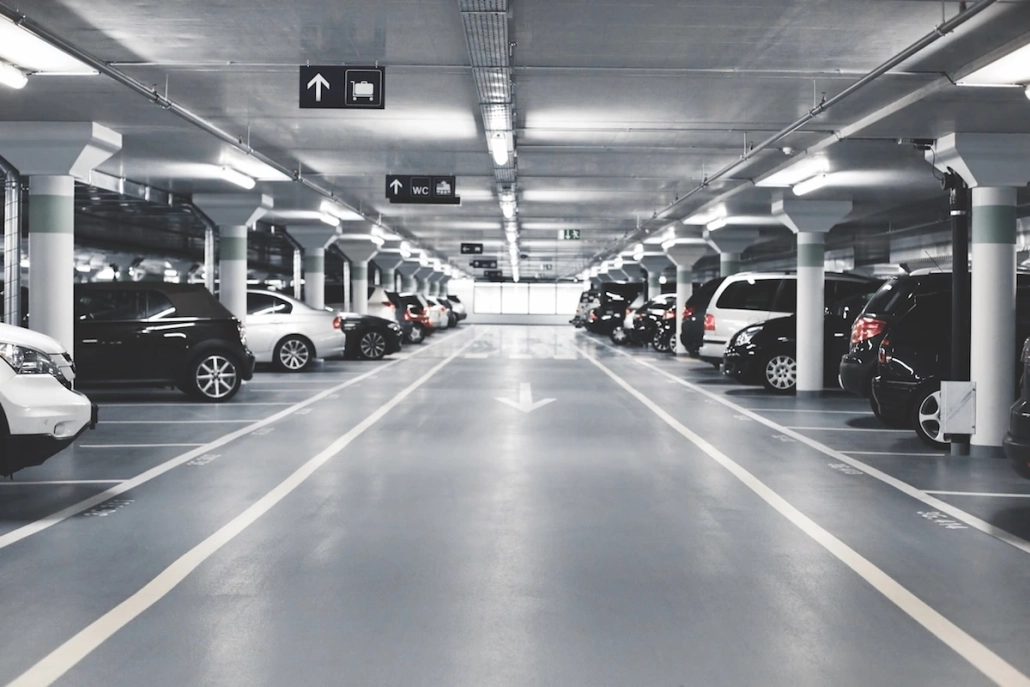
Choosing the right traffic coating system means matching material chemistry, system build-up, and cure characteristics to a specific set of conditions: the exposure and traffic of each zone, the movement behaviour of the structure, the operational constraints of the facility, and the season in which the work will occur. There is no single best coating — only the system best suited to a given project. Specifying by habit or by lowest unit price, rather than by condition, is the most common reason coatings underperform on commercial and institutional buildings. This is a decision framework for making that choice deliberately.
Start With Exposure and Traffic
The governing question is what the surface must endure. A traffic coating on a heavily used ramp faces relentless abrasion and turning shear; the same product would be overbuilt on a pedestrian terrace and inadequate on an exposed roof deck subject to weather. Before chemistry enters the conversation, the surface should be classified: vehicular or pedestrian; heavy, moderate, or light traffic; covered or weather-exposed; and flat or inclined. This classification sets the required build-up and narrows the field of appropriate systems before any product is named. Complex structures are rarely uniform, so this exercise is done zone by zone rather than once for the whole building.
The Main System Chemistries
Polyurethane systems are the default choice for the majority of commercial vehicular and pedestrian applications in Ontario. They offer excellent elongation and crack-bridging, proven freeze-thaw durability, and a favourable balance of performance and cost. Aromatic urethanes serve as base coats; aliphatic urethanes serve as UV-stable top coats on exposed surfaces. Their main limitation is cure time and sensitivity to temperature and moisture during installation.
Polyurea and polyurethane hybrids cure rapidly and develop high tensile strength, making them valuable where facilities cannot tolerate extended closures. They require specialized spray equipment and experienced applicators, and their fast cure leaves little margin for application error.
Methyl methacrylate (MMA) systems cure in roughly an hour and can be applied at low temperatures, well below the limits of standard urethanes. This makes them the system of choice for tight return-to-service windows and for extending the construction season into colder months. The trade-offs are a strong odour during application that demands ventilation planning in enclosed structures, and a higher material cost.
Epoxy and epoxy-urethane systems provide chemical resistance and compressive strength for zones with concentrated loading or chemical exposure, such as loading docks and industrial floors. Epoxies are more rigid and less crack-tolerant than urethanes, so they are typically combined with more flexible layers rather than used alone over moving structural slabs.
Factor In Structural Movement
Concrete structures move, and the coating must accommodate that movement without tearing. Structures with significant thermal exposure, long spans, or existing active cracking require systems with higher elongation and, at wider cracks, detail treatment before the field coating is applied. A high-movement structure coated with a low-elongation system will crack the coating along every active slab crack, defeating its purpose. Where movement is concentrated at joints rather than distributed as cracking, the solution is a dedicated expansion joint system integrated with the coating — coating chemistry alone cannot bridge structural joints.
Weigh Operational Constraints
The facility’s operations often constrain the choice as much as the technical conditions. A hospital, transit facility, or fully occupied commercial garage may permit only limited closure windows, favouring fast-cure MMA or polyurea despite higher material cost, because the true cost of a slow-curing system includes lost operational availability. A structure that can be closed in sections over a longer period may accept standard urethane at lower cost. Odour tolerance matters too: MMA’s application odour, while transient, requires ventilation and occupant communication in enclosed or occupied buildings. These operational realities should be established with the facility manager before a system is specified, not discovered during installation.
Account for the Installation Season
Ontario’s climate compresses the practical window for many coating systems. Standard urethanes have minimum application temperatures and substrate moisture limits that effectively confine them to the warmer months. A project scheduled for late fall or winter either waits for spring, invests in temporary enclosure and heating, or specifies a cold-tolerant chemistry such as MMA. Deciding this early prevents the common situation where a season-inappropriate system is specified and the project stalls waiting for weather.
Don’t Overlook the Substrate
No coating decision is valid without confirming the condition of the concrete beneath. Coatings do not repair or strengthen concrete; they protect sound concrete. If assessment reveals delamination, spalling, or chloride contamination at the reinforcing, the correct sequence is rehabilitation first, coating second. Selecting and installing a premium coating over compromised concrete wastes the investment, because the deterioration continues beneath it. Substrate verification — sounding for delamination and, where warranted, chloride testing — belongs at the front of the selection process, not after a product has been chosen.
Total Cost Over Service Life
The most economical system is rarely the one with the lowest installed price. The relevant measure is cost over service life, which accounts for expected durability in each zone, the ease and cost of future recoating, and the operational cost of the closures each renewal will require. A slightly more durable system in a high-wear ramp, or a fast-cure system that halves closure time in an operating facility, frequently proves cheaper over a fifteen-year horizon than the lowest-bid alternative. Framing the decision around lifecycle cost aligns the coating choice with how the asset is actually managed.
System Selection with Nusite Group
Nusite Group helps commercial and institutional project teams select and install traffic coating systems suited to their structures, drawing on field experience across the GTA and Southern Ontario since 1990. As a fully bonded specialty contractor, licensed across Ontario and insured to $10 million in liability coverage, we assess exposure, movement, operations, and substrate condition together — then specify and install systems, including integrated concrete repair and expansion joints, matched to each project’s real requirements.
Request a consultation to determine the right traffic coating system for your building.