
Retaining Wall Strengthening for Commercial and Municipal Projects
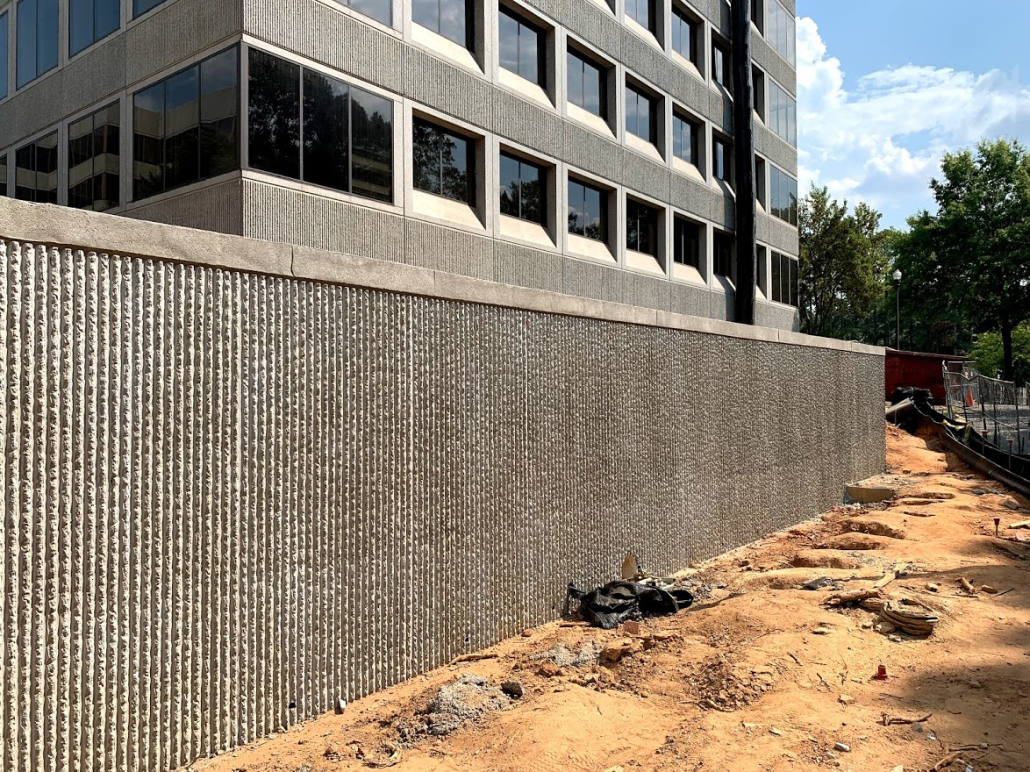
Retaining walls serve as critical infrastructure throughout the Greater Toronto Area, holding back thousands of tons of soil on commercial properties, municipal parks, roadways, and institutional campuses. When these structures fail, the consequences extend far beyond aesthetic concerns—collapsed retaining walls can damage buildings, compromise utilities, create dangerous conditions for pedestrians and vehicles, and trigger liability issues that cost property owners hundreds of thousands of dollars.
For commercial property managers and municipal facility operators in the GTA, the question isn’t whether your retaining walls will eventually need attention. The real question is whether you’ll address structural concerns proactively through strengthening measures or reactively after a failure occurs. The difference between these approaches can mean the difference between a $30,000 preventative strengthening project and a $200,000 emergency reconstruction after a collapse.
Toronto’s unique climate—with severe freeze-thaw cycles, heavy spring runoff, and aging infrastructure throughout the city—accelerates retaining wall deterioration. Understanding the warning signs, knowing your strengthening options, and working with experienced concrete restoration contractors ensures these essential structures continue protecting your property safely and cost-effectively for decades to come.
Recognizing When Commercial Retaining Walls Need Strengthening
Early detection of retaining wall problems provides the widest range of cost-effective solutions. Property managers and municipal operators who conduct regular inspections and understand critical warning signs can intervene before minor issues escalate into structural failures.
Visual Indicators of Structural Compromise
Several observable signs indicate a retaining wall requires professional assessment and likely strengthening intervention. Property managers should document and monitor these conditions:
Outward movement or bulging represents one of the most serious warning signs. Even slight forward lean—as little as 1-2 inches over the wall’s height—indicates the structure is losing its battle against soil pressure. In Toronto, we frequently see this develop gradually over years as freeze-thaw cycles and water infiltration progressively undermine wall stability.
Cracking patterns tell important stories about what’s happening structurally. Horizontal cracks running along mortar joints or through concrete blocks suggest the wall is bending under excessive pressure. Vertical cracks near wall corners or stepped cracks following mortar lines indicate differential settlement or inadequate reinforcement. While minor surface cracks may be cosmetic, widening cracks—especially those exceeding 1/4 inch—demand immediate professional evaluation.
Drainage issues and water staining often precede structural failure. Efflorescence (white mineral deposits), rust staining from reinforcement corrosion, or consistently wet areas below the wall indicate water isn’t draining properly. In the GTA’s clay-heavy soils, poor drainage creates hydrostatic pressure that can easily exceed the wall’s design capacity, particularly during spring thaw when groundwater levels peak.
Hidden Structural Concerns
Not all critical retaining wall problems are visible from casual observation. Property managers should be alert to these additional indicators:
Soil erosion around the wall’s base or showing through weep holes suggests the backfill is washing away, removing crucial support. Settlement or cracking in adjacent pavement, sidewalks, or structures indicates the retained soil mass is shifting. Tilting fence posts or damaged landscaping above the wall often signal soil movement that’s stressing the wall structure.
For commercial and municipal properties in Toronto built before 2000, many retaining walls were constructed without modern engineering standards, adequate drainage systems, or proper reinforcement. These older structures may show no obvious distress yet lack the structural capacity to meet current safety requirements—particularly as they age and material properties degrade.
Climate-Driven Deterioration in the GTA
Toronto’s climate creates specific retaining wall challenges that property managers must understand. Our region experiences pronounced freeze-thaw cycles that cause water trapped behind walls to expand, generating immense pressure. The GTA’s clay soils expand when wet and contract when dry, creating cyclical stress on retaining structures. Spring snowmelt and heavy rainfall events can saturate soil rapidly, dramatically increasing lateral loads.
These factors mean that retaining walls in the Greater Toronto Area deteriorate faster than similar structures in more moderate climates. A wall that might last 50 years in a temperate region may require strengthening after just 20-30 years in Toronto—sooner if drainage was inadequate in the original design.
Strengthening Methods for Existing Retaining Walls
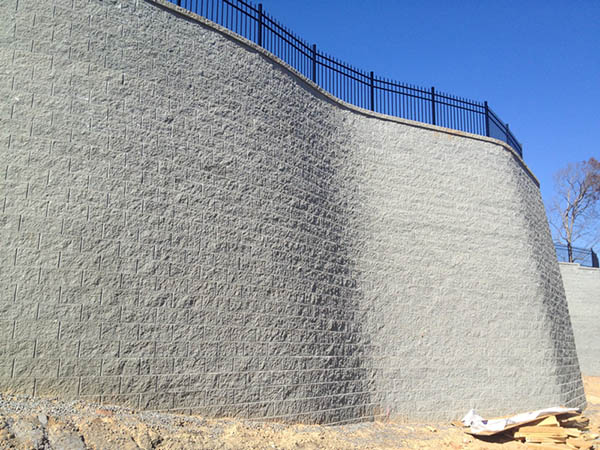
When assessment confirms a retaining wall needs reinforcement, property managers have several proven strengthening approaches. The optimal method depends on the wall’s condition, failure mode, site constraints, and budget considerations.
Soil-Side Reinforcement and Tiebacks
For walls showing outward movement or inadequate capacity to resist soil pressure, soil-side reinforcement provides highly effective strengthening. This approach involves installing ground anchors or tiebacks that extend deep into stable soil behind the wall, creating tension elements that counteract the forward pressure.
Helical tiebacks consist of steel shafts with helical plates that screw into the soil behind the wall. These anchors connect to the wall face through steel rods or cables, pulling the structure back against the soil mass. Property managers appreciate this method because installation requires minimal excavation—crews can often complete work without disrupting operations on either side of the wall.
Deadman anchors use buried concrete or steel masses connected to the wall through tension rods. While effective, this traditional approach requires more extensive excavation behind the wall and typically costs 30-40% more than helical systems for equivalent capacity.
For commercial properties in Toronto, tieback systems offer particular advantages. Installation can proceed year-round with appropriate frost protection measures, the work causes minimal disruption to tenants or adjacent properties, and the strengthening is largely invisible—important for properties where aesthetics matter.
Cost considerations for tieback strengthening typically range from $150-$300 per linear foot depending on wall height, soil conditions, and required anchor capacity. For a 50-foot section of failing 8-foot tall retaining wall, property managers should budget $7,500-$15,000 for comprehensive tieback reinforcement—substantially less than the $40,000-$60,000 cost of complete wall replacement.
Structural Buttressing and Counterfort Systems
When access behind the wall is limited or soil conditions make tiebacks impractical, structural buttressing strengthens walls from the front. This method involves constructing reinforced concrete buttresses at intervals along the wall face, creating additional support that resists the outward pressure.
Buttress spacing and size depend on the specific loads and wall condition, but typical designs place buttresses every 8-12 feet for residential-height walls. While buttressing reduces usable space in front of the wall, it provides extremely robust strengthening and can often salvage walls that are significantly compromised.
For municipal projects and commercial properties where space permits, buttressing offers excellent long-term reliability. The additional concrete mass also provides thermal protection that reduces freeze-thaw cycling in the original wall—extending overall structure life.
Concrete Restoration and Reinforcement Enhancement
Walls with sound structural alignment but deteriorated concrete or inadequate reinforcement benefit from restoration and enhancement techniques. These approaches strengthen the existing structure without adding major new components.
Shotcrete overlay systems involve applying reinforced concrete over the existing wall face, typically 2-4 inches thick with welded wire fabric or rebar reinforcement. This method significantly increases wall capacity while addressing surface deterioration. For Toronto applications, modern shotcrete mixes with air entrainment and low permeability provide excellent freeze-thaw resistance.
Property managers should expect shotcrete strengthening costs of $40-$80 per square foot of wall area, including surface preparation, reinforcement installation, and concrete application. This positions shotcrete as a mid-range option—more expensive than tiebacks for simple strengthening but more economical than complete replacement while substantially extending wall life.
Fiber-reinforced polymer (FRP) strengthening represents newer technology that’s gaining adoption for certain applications. Carbon fiber or fiberglass sheets bonded to the wall face with epoxy resins can significantly increase flexural strength and crack resistance. While FRP systems work exceptionally well in some situations, Toronto’s temperature extremes require careful material selection and installation protocols to ensure long-term bond integrity.
Drainage Improvement as Strengthening Strategy
Many retaining wall problems stem from inadequate drainage rather than insufficient structural capacity. For walls with good alignment but showing signs of water pressure damage, drainage improvements can effectively “strengthen” the structure by reducing the loads it must resist.
Comprehensive drainage upgrades include installing or rehabilitating weep holes, adding perforated drain pipes behind the wall connected to proper outlets, placing free-draining granular backfill adjacent to the wall, and improving surface water management to prevent water from entering behind the wall.
The beauty of drainage-focused strengthening is cost-effectiveness. Property managers can often address significant wall stability issues for $50-$150 per linear foot—less than half the cost of structural strengthening methods. Combined with modest structural repairs, drainage improvements provide excellent value when walls haven’t yet developed serious structural deficiencies.
Safety Regulations and Building Code Compliance in Toronto
Retaining walls on commercial and municipal properties in the Greater Toronto Area must comply with Ontario Building Code (OBC) requirements and municipal regulations. Understanding these standards helps property managers recognize when strengthening becomes legally necessary, not just advisable.
Structural Safety Requirements
The Ontario Building Code establishes minimum structural safety standards for retaining structures. Walls exceeding 1.0 meters (approximately 3.3 feet) in height generally require engineered design and construction permits. For walls over 1.5 meters, professional engineering is mandatory, with design accounting for soil properties, surcharge loads, seismic considerations, and environmental factors including freeze-thaw effects.
When strengthening existing retaining walls, property managers should recognize that major structural modifications trigger current code compliance requirements. Simply repairing a failing wall doesn’t exempt the project from modern safety standards—if the work involves substantial strengthening, the wall must meet current OBC provisions.
Liability Considerations for Property Owners
Commercial property owners and municipal operators face significant liability if retaining wall failures cause injury or property damage. Toronto courts have consistently held property owners responsible when inadequate maintenance or delayed repairs lead to foreseeable failures.
From a risk management perspective, documented regular inspections and timely response to identified deficiencies provide important liability protection. Property managers should maintain records of periodic inspections, document any observed changes or developing issues, and obtain professional engineering assessments when warning signs appear and implement recommended strengthening measures promptly.
This documentation becomes critical if wall failure occurs—demonstrating proactive monitoring and good faith efforts to maintain the structure can significantly reduce liability exposure even if the failure causes damage.
Municipal Permit Requirements
Most retaining wall strengthening projects in Toronto require building permits, particularly when structural modifications occur. Property managers should engage contractors experienced with municipal permitting processes who can prepare necessary documentation including structural drawings and engineering specifications, soil reports when required, and construction plans addressing safety and erosion control.
Permit timelines vary, but property managers should expect 4-8 weeks for permit approval on straightforward strengthening projects. Complex situations may require longer review periods, particularly if the work affects municipal right-of-way or involves walls near property boundaries.
Preventing Future Retaining Wall Deterioration
After investing in retaining wall strengthening, property managers benefit enormously from implementing preventative maintenance programs that protect the investment and minimize future intervention needs.
Regular Inspection Protocols
Systematic inspection catches developing problems early when solutions remain simple and economical. Commercial and municipal property managers should establish biannual inspection routines—typically spring and fall—documenting wall condition through photographs and written observations.
Key inspection points include checking for new cracks or crack growth, verifying proper drainage function through weep holes, examining wall alignment using a level or plumb bob, assessing any vegetation growth that might damage the structure, and evaluating conditions of adjacent areas including pavement and landscaping.
Early detection of minor issues allows intervention before significant deterioration occurs. A $500 crack repair today can prevent a $15,000 strengthening project five years later.
Drainage Maintenance
Effective drainage represents the single most important factor in long-term retaining wall performance. Property managers should implement routine maintenance that keeps drainage systems functioning optimally.
This includes clearing weep holes and drain outlets at least twice yearly, ensuring downspouts and surface water direct away from the wall, removing debris and vegetation that blocks drainage paths, and inspecting and cleaning subsurface drainage systems periodically.
In Toronto’s climate, special attention to drainage before winter prevents ice formation that can damage walls. Similarly, spring inspections after snowmelt help identify any damage that occurred during winter months.
Vegetation Management
Tree and shrub roots can exert tremendous pressure on retaining walls while disrupting drainage systems. Property managers should avoid planting large trees within 10-15 feet of retaining walls and remove volunteer tree growth behind or near walls promptly. Even ornamental plantings should be selected carefully—deep-rooted species belong away from wall areas.
That said, appropriate groundcover vegetation on slopes above walls can reduce erosion and water infiltration. Property managers should consult with landscape professionals familiar with retaining wall environments to select beneficial plantings.
Winter Protection Measures
Toronto winters create harsh conditions for retaining walls. Property managers can reduce seasonal damage through several protective measures including avoiding snow piling against walls during clearing operations, using calcium chloride or calcium magnesium acetate de-icing products rather than sodium chloride which accelerates concrete deterioration, and promptly repairing any cracks before winter to prevent water infiltration and freeze-thaw damage.
These preventative measures require minimal investment but substantially extend strengthened wall life—helping property managers maximize their strengthening project ROI.
Making Strategic Decisions About Wall Strengthening
Retaining wall strengthening represents a significant capital investment, and property managers need frameworks for making sound decisions about timing, scope, and methodology.
Cost-Benefit Analysis Framework
When evaluating whether to strengthen existing walls versus complete replacement, property managers should consider several factors. If the existing wall has good alignment and sound foundation with deterioration limited to upper portions or surface damage, strengthening typically costs 40-60% less than replacement while achieving similar service life extension.
However, walls with foundation problems, extensive structural damage throughout, or original construction that was grossly inadequate may prove false economy to strengthen. In these situations, the more substantial investment in replacement provides better long-term value.
Professional structural assessment by engineers experienced with retaining walls provides the foundation for these decisions. The $2,000-$5,000 spent on comprehensive engineering evaluation often saves tens of thousands by identifying the most cost-effective solution.
Timing Strategic Interventions
The optimal timing for retaining wall strengthening balances risk management against capital planning constraints. Property managers should consider strengthening when visible warning signs appear such as cracking, movement, or drainage issues; the wall approaches or exceeds its original design life (typically 30-50 years); adjacent development or changes in use increase loading; or property improvements make wall failure increasingly costly.
Waiting until emergency conditions develop almost always costs more—both because of higher repair costs under urgent timelines and potential costs from damage the failure causes. Proactive strengthening when inspections first identify concerns provides the most favorable cost outcomes.
Protecting Your Commercial Property Investment
Retaining walls throughout the Greater Toronto Area represent critical infrastructure that property managers cannot afford to neglect. Whether supporting parking areas, creating level building pads, or stabilizing slopes on institutional campuses, these structures require attention to maintain safety and protect property values.
The commercial and municipal property managers who achieve the best outcomes approach retaining walls proactively—conducting regular inspections, addressing problems while they remain manageable, and investing in quality strengthening solutions when assessment indicates the need. This proactive approach consistently delivers better safety outcomes, lower total costs, and fewer operational disruptions than reactive responses to wall failures.
Toronto’s challenging climate and aging infrastructure inventory mean that retaining wall strengthening will remain an ongoing need throughout the region. Property managers who develop relationships with qualified contractors and engineers position themselves to address these needs efficiently when they arise.
Partner With Proven Concrete Strengthening Expertise
Nusite Group has strengthened and restored retaining walls throughout the Greater Toronto Area for over 30 years. Our team brings the engineering expertise, construction capabilities, and project management experience that commercial and municipal clients require for successful retaining wall strengthening projects.
We understand Toronto’s unique climate challenges and soil conditions, providing solutions engineered for long-term performance through decades of freeze-thaw cycles and challenging weather. From initial structural assessment through final construction and beyond, we deliver the comprehensive foundation and concrete restoration services that property managers trust.
Whether your property requires tieback installation, structural buttressing, shotcrete overlay, or comprehensive drainage improvements, our experienced crews complete projects on schedule with minimal disruption to your operations. Our commitment to quality workmanship and attention to detail has made us the concrete restoration contractor that Toronto property managers rely on for critical infrastructure projects.
Contact Nusite Group today for a professional retaining wall assessment. Let us evaluate your property’s specific conditions and develop cost-effective strengthening solutions that protect your investment, ensure safety, and provide decades of reliable performance.


