
Understanding Podium Deck Waterproofing: Challenges and Solutions

Podium decks represent one of the most critical—and challenging—waterproofing applications in commercial and mixed-use construction across the Greater Toronto Area. These elevated concrete slabs form the foundation for building towers while spanning over retail spaces, parking areas, amenities, or public plazas below. Unlike conventional roofs that protect unoccupied attic spaces, podium deck waterproofing failures cause immediate damage to revenue-generating commercial tenants, parking revenue, building systems, and high-value interior finishes. For property managers, facility directors, and general contractors responsible for mixed-use developments, office towers with retail podiums, condominium buildings, and institutional campuses, understanding podium deck waterproofing systems and their unique performance requirements is essential to protecting significant real estate investments.
Established in 1990, Nusite Group has executed podium deck waterproofing, traffic coating systems, and concrete rehabilitation on commercial and institutional properties throughout the GTA and Southern Ontario. This technical overview explains podium deck construction characteristics, waterproofing challenges specific to these assemblies, proven system solutions, and maintenance strategies ensuring long-term performance.
What Are Podium Decks and Why They Dominate GTA Development
Podium decks have become ubiquitous in Toronto’s urban development landscape. These structural concrete slabs support residential or office towers while creating separation between different building uses. The typical configuration places retail, commercial amenities, parking, or public gathering spaces at grade and lower levels, with a waterproofed podium deck at the second, third, or fourth floor level forming the base for tower construction above.
This design approach maximizes development density on constrained urban sites. Property developers can provide street-level retail activating pedestrian environments, structured parking meeting zoning requirements, and tower floor plates optimized for residential or office use—all within a single integrated building. The GTA’s intensification policies encouraging mixed-use development and transit-oriented density have made podium deck construction the dominant typology for new urban buildings.
However, this construction approach creates a critical vulnerability. The podium deck must function as a waterproof barrier protecting everything below while supporting vehicular traffic, landscaped amenity spaces, or building components above. Unlike a conventional roof where minor leaks cause limited damage, podium deck waterproofing failures directly impact occupied commercial spaces, parking structures generating revenue, electrical rooms housing critical building systems, and retail tenants with stringent lease agreements regarding building performance.
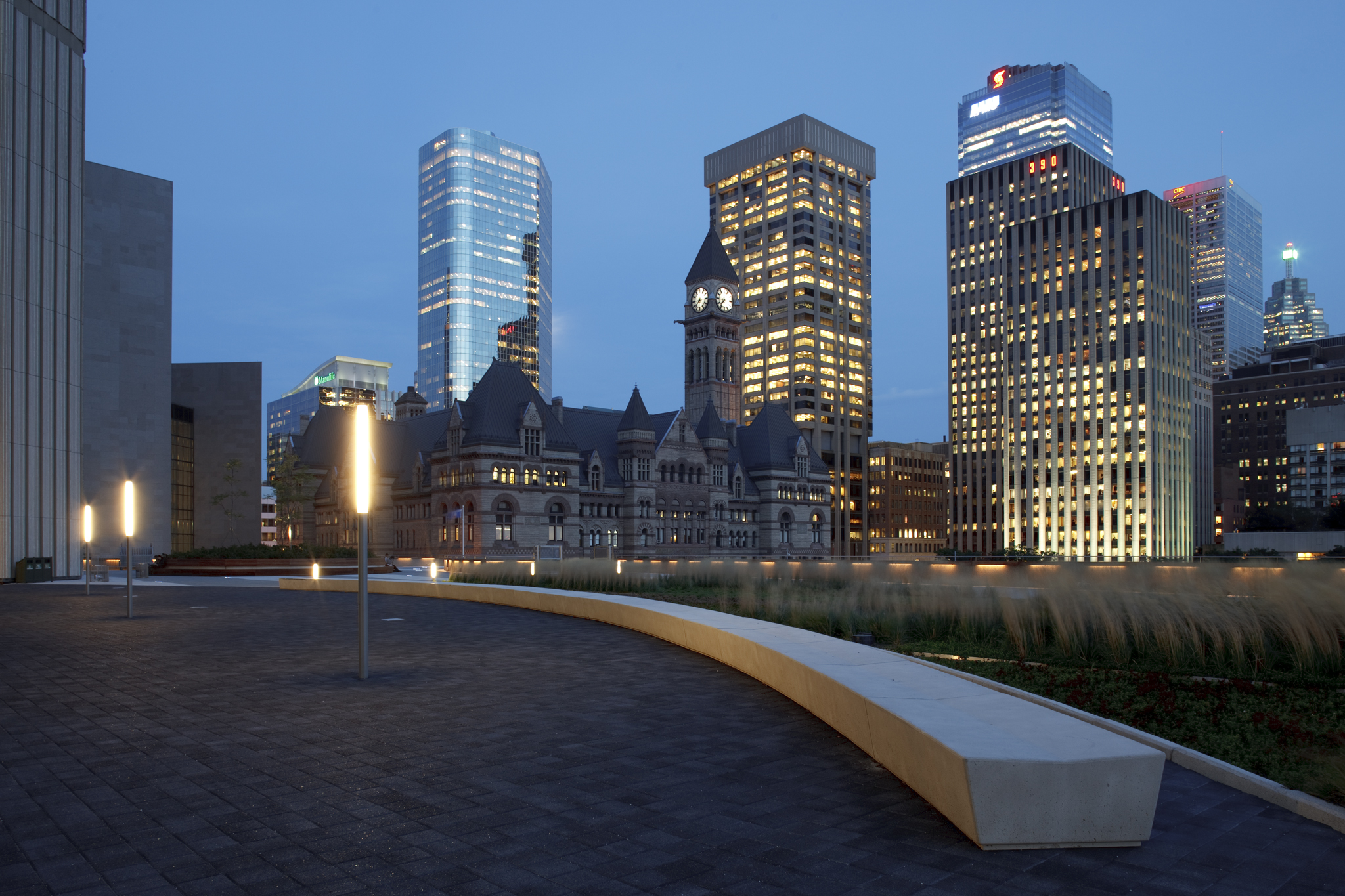
Unique Waterproofing Challenges in Podium Deck Construction
Structural Movement and Deck Cracking
Podium decks experience more structural movement than conventional roofs due to several factors. Temperature differentials between exposed deck surfaces and protected areas below create thermal expansion and contraction. Tower structures above impose concentrated loads at column locations, causing localized deflection. Concrete shrinkage during curing and long-term creep under sustained loads create ongoing dimensional changes. Seismic design requirements in some applications introduce additional movement considerations.
This movement translates directly to the concrete deck surface. Construction joints, control joints, and inevitable shrinkage cracks occur throughout the slab. Unlike buried foundations where minor cracks remain tolerable, podium deck cracks provide direct pathways for water infiltration into occupied spaces below. Waterproofing systems must accommodate this movement without membrane failure, maintain integrity across joints and cracks, and remain flexible over decades of repeated thermal cycling.
Traffic Loading and Mechanical Damage
Many podium decks support vehicular traffic—residential visitor parking, service vehicle access, loading areas, or valet parking operations. Tire abrasion, snow plow equipment, impact from vehicle operations, and concentrated wheel loads all stress waterproofing membranes. The waterproofing system must function simultaneously as a durable wearing surface and a watertight barrier.
Landscaped podium decks face different but equally demanding conditions. Maintenance equipment traffic, irrigation system installation and repairs, root penetration from plantings, and concentrated loads from soil, pavers, or amenity structures all threaten membrane integrity. Construction activity during building fit-out phases poses particular risk, as trades installing building systems often treat podium decks as work platforms without recognizing the waterproofing system beneath.
Complex Drainage Requirements
Effective podium deck waterproofing depends fundamentally on positive drainage preventing water accumulation. However, achieving proper drainage on podium decks presents challenges absent in conventional roofing. Architectural requirements for level plazas, accessible pathways meeting barrier-free design standards, integration with building entries and retail storefronts, and coordination with tower column locations all constrain drainage design flexibility.
Drainage systems must handle not just precipitation but also irrigation runoff from landscaped areas, snowmelt during spring thaw events, and occasional flooding from mechanical equipment malfunctions. Internal roof drains, scuppers, perimeter drainage, and positive slope to all discharge points must be coordinated during structural design—correcting inadequate drainage after concrete placement proves extremely costly.
Coordination with Multiple Building Systems
Podium decks don’t exist in isolation but integrate with numerous other building systems. Mechanical and electrical penetrations serving tower and podium uses puncture the waterproofing membrane. Structural columns supporting towers above require special detailing at deck penetrations. Building envelope transitions where tower walls meet podium surfaces create complex flashing conditions. Perimeter details at property lines, adjacent buildings, or public sidewalks demand careful waterproofing termination.
Each penetration, transition, or termination represents a potential failure point. General contractors managing podium deck construction must coordinate waterproofing installation with structural concrete, mechanical rough-in, electrical systems, architectural finishes, and landscaping—all while maintaining waterproofing system continuity and warranty coverage.

Podium Deck Assembly Types and Waterproofing Approaches
Protected Membrane Assembly (Inverted Roof)
The protected membrane assembly places waterproofing directly on the structural concrete deck, then protects it with insulation, drainage layers, and wearing surfaces above. This configuration shields the membrane from UV exposure, temperature extremes, and mechanical damage—extending service life significantly compared to exposed membranes.
The typical assembly consists of the structural concrete deck with proper slope to drainage, waterproofing membrane adhered or mechanically fastened to the deck, extruded polystyrene insulation protecting the membrane, a drainage layer allowing water to reach roof drains, filter fabric preventing fines from clogging drainage, and finally the wearing surface such as pavers, concrete, or landscaping components.
This approach offers several advantages. The membrane operates at relatively stable temperatures, protected from daily and seasonal extremes. Physical protection from the overlying assembly prevents punctures, tears, and UV degradation. Multiple layers above the membrane provide redundancy—minor damage to wearing surfaces doesn’t immediately compromise waterproofing. The assembly accommodates various finish options including pavers, poured concrete, planting beds, and amenity installations.
However, protected membrane assemblies require careful design and execution. Adequate insulation thickness must be provided for thermal performance without creating excessive dead loads. The drainage layer must have capacity to handle design storm events without water backing up. Membrane installation requires perfect execution since subsequent repairs are extremely difficult and costly. Any waterproofing failure necessitates removing potentially all overlying materials to access and repair the membrane.
Trafficked Membrane Assembly
Trafficked membrane assemblies place the waterproofing system at the wearing surface, where it functions simultaneously as waterproofing and as a durable traffic surface. These systems typically use polyurethane, polyurea, or methyl methacrylate (MMA) traffic deck coatings designed specifically for vehicular or pedestrian traffic exposure.
The assembly begins with the structural concrete deck with positive slope to drainage, followed by concrete substrate preparation and repair as needed, primer application sealing the concrete, base coat waterproofing membrane with flexibility to accommodate deck movement, broadcast aggregate providing slip resistance and wear protection, and topcoat sealing the aggregate and providing the final wearing surface.
Trafficked systems offer distinct advantages. Waterproofing is visible and accessible for inspection and maintenance. Repairs can be executed quickly without removing overlying assemblies. The thin profile minimizes dead loads and preserves vertical clearances. Installation typically proceeds faster than protected membrane assemblies. Cost is generally lower than protected assemblies for vehicular applications.
The trade-offs include direct exposure to UV, temperature extremes, and mechanical damage requiring more frequent maintenance and recoating. Service life is typically shorter than protected membranes, ranging from 15 to 25 years versus 30 to 50 years for protected assemblies. The membrane must be carefully selected for the specific traffic and exposure conditions. Winter maintenance with plows and de-icing chemicals accelerates wear.
Waterproofing System Selection Criteria
Selecting the appropriate podium deck waterproofing system requires evaluating multiple factors specific to each project. The intended use of the deck surface determines whether trafficked or protected membrane assembly is appropriate. Vehicular parking typically uses trafficked systems, while landscaped amenity decks favor protected assemblies. Pedestrian plazas may use either approach depending on aesthetic requirements and maintenance preferences.
Structural considerations affect system selection:
Key Structural Factors:
- Available dead load capacity for assembly thickness and weight
- Deck deflection characteristics affecting membrane flexibility requirements
- Column penetration locations requiring special detailing
- Expansion joint locations and movement magnitudes
Climate exposure in the GTA creates specific system requirements. Freeze-thaw cycling demands flexible membranes that maintain elasticity at low temperatures. De-icing salt exposure for trafficked systems requires chemical-resistant formulations. Temperature extremes from -30°C winter conditions to +35°C summer heat stress membrane bonds and flexibility. Ponding water potential from snow accumulation and spring melt requires positive drainage and water-resistant systems.
Budget parameters balance initial installation costs against lifecycle costs. Protected membrane assemblies typically cost $30 to $60 per square foot installed including all layers and finishes. Trafficked membrane systems range from $15 to $30 per square foot for parking applications. However, lifecycle cost analysis must account for maintenance, recoating frequencies, and expected service life—often favoring higher initial investment in protected assemblies for long-term value.
Critical Installation Details and Common Failure Points
Drainage System Integration
The most critical podium deck detail is often the most overlooked—positive drainage to all discharge points. Structural concrete placement must achieve minimum slopes of 1 to 2 percent throughout the deck. Low spots, reverse slopes, or areas without drainage paths create ponding that overwhelms waterproofing systems and accelerates deterioration.
Floor drains require careful detailing with the waterproofing membrane turned up and clamped or mechanically fastened to drain flanges. Fabric reinforcement around drain perimeters provides additional crack resistance at these stress concentration points. Drain sump depths must provide adequate capacity, and overflow provisions prevent catastrophic flooding if primary drains become blocked.
Penetration Flashing
Every penetration through the podium deck—structural columns, mechanical pipes, electrical conduits, railing posts, equipment supports—requires proper flashing integrating with the waterproofing membrane. Prefabricated boots, custom-fabricated sheet metal flashings, or liquid-applied membrane build-ups at penetrations must be carefully detailed and installed to prevent water infiltration.
Column penetrations at the deck surface present particular challenges. Large diameter structural columns supporting towers above create significant interruptions in the waterproofing plane. Detailing must accommodate differential movement between column and deck, maintain waterproofing continuity around the full perimeter, and integrate with whatever finishes surround the column at the podium level.
Perimeter Terminations and Edge Details
Podium deck perimeters require careful waterproofing termination. At building walls, the membrane must turn up and integrate with wall waterproofing or through-wall flashing systems. Termination bars or reglets mechanically fasten the membrane, with sealant providing the final weather seal. At property lines or openings, edge details must prevent water migration behind or beneath the waterproofing system while accommodating thermal movement.
Expansion joints in the podium deck require special treatment. These joints accommodate significant structural movement and cannot be bridged by rigid waterproofing. High-movement joint sealants, proprietary expansion joint covers, or flexible membrane systems designed specifically for expansion joint applications must be specified. Failure to properly detail expansion joints represents one of the most common podium deck waterproofing failures.
Maintenance and Long-Term Performance
Podium deck waterproofing requires proactive maintenance to achieve design service life. For trafficked membrane systems, annual inspections should document surface wear patterns, joint sealant condition, drainage system functionality, and any visible damage. High-traffic areas showing wear may require topcoat renewal every 5 to 10 years. Complete recoating typically becomes necessary after 15 to 25 years depending on traffic intensity and exposure.
Protected membrane assemblies require less frequent intervention but demand systematic monitoring. Annual inspections examine wearing surfaces for settlement, cracking, or displacement that might indicate underlying drainage problems or membrane damage. Drainage system maintenance includes cleaning roof drains and scuppers, verifying positive water flow during heavy rain events, and removing debris that could clog drainage layers. Landscape maintenance must avoid root systems penetrating waterproofing and equipment traffic damaging protected membranes.
Early repair of minor defects prevents major failures. Small cracks in trafficked surfaces should be sealed promptly. Damaged pavers or displaced materials on protected assemblies should be reset. Joint sealants showing deterioration require resealing before water infiltration begins. Property managers implementing these preventative maintenance protocols extend podium deck waterproofing service life significantly while avoiding catastrophic failures requiring complete assembly removal and replacement.
Nusite Group’s Podium Deck Waterproofing Expertise
With over 30 years of waterproofing and concrete rehabilitation experience, Nusite Group has executed podium deck waterproofing on mixed-use developments, office buildings, condominium projects, and institutional campuses throughout the GTA and Southern Ontario. Our installations protect retail tenants, parking operations, building systems, and property values while withstanding the demanding exposure conditions characteristic of urban podium deck applications.
We provide comprehensive podium deck solutions integrating concrete substrate preparation and repair, drainage system evaluation and improvements, waterproofing membrane installation using protected or trafficked assemblies, traffic coating systems for vehicular or pedestrian applications, and coordination with architectural finishes and building systems. Our technical approach addresses the unique challenges podium decks present—structural movement accommodation, complex penetration detailing, drainage integration, and occupied building coordination.
Our project teams execute podium deck waterproofing in operational buildings, phasing work to maintain tenant access and building operations, protecting retail spaces and parking areas during construction, and implementing safety protocols for occupied environments. We coordinate with general contractors, structural engineers, architects, and landscape designers ensuring waterproofing systems integrate seamlessly with overall building design and performance requirements.
Frequently Asked Questions
How long should podium deck waterproofing last before requiring replacement?
Service life depends on system type and exposure conditions. Protected membrane assemblies properly installed and maintained typically provide 30 to 50 years of service. The membrane remains protected from UV, temperature extremes, and mechanical damage, allowing extended performance. Trafficked membrane systems on parking decks generally last 15 to 25 years before requiring complete recoating or replacement. High-traffic areas may need topcoat renewal every 5 to 10 years. Landscaped podium decks with protected assemblies and minimal traffic can exceed 40 years when drainage systems function properly and landscape maintenance avoids membrane damage. Property managers should plan capital replacement on these timelines while implementing preventative maintenance extending actual service life.
What causes most podium deck waterproofing failures?
The majority of failures stem from inadequate drainage rather than membrane defects. Podium decks installed without proper slope, insufficient drainage capacity, or clogged drains experience ponding water that eventually finds pathways through membranes. Penetration flashing failures at columns, pipes, and equipment supports represent the second most common failure mode. Movement joint failures where expansion joints lack proper detailing allow water infiltration. Construction damage during building fit-out when trades treat podium decks as work platforms without protecting waterproofing causes many premature failures. Proper initial design with adequate drainage, careful installation with quality control, and protection during construction prevent most podium deck waterproofing problems.
Can podium deck waterproofing be repaired without removing everything above it?
For protected membrane assemblies, major repairs typically require removing overlying materials to access the membrane. However, targeted repairs addressing localized failures may be possible through selective removal of pavers, insulation, and drainage layers in affected areas only. Infrared thermography and moisture mapping can isolate leak locations, minimizing demolition extent. For trafficked membrane systems, repairs are straightforward—damaged areas are cleaned, prepared, and recoated using compatible materials. This represents a significant advantage of trafficked systems for parking applications where repair accessibility matters. Property managers should specify waterproofing systems appropriate to anticipated maintenance capabilities and budget constraints.
Protect Your Property Investment with Proven Podium Deck Solutions
Nusite Group has delivered podium deck waterproofing, traffic coating systems, and concrete rehabilitation on mixed-use developments, commercial buildings, and institutional properties across the GTA and Southern Ontario since 1990. Our installations protect retail tenants, parking operations, building systems, and interior finishes while providing durable, long-lasting performance in demanding urban environments.
Fully bonded, licensed across Ontario, and insured to $10 million in liability coverage, Nusite Group operates as a dependable specialty contractor for property managers, facility directors, and general contractors who require technical expertise and proven execution on podium deck waterproofing projects.
Request a consultation to discuss your podium deck waterproofing requirements or explore how Nusite Group can support your project with trafficked membrane systems, protected membrane assemblies, or comprehensive rehabilitation solutions.


