
Commercial Stamped Concrete: Combining Function and Design for Business Spaces
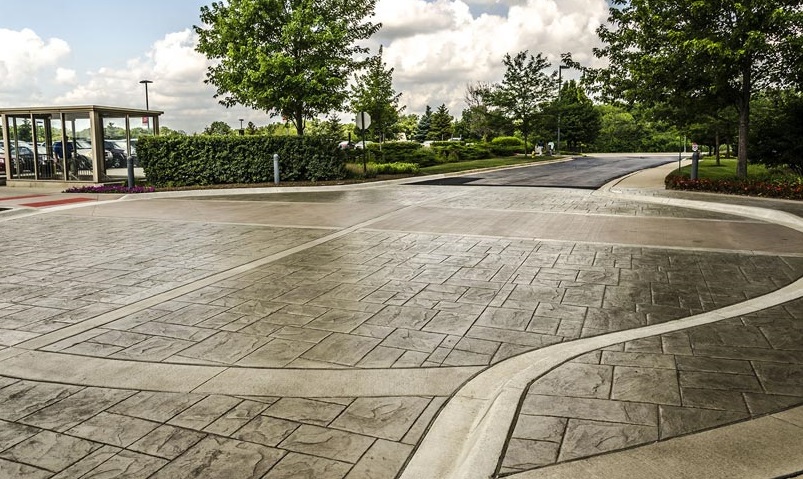
Commercial stamped concrete has evolved from a purely decorative finish to a performance-driven flooring system that delivers durability, low maintenance, and design flexibility across retail environments, hospitality venues, institutional campuses, and corporate facilities. For property managers, facility directors, and general contractors responsible for high-traffic commercial spaces throughout the Greater Toronto Area, understanding when stamped concrete offers functional advantages—and how to specify systems that withstand demanding operational conditions—ensures long-term asset value.
Established in 1990, Nusite Group has expanded its concrete and structural expertise to include commercial flooring systems, delivering stamped concrete, polished concrete, and epoxy flooring solutions on institutional, retail, and commercial properties across the GTA and Southern Ontario. This technical overview explains the performance characteristics of commercial stamped concrete, appropriate applications, and specification considerations for large-scale building projects.
Understanding Commercial Stamped Concrete Systems
Beyond Decorative Finishes: Engineered Surface Performance
Commercial stamped concrete differs fundamentally from residential decorative applications. While pattern and texture provide aesthetic value, commercial systems prioritize:
- Abrasion resistance under foot traffic, wheeled carts, and equipment movement
- Slip resistance meeting commercial safety standards and liability requirements
- Freeze-thaw durability in exterior applications exposed to Ontario’s climate
- Chemical resistance in food service, retail, and light industrial environments
- UV stability preventing color fading in exterior plazas and walkways
- Compressive strength supporting concentrated loads in commercial occupancies
For general contractors specifying flooring systems on commercial projects, stamped concrete functions as an engineered surface treatment—not merely a cosmetic overlay.
System Components and Material Specifications
Commercial stamped concrete installations consist of multiple integrated layers:
Base Concrete Slab
- Minimum 4-6 inch thickness for commercial applications
- 3000-4000 psi compressive strength as baseline
- Properly compacted subgrade meeting geotechnical specifications
- Reinforcement (wire mesh or fiber) to control shrinkage cracking
- Control joint placement per ACI guidelines
Color Hardener Layer
- Dry-shake color hardener broadcast onto fresh concrete surface
- Integral pigmentation providing fade resistance and wear durability
- Typical application rates: 60-100 lbs per 100 square feet
- Creates a densified, abrasion-resistant wearing surface
Release Agent Application
- Powder or liquid release preventing stamping tool adhesion
- Secondary color layer providing antiquing or highlight effects
- Must be compatible with sealer systems for proper bond
Pattern Stamping
- Texture mats pressed into plastic concrete to create surface relief
- Timing critical—concrete must be firm enough to support workers but plastic enough to receive pattern
- Pattern consistency requires skilled installation teams
Sealer System
- Acrylic, polyurethane, or epoxy-based protective coatings
- Provides stain resistance, moisture protection, and surface sheen
- Requires reapplication on maintenance cycles (typically 2-5 years, depending on traffic)
Distinguishing Commercial from Residential Applications
Commercial stamped concrete installations demand specification rigor absent from residential projects:
- Traffic loading analysis determining appropriate concrete strength and sealer durability
- Slip resistance testing (ASTM C1028 or equivalent) verifying compliance with building codes and accessibility standards
- Color consistency across large areas requiring batch control and installation sequencing
- Joint detailing coordinating stamped patterns with structural control joints and construction joints
- Maintenance protocols establishing cleaning, resealing, and repair procedures
Property managers overseeing retail centers, hospitality properties, or institutional campuses require these performance specifications to protect capital investments and manage ongoing operational costs.
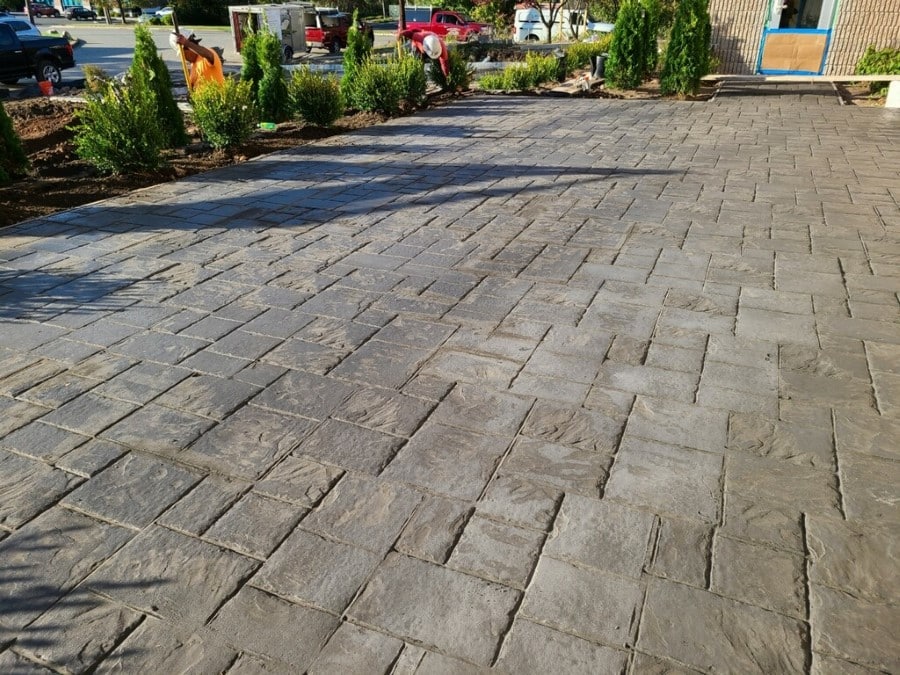
Commercial Applications for Stamped Concrete Systems
Exterior Plazas and Pedestrian Zones
Stamped concrete provides durable, attractive surfaces for high-traffic exterior environments:
- Retail center walkways and gathering spaces where aesthetic appeal attracts customers while withstanding continuous foot traffic
- Institutional campus pedestrian networks connecting buildings with surfaces that resist winter maintenance damage
- Corporate office plazas and courtyards creating branded environments with custom pattern and color schemes
- Hospitality venue patios and pool decks combining slip resistance with resort-quality aesthetics
For projects in the GTA, exterior stamped concrete must be engineered for freeze-thaw cycling, de-icing salt exposure, and snow removal equipment traffic—conditions that eliminate marginal installation practices.
Commercial Building Entrances and Lobbies
Interior stamped concrete delivers durability in high-impact zones:
- Retail store entrances subjected to shopping cart traffic, wet conditions, and continuous patron movement
- Hotel and restaurant lobbies requiring elegant finishes that withstand luggage carts, foot traffic, and spill exposure
- Corporate reception areas providing branded design elements with minimal maintenance requirements
- Institutional building vestibules handling heavy use while meeting accessibility and safety standards
These applications benefit from stamped concrete’s monolithic installation—no grout joints to deteriorate, no individual pavers to shift or settle.
Mixed-Use Developments and Urban Streetscapes
Large-scale urban projects increasingly specify stamped concrete for:
- Sidewalk and boulevard installations mimicking traditional materials while providing municipal durability standards
- Streetscape improvements coordinating with brick, stone, and other hardscape elements
- Transit station plazas handling extreme pedestrian volumes with low maintenance requirements
- Public-private interface zones where property owners maintain streetscape aesthetics
General contractors managing these projects benefit from stamped concrete’s installation efficiency—faster than individual unit pavers, more design flexibility than standard broom-finish concrete.
Parking Areas and Vehicular Applications
While not suitable for high-speed traffic lanes, stamped concrete serves specific vehicular functions:
- Parking lot pedestrian crossings providing visual differentiation and traffic calming
- Fire access lanes and emergency routes combining required load capacity with aesthetic consistency
- Golf cart paths and maintenance vehicle routes in institutional or resort settings
- Loading zones and service areas where controlled traffic patterns allow decorative treatments
These applications require engineering verification that base slab design accommodates vehicle loads without premature surface distress.
Performance Specifications for Commercial Stamped Concrete
Concrete Mix Design Requirements
Commercial applications demand mix designs exceeding residential standards:
Compressive Strength
- Minimum 3000 psi for pedestrian applications
- 4000+ psi for vehicular or heavy equipment zones
- 28-day strength testing verifying specified performance
Air Entrainment
- 5-8% entrained air for freeze-thaw resistance in exterior applications
- ASTM C260 compliant air-entraining admixtures
- Critical for Ontario climate conditions
Water-Cement Ratio
- Maximum 0.45 w/c ratio for durability and surface density
- Lower ratios improve abrasion resistance and reduce permeability
- Essential for exterior applications exposed to de-icing salts
Fiber Reinforcement or Wire Mesh
- Synthetic macro-fibers or welded wire fabric controlling shrinkage cracking
- Does not replace structural reinforcement but improves crack distribution
- Particularly important for large pour areas without intermediate control joints
Slip Resistance and Safety Standards
Commercial properties face liability exposure from slip-and-fall incidents. Stamped concrete must meet measurable safety thresholds:
- Static Coefficient of Friction (SCOF) minimum 0.60 for level surfaces, 0.80 for ramps per accessibility guidelines
- Wet condition testing verifying slip resistance under moisture, ice, or contamination
- Texture depth sufficient to provide traction without impeding cleaning or creating trip hazards
For property managers and facility directors, specifying slip resistance testing during installation and periodic verification during building occupancy protects against claims and ensures code compliance.
Color Stability and UV Resistance
Commercial environments demand color consistency over years of service:
- Integral color systems using iron oxide pigments providing superior UV stability compared to topical stains
- Sealer UV inhibitors protecting against fading in high-exposure locations
- Color matching protocols for repairs or expansions maintaining aesthetic continuity
Retail and hospitality properties where brand identity depends on visual consistency should specify fade-resistant color systems and maintenance resealing schedules.
Sealer Selection for Traffic and Exposure
Sealer choice determines long-term surface performance:
Acrylic Sealers
- Lower cost, easier reapplication
- Suitable for moderate pedestrian traffic
- Requires resealing every 1-3 years
- Limited chemical resistance
Polyurethane Sealers
- Enhanced abrasion resistance
- Better chemical and stain resistance
- Longer resealing intervals (3-5 years)
- Higher initial cost justified by performance in demanding environments
Epoxy Sealers
- Maximum durability for heavy traffic
- Superior chemical resistance for food service or industrial areas
- Longest service life between recoating
- Highest material and labor costs
General contractors should coordinate sealer specifications with building use, anticipated traffic, and property management maintenance capabilities.
Installation Considerations for Commercial Projects
Subgrade Preparation and Structural Support
Commercial stamped concrete performance begins below the surface:
- Geotechnical verification confirming bearing capacity adequate for intended loads
- Subgrade compaction to 95% Standard Proctor density minimum
- Vapor barrier installation beneath interior slabs preventing moisture transmission
- Perimeter drainage for exterior applications managing water infiltration
Inadequate subgrade preparation leads to settlement cracking, joint displacement, and premature surface failure—conditions particularly problematic in commercial environments where aesthetics and safety are critical.
Control Joint Planning and Pattern Integration
Control joints manage shrinkage cracking but interrupt stamped patterns. Successful commercial installations require:
- Joint spacing per ACI 302 guidelines (typically 10-15 feet for unreinforced slabs)
- Pattern alignment coordinating stamps with joint locations to minimize visual disruption
- Sawcut timing creating joints while concrete is plastic enough to accept clean cuts
- Joint sealing preventing moisture infiltration and debris accumulation
For large commercial projects—retail center plazas, institutional walkways—joint layout requires coordination between structural engineers, stamped concrete installers, and architects to balance technical requirements with design intent.
Weather and Seasonal Constraints
Ontario’s climate imposes installation windows:
Temperature Requirements
- Concrete placement prohibited when ambient temperature falls below 5°C without heated enclosures
- Hot weather (above 30°C) requires accelerated finishing, increased crew size, and evaporation retardants
- Ideal installation temperatures: 15-25°C with moderate humidity
Precipitation Concerns
- Rain during or immediately after stamping ruins surface texture and color integrity
- Exterior projects require weather forecasting and contingency scheduling
- Covered or interior installations eliminate weather risk
Property managers planning commercial stamped concrete installations should target spring and fall shoulder seasons for optimal conditions and installation quality.
Quality Control and Testing Protocols
Commercial specifications should mandate:
- Pre-installation mock-ups demonstrating pattern, color, and finish quality
- Compressive strength testing verifying mix design compliance (minimum 2 cylinders per 50 cubic yards)
- Slump testing ensuring workability without excess water addition
- Slip resistance verification on completed surfaces before project closeout
General contractors benefit from documented quality control reducing disputes, warranty claims, and performance failures.
Maintenance Requirements for Commercial Stamped Concrete
Routine Cleaning and Protection
Unlike pavers requiring joint sand maintenance or natural stone demanding specialized cleaners, stamped concrete maintenance is straightforward:
- Regular cleaning with neutral pH detergents and pressure washing (2500-3000 psi maximum)
- De-icing chemical selection avoiding ammonium sulfate or ammonium nitrate products that attack concrete
- Snow removal equipment protocols using plastic-edged plows preventing surface gouging
For facility management teams, these simple protocols reduce operational costs compared to alternative hardscape materials.
Resealing Cycles
Sealer reapplication maintains surface protection and aesthetic appearance:
- Inspection intervals annually to assess sealer condition, surface wear, and potential damage
- Resealing frequency varies by traffic intensity and sealer type (1-5 year cycles)
- Surface preparation before resealing including cleaning, minor repairs, and complete drying
- Application timing coordinated with building operations to minimize access disruption
Property managers should budget resealing as planned maintenance, not deferred capital expenditure—preventative resealing costs significantly less than surface rehabilitation from neglected protection.
Repair and Restoration Protocols
When surface damage occurs—cracking, spalling, color fading—commercial properties require professional restoration:
- Crack repair using color-matched epoxy or polyurethane injection
- Surface patching with polymer-modified repair mortars and restamping techniques
- Color restoration through topical staining or complete resealing
- Partial replacement for severely damaged sections coordinating with original installation
Nusite Group’s concrete rehabilitation expertise extends to stamped concrete repair, ensuring restored sections match surrounding areas in pattern, color, and texture.
Comparing Stamped Concrete to Alternative Commercial Hardscape Systems
Stamped Concrete vs. Interlocking Pavers
Advantages of Stamped Concrete:
- Monolithic surface without joint deterioration or weed growth
- Faster installation on large commercial projects
- Lower long-term maintenance costs
- No shifting or settling of individual units
Advantages of Pavers:
- Individual unit replacement for isolated damage
- Better performance on poor subgrades subject to settlement
- Traditional aesthetic for historic district compliance
Stamped Concrete vs. Natural Stone
Advantages of Stamped Concrete:
- Significantly lower material and installation costs
- Consistent surface flatness and accessibility compliance
- Predictable maintenance requirements and lifecycle costs
- Custom color matching to branding or architectural palettes
Advantages of Natural Stone:
- Premium aesthetic for luxury commercial applications
- Higher perceived value in hospitality and high-end retail
- Unique, non-repeating patterns
Stamped Concrete vs. Standard Concrete Finishes
Advantages of Stamped Concrete:
- Enhanced aesthetic appeal supporting property values and tenant attraction
- Differentiation of pedestrian zones, entrances, or branded areas
- Slip resistance through textured patterns
Advantages of Standard Finishes:
- Lower initial installation costs
- Simplified repair and patching
- Neutral appearance suitable for industrial or utilitarian spaces
General contractors and property managers should evaluate these trade-offs based on project budget, aesthetic requirements, and long-term operational plans.
Nusite Group’s Commercial Flooring Division
With over 30 years of concrete and structural expertise, Nusite Group has expanded into commercial flooring systems, providing stamped concrete, polished concrete, and epoxy flooring solutions on institutional, retail, hospitality, and commercial properties throughout the GTA and Southern Ontario.
Commercial-Grade Installation Standards
Our flooring division executes stamped concrete installations following commercial specifications—engineered mix designs, quality control testing, slip resistance verification, and coordination with construction schedules on occupied properties.
Integration with Structural Services
Stamped concrete projects benefit from Nusite Group’s concrete rehabilitation expertise. When existing slabs require repair, stabilization, or overlay preparation before stamped concrete installation, we provide integrated solutions eliminating coordination between multiple specialty contractors.
Large-Scale Project Experience
We work within complex construction environments—retail developments, institutional campuses, mixed-use properties—where coordination with general contractors, architects, and property management teams is essential to successful delivery.
Maintenance and Restoration Support
Beyond initial installation, our teams provide resealing services, surface repairs, and restoration work ensuring commercial stamped concrete installations maintain performance and aesthetics over decades of service life.
Frequently Asked Questions
Is stamped concrete suitable for high-traffic commercial environments?
Yes, when properly specified and installed. Commercial stamped concrete systems using appropriate concrete strengths (3000-4000+ psi), quality color hardeners, and performance sealers handle pedestrian traffic comparable to alternative hardscape materials. Key requirements include adequate subgrade preparation, proper mix design with air entrainment for freeze-thaw resistance, and maintenance resealing on appropriate cycles. Retail centers, hospitality venues, and institutional campuses successfully use stamped concrete in demanding applications. General contractors should verify that specifications meet project traffic and exposure conditions.
How does stamped concrete perform in Ontario’s winter climate?
Exterior stamped concrete engineered for freeze-thaw conditions performs reliably in the GTA climate. Critical factors include: air-entrained concrete (5-8% air content), low water-cement ratios (0.45 maximum), proper subgrade drainage preventing water accumulation beneath slabs, and sealer systems protecting surface from moisture intrusion and de-icing salt damage. Property managers should implement winter maintenance protocols using calcium chloride or calcium magnesium acetate de-icers (avoiding ammonium-based products), and schedule spring inspections to address any surface damage before minor issues propagate.
What is the expected lifespan of commercial stamped concrete?
Properly installed and maintained commercial stamped concrete provides 20-30+ years of service life. The concrete substrate itself lasts indefinitely when adequately designed for loads and climate. Surface color and texture longevity depend on sealer maintenance—resealing every 2-5 years (depending on traffic and sealer type) preserves aesthetics and protection. Facility management teams should budget for periodic resealing as routine maintenance. Neglected surfaces may require restoration or resurfacing after 10-15 years, but proactive maintenance extends service life comparable to premium hardscape alternatives.
How does the cost of commercial stamped concrete compare to other flooring options?
Commercial stamped concrete typically costs $12-$30 per square foot installed, varying with project size, pattern complexity, color requirements, and site conditions. This positions it above standard broom-finish concrete ($8-$12/sf) but below natural stone ($25-$50+/sf) and comparable to mid-range interlocking pavers ($15-$30/sf). Lifecycle cost analysis favors stamped concrete due to lower maintenance requirements—no joint sand replacement, fewer individual unit repairs, straightforward cleaning protocols. For property managers evaluating hardscape investments, stamped concrete delivers aesthetic value without the ongoing operational costs of alternative systems.
Deliver Functional Design Solutions
Nusite Group’s commercial flooring division has delivered stamped concrete, polished concrete, and epoxy flooring systems on institutional, retail, hospitality, and commercial properties across the GTA and Southern Ontario. Our installations combine aesthetic design with engineered performance, supporting property values and operational requirements in demanding commercial environments.
Fully bonded, licensed across Ontario, and insured to $10 million in liability coverage, Nusite Group operates as a dependable specialty contractor for property managers, facility directors, and general contractors who require technical expertise and proven execution on commercial flooring projects.
Request a consultation to discuss your property’s flooring requirements or explore how Nusite Group’s commercial flooring division can support your next project with stamped concrete, polished concrete, or epoxy flooring systems.


