Concrete Surface Protection Systems for Commercial Properties
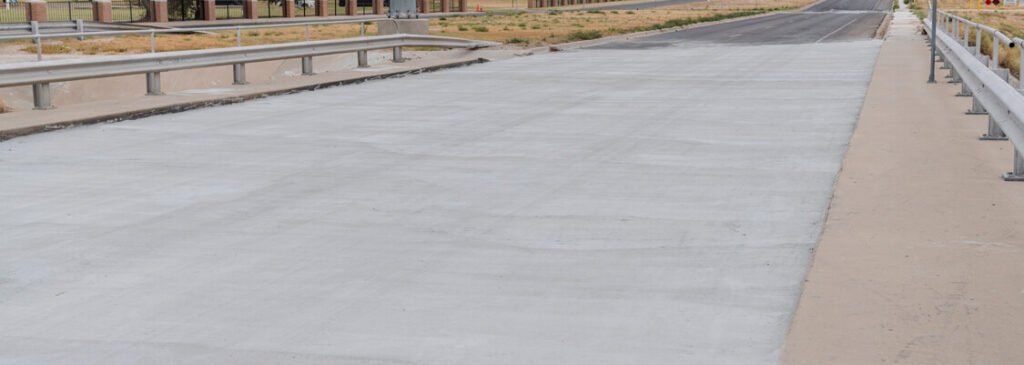
Concrete surface protection systems are treatments applied to concrete to shield it from the water, chlorides, chemicals, and abrasion that cause deterioration. They range from penetrating sealers that work within the concrete to film-forming coatings and membranes that create a barrier on the surface, and their common purpose is preventative: to keep aggressive agents out of the concrete before they can reach the reinforcing steel and begin the corrosion cycle that damages structures. For commercial properties, surface protection is among the most cost-effective ways to extend the service life of concrete, because it addresses deterioration at the earliest and least expensive point — prevention rather than repair. Understanding the available systems and how to match them to conditions allows property teams to protect concrete assets deliberately rather than waiting for damage to force intervention.
This matters to property managers, facility managers, and owners of commercial, institutional, and industrial buildings across the GTA and Southern Ontario, where concrete faces sustained chloride and freeze-thaw exposure.
Why Concrete Needs Surface Protection
Concrete is durable but not impervious. Its pore structure allows water, dissolved chlorides, and chemicals to penetrate, and it inevitably develops cracks that provide direct pathways to the interior. Once these agents reach the embedded reinforcing steel — particularly chlorides from de-icing salts — they initiate corrosion, which expands, cracks, and delaminates the concrete and progressively reduces structural capacity. Freeze-thaw cycling adds further stress as absorbed water expands on freezing. Surface protection systems address these mechanisms at the surface, reducing or preventing the ingress of the agents that drive deterioration and thereby extending the time before repair becomes necessary. Applied to sound concrete, they are a preventative investment; the alternative is to allow deterioration to proceed and pay for rehabilitation later.
Penetrating Sealers
Penetrating sealers soak into the concrete rather than forming a film on the surface. The most common commercial type, silane and siloxane-based water repellents, line the pores of the concrete to make them hydrophobic, repelling water and the chlorides it carries while allowing the concrete to breathe — that is, to release water vapour.
Where they apply. Penetrating sealers suit exposed concrete surfaces where water and chloride repellency is needed without changing the appearance or creating a wearing surface — parking areas, plazas, facades, and exposed structural concrete. Because they work within the concrete, they do not wear off underfoot as a film would, though they are periodically renewed. They do not bridge cracks, so they are best suited to sound concrete and are often combined with crack treatment.
Film-Forming Coatings
Film-forming coatings create a protective layer on the concrete surface. These include a range of chemistries — epoxies, polyurethanes, acrylics, and others — selected for the exposure and performance required. Coatings provide a barrier against water, chlorides, and chemicals, and depending on the system, resistance to abrasion, UV exposure, and specific chemical agents.
Where they apply. Film-forming coatings suit surfaces requiring a robust barrier and, in many cases, chemical or abrasion resistance — industrial floors, mechanical and process areas, containment areas, and surfaces exposed to chemical spillage. Coating selection is driven by the specific exposure: UV-stable chemistries for exposed surfaces, chemically resistant systems for process environments, and abrasion-resistant systems for trafficked or high-wear areas. Because coatings form a film, surface preparation and moisture control are critical to adhesion, and the film wears over time and requires renewal.
Crystalline Treatments
Crystalline systems react with moisture and the constituents of concrete to form insoluble crystals within the pore structure, reducing the concrete’s permeability from within. They can be applied as surface treatments or incorporated as admixtures in new concrete, and they offer a degree of self-sealing of minor cracks as the crystals form in the presence of water.
Where they apply. Crystalline treatments suit structures where reducing permeability and providing a degree of self-sealing is valuable, including below-grade and water-retaining structures. They are frequently used in combination with other systems as part of a redundant protection strategy rather than as a standalone measure.
Traffic-Bearing Membrane Systems
Where a protected surface must also bear traffic — parking decks, ramps, and podium surfaces — traffic coating systems combine waterproofing with a wear-resistant surface. These are a specialized category of surface protection engineered for the combination of water exclusion and traffic loading, and they are the appropriate protection where the surface carries vehicles or significant pedestrian traffic over structural concrete.
Selecting the Right Protection System
Choosing a surface protection system follows from the conditions the concrete faces:
Exposure. The primary threat — water, chlorides, chemicals, abrasion, UV, or a combination — determines the class of system required.
Traffic. Whether the surface bears vehicle or pedestrian traffic dictates whether a traffic-bearing system is needed rather than a sealer or thin coating.
Appearance and breathability. Where the natural concrete appearance is to be preserved or vapour transmission is important, penetrating sealers may be preferred over film-forming coatings.
Substrate condition. Protection systems perform on sound concrete; deteriorated concrete must be repaired first, as no surface treatment substitutes for structural repair.
Service life and renewal. Different systems have different service lives and renewal requirements, which should be weighed over the life of the asset rather than at installation alone.
Protection as Part of a Maintenance Strategy
Surface protection delivers the most value as part of a planned maintenance strategy rather than a one-time application. Because protective systems have finite service lives and because their purpose is to prevent deterioration before it begins, they should be renewed on a planned cycle informed by periodic condition assessment. Protecting sound concrete, monitoring its condition, and renewing protection before it lapses keeps a structure on the low-cost, preventative side of the deterioration curve. Where assessment reveals that deterioration has already begun, the strategy shifts to repair followed by protection — restoring the concrete and then shielding it from further attack.
Concrete Surface Protection with Nusite Group
Nusite Group applies concrete surface protection systems — penetrating sealers, film-forming coatings, crystalline treatments, and traffic-bearing membranes — on commercial, institutional, and industrial properties across the GTA and Southern Ontario, with field experience since 1990. As a fully bonded specialty contractor, licensed across Ontario and insured to $10 million in liability coverage, we match protection systems to exposure and substrate condition, integrating them with concrete repair where structures require restoration before protection.
Request a consultation to develop a surface protection strategy for your concrete assets.