Why Preconstruction Coordination Matters for Blindside Waterproofing Systems
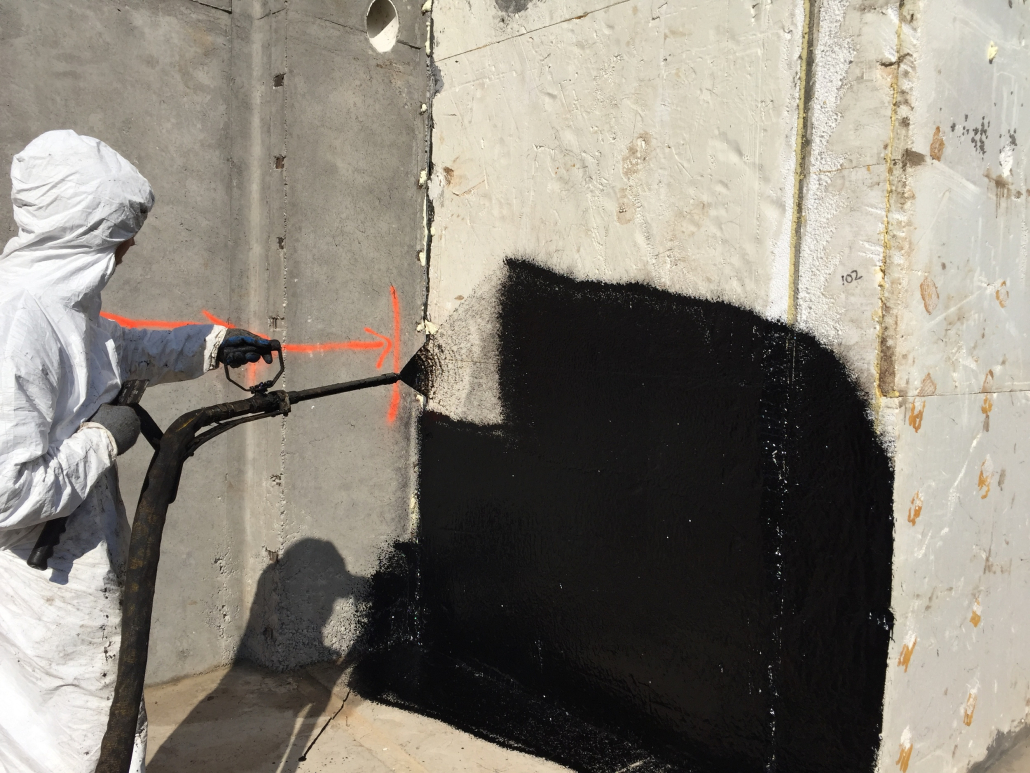
Blindside waterproofing is the rare construction scope whose success is largely determined before any membrane is installed. Because a blindside membrane is permanently concealed the moment the foundation wall is poured — with no possibility of inspection or repair afterward — the decisions that govern its performance are made in preconstruction: how the shoring is built, who prepares the substrate, how tiebacks are sequenced, and what inspection holds precede the pour. When these are resolved deliberately and early, blindside work becomes a managed, verifiable process. When they are left to be worked out in the field, the result is improvisation at a location where improvisation becomes permanent.
For general contractors and project managers delivering high- and mid-rise below-grade construction on constrained sites across the GTA, preconstruction coordination is not a preliminary courtesy — it is the single most important determinant of whether the below-grade envelope performs.
Why Preconstruction Is Decisive for Blindside Work
On most scopes, deficiencies discovered during construction can be corrected. A misaligned wall can be adjusted, a failed finish can be redone, a leaking positive-side membrane can be uncovered and repaired before backfill. Blindside waterproofing has no such margin. Once reinforcing is placed against the membrane and concrete is poured, the exterior barrier is sealed inside the structure forever. Every condition that affects its performance — substrate quality, tieback detailing, seam integrity, freedom from damage — must be right before that moment, because there is no after.
This single characteristic reorganizes where the work of quality happens. On a blindside project, quality is built in preconstruction planning and verified in pre-pour inspection, not corrected during a punch-list phase that, for this scope, does not exist.
Coordinating the Shoring Interface
The blindside membrane is installed against the shoring system, which means the shoring design directly affects the waterproofing. Yet shoring is engineered primarily to retain soil and support the excavation, not to serve as a waterproofing substrate. Preconstruction coordination must reconcile these purposes.
Key questions to resolve before construction include the tolerances the shoring will achieve and whether they meet what the membrane system requires; how irregular shoring surfaces — lagging gaps, shotcrete undulations, protruding hardware — will be prepared to provide an acceptable substrate; and who is responsible for that preparation and to what standard. Reviewing the shoring drawings alongside the waterproofing specification during preconstruction surfaces these conflicts while they can still be designed out, rather than discovering them when a crew arrives to install membrane against an unsuitable surface.
Sequencing Tiebacks and De-Tensioning
Tiebacks are both the primary means of retaining a deep excavation and the primary source of blindside leaks. Each anchor penetrates the membrane plane and requires an individually sealed detail, and the timing of tieback installation and de-tensioning must be coordinated with membrane work. If de-tensioning occurs after the membrane is installed without a planned detail, the resulting pocket becomes a breach; if the sequence is planned, the detail is executed and verified as a controlled operation.
This sequencing cannot be improvised at the anchor. It must be established in preconstruction, with the shoring contractor, the waterproofing contractor, and the general contractor agreeing on the order of operations and the detail at every tieback and de-tensioning pocket.
Planning the Pour Sequence
The forming and pouring operation interacts with the membrane in ways that must be anticipated. The membrane must withstand reinforcing placement and concrete pressure without damage, the pour sequence must allow completed details to be protected, and inspection holds must be scheduled so that verification occurs before each section is concealed. When the pour schedule is planned around these needs, inspections proceed on agreed dates. When it is not, waterproofing inspection becomes a pour-day dispute in which schedule pressure works directly against quality.
Establishing Inspection and Documentation Protocols
Because verification before concealment is the only quality assurance a blindside system permits, the inspection regime must be defined in preconstruction, not assembled ad hoc. An effective protocol establishes hold points — substrate acceptance, detail sign-off at tiebacks and penetrations, seam inspection, and a final pre-pour walkdown after reinforcing placement — and a documentation standard, typically photographic records of every completed detail keyed to location and date. Agreeing these protocols in advance means every party knows what will be inspected, by whom, and when, and that the pour will not proceed until the section is verified and recorded.
Aligning Groundwater and Dewatering Assumptions
Preconstruction is also where the permanent groundwater condition is reconciled with the temporary construction condition. The waterproofing system must be selected for the pressure the structure will face once dewatering ceases and groundwater recovers, not for the dry excavation in which it is installed. Where Permit To Take Water constraints limit dewatering duration, membrane installation may need to be sequenced against groundwater recovery. Aligning the geotechnical assessment, the dewatering plan, and the waterproofing approach early prevents a system from being specified for conditions that will not exist at occupancy.
The Value to the General Contractor
For the general contractor, early coordination converts the highest-risk below-grade scope into a controlled process. Substrate responsibility is assigned rather than disputed, tieback details are planned rather than improvised, inspections proceed on schedule rather than becoming pour-day conflicts, and the completed work is documented rather than taken on faith. This is the difference between managing blindside risk and absorbing it — and it is available only in preconstruction, before the sequence begins. A specialty waterproofing contractor engaged at this stage contributes review of shoring drawings, conflict identification, sequencing coordination, and protocol development that a contractor brought in only to install membrane cannot provide.
Preconstruction Coordination with Nusite Group
Nusite Group engages early on blindside and below-grade projects across the GTA and Southern Ontario, contributing preconstruction review and coordination alongside installation, with field experience since 1990. As a fully bonded specialty contractor, licensed across Ontario and insured to $10 million in liability coverage, we work with general contractors, shoring contractors, and consultants from preconstruction through the pour — resolving substrate, tieback, sequencing, and inspection questions before they become permanent conditions in the structure.
Engage Nusite Group early in your next below-grade project — request a consultation or prequalification package.