Restoring Failed Below-Grade Waterproofing Without Full Replacement
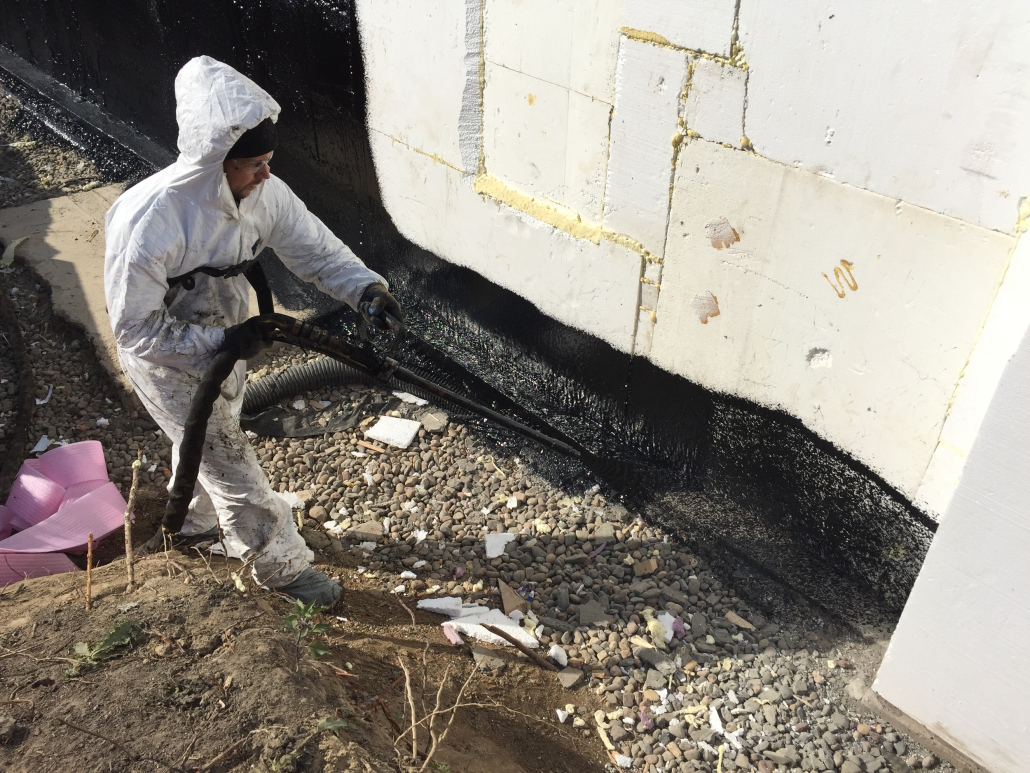
When below-grade waterproofing fails and water begins entering a structure, the instinctive assumption is that the entire waterproofing system must be dug up and replaced. Often, it does not. Where a failure is localized — at a joint, a penetration, a crack, or a discrete area of membrane — the affected waterproofing can frequently be restored in place, from within the structure, without exposing and replacing the whole assembly. For commercial and institutional buildings across the GTA and Southern Ontario, where full exterior replacement can mean excavating through parking, plazas, or landscaping at enormous cost and disruption, targeted restoration is often the more sensible path. Understanding when restoration is possible — and when replacement genuinely is required — allows building owners to match the response to the actual problem.
This matters to property managers, facility managers, and project teams weighing how to address water intrusion in an existing below-grade structure.
Why Full Replacement Is So Costly
Replacing below-grade waterproofing by conventional means requires accessing the exterior face of the structure — which, on an existing building, is buried. Reaching it means excavating down alongside the foundation, potentially through parking surfaces, ramps, hardscape, landscaping, or up against adjacent structures, then removing the failed membrane, installing a new one, and reinstating everything that was disturbed. On constrained urban sites, the exterior may not be accessible at all where the structure extends to the property line or abuts a neighbour.
The cost of this process is driven far more by the excavation and reinstatement than by the waterproofing itself. Exposing an entire buried assembly to address what may be a localized failure is often disproportionate — and the disruption to a functioning building can be as significant as the direct cost. This is the central reason targeted restoration, where appropriate, is so valuable: it addresses the failure without incurring the full expense and disruption of replacement.
When Restoration in Place Is Possible
Targeted restoration is suited to failures that are localized rather than systemic. Many below-grade leaks originate at discrete, identifiable points — a construction or expansion joint, a pipe or service penetration, a concrete crack, a precast joint, or a limited area of compromised membrane. Where the failure is confined in this way, and the source can be accurately identified, the affected area can often be restored without touching the sound waterproofing around it.
The most common method for restoring waterproofing in place is injection. Rather than exposing the exterior, controlled access points are drilled through the structure toward the affected waterproofing area, and a waterproofing material is injected to restore continuity around the leak. Because the work is performed from within, it avoids excavation entirely while still addressing the failure at its actual location behind or beneath the structure.
How Injection Restores Waterproofing
Injection restoration reaches the failed waterproofing from inside the structure. After the water intrusion and existing construction are assessed, access holes are drilled toward the affected area, injection packers are installed, and a waterproofing material is injected under controlled pressure to establish coverage around the compromised waterproofing. Once continuity is restored, the access points are sealed.
Systems such as GTI-1000 injection waterproofing are designed specifically for restoring damaged waterproofing membrane systems in this way. The injectable polymer rubber gel remains flexible after installation, so it accommodates ongoing structural movement, and it is formulated to perform in damp conditions and active leakage. Critically, it can be injected through the structure toward the affected waterproofing layer, restoring the barrier where it failed rather than merely sealing the interior surface where water appears. This ability to target the compromised waterproofing behind the structure is what makes in-place restoration a genuine alternative to replacement for many failures.
The Advantages of Targeted Restoration
Where conditions suit it, restoring waterproofing in place offers clear benefits over full replacement. It reduces or eliminates excavation, avoiding the need to expose large sections of the buried assembly. It reduces operational disruption, sparing parking areas, occupied spaces, hardscape, and site operations from major construction. It provides access to waterproofing conditions that would be difficult or costly to reach from outside. And it allows the repair to be focused precisely on the areas that have failed, rather than replacing sound waterproofing along with the failed portion. For an operating building, these advantages often make restoration not just cheaper but far less disruptive than replacement.
When Full Replacement Is Still the Right Answer
Targeted restoration is not always the correct choice, and recognizing its limits is part of using it responsibly. Where a waterproofing system has failed comprehensively — deteriorated across a large area rather than at discrete points — repeated localized repairs may be a false economy, and full replacement of the assembly may be more durable and more cost-effective over the long term. Where the exterior is readily accessible and the assembly is at the end of its service life, replacement from the positive side may be the sounder investment. And where the failure cannot be accurately localized, or the structure and substrate conditions are unsuitable for injection, restoration in place may not deliver a lasting result.
The decision between restoration and replacement should therefore rest on the nature and extent of the failure, the accessibility of the structure, its condition and remaining service life, and the long-term performance required — not on a blanket preference for either approach.
Assessment Determines the Right Path
Choosing correctly between targeted restoration and full replacement depends entirely on an accurate understanding of the failure. This means establishing the source and extent of the water intrusion, the configuration and condition of the existing waterproofing, and how water is migrating through the structure — since a leak that appears localized inside may reflect a more widespread failure, or vice versa. A proper assessment distinguishes a discrete, restorable failure from a systemic one, and it identifies the actual location of the failure so that any restoration is directed where it will work. Without this diagnosis, both approaches risk being misapplied — restoration aimed at the wrong location, or replacement of an assembly that only needed targeted repair.
Restoring Below-Grade Waterproofing with Nusite Group
Nusite Group restores and replaces below-grade waterproofing on commercial, institutional, and infrastructure structures across the GTA and Southern Ontario, with field experience since 1990. As a fully bonded specialty contractor, licensed across Ontario and insured to $10 million in liability coverage, we assess each failure and recommend the approach that fits it — targeted in-place restoration where appropriate, full replacement where the condition requires it.
Request an assessment to determine whether your below-grade waterproofing can be restored in place.