High-traffic pedestrian walkways in commercial and institutional facilities face relentless demands—thousands of daily foot traffic passes, wheeled equipment and carts, moisture exposure from tracked-in precipitation, and cleaning protocols that stress surface finishes. For property managers, facility directors, and general contractors responsible for shopping centers, office buildings, institutional campuses, transit facilities, and mixed-use developments across the Greater Toronto Area, selecting appropriate traffic coating toppings for pedestrian walkways directly impacts operational costs, safety compliance, aesthetic appearance, and long-term asset value.
Unlike residential applications where occasional foot traffic poses minimal wear, commercial pedestrian coating systems must deliver years of reliable performance under conditions that rapidly degrade inadequate surface treatments.
Understanding Commercial Pedestrian Walkway Applications
Commercial pedestrian walkways encompass diverse applications across property types, each presenting unique performance requirements and traffic patterns. Shopping centers and retail developments feature interior corridors connecting tenant spaces, exterior covered walkways between buildings or parking structures, and entrance zones experiencing concentrated traffic during peak shopping periods. These environments demand coatings that maintain attractive appearance supporting retail aesthetics while withstanding constant foot traffic and occasional spills from food service or beverage areas.
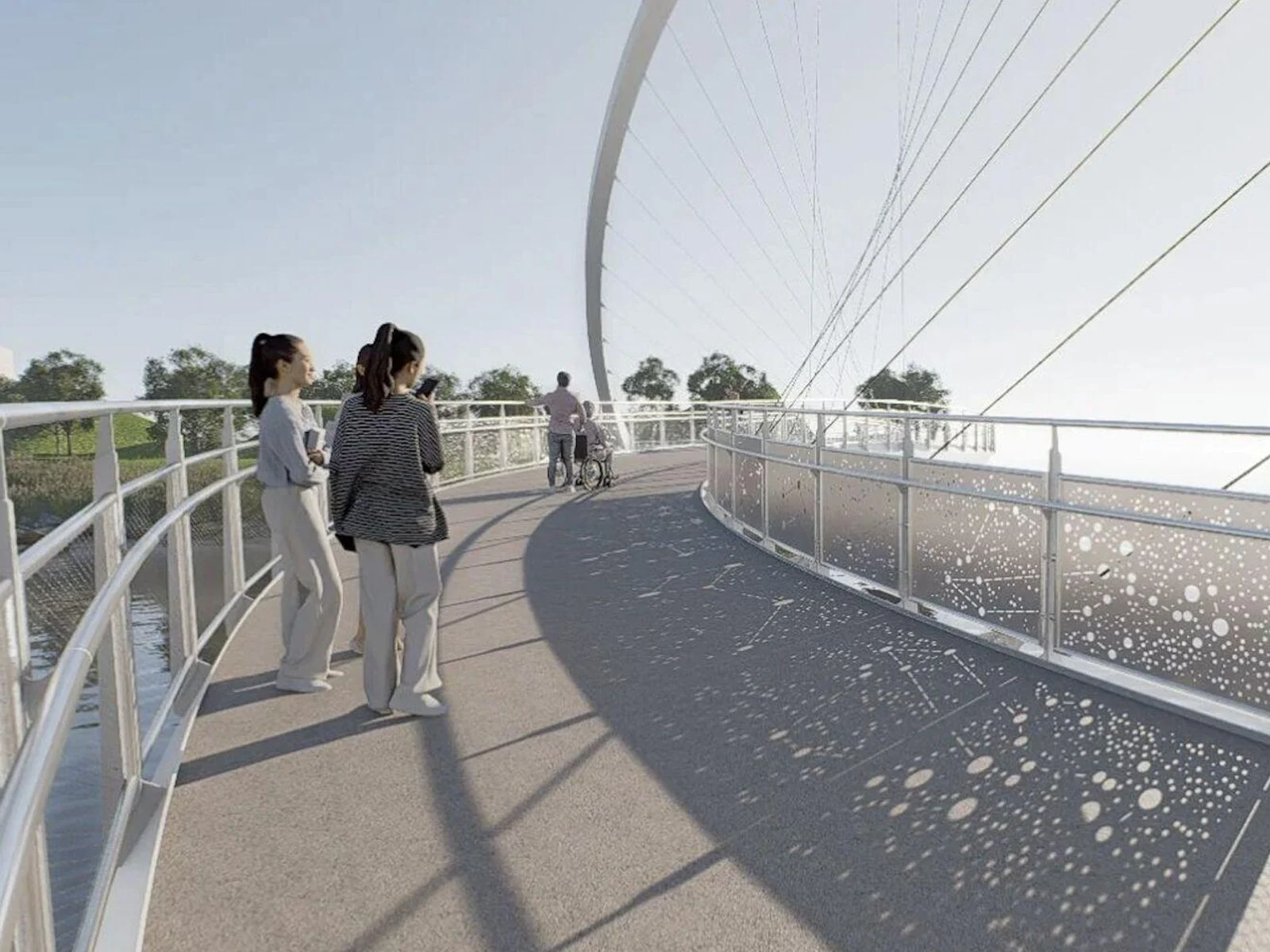
Office buildings and corporate campuses include lobby areas serving as building entry points and primary circulation spaces, elevated walkways or sky bridges connecting building wings, exterior plaza walkways and courtyards, and parking structure pedestrian corridors linking parking to building entries. Professional environments require coating systems balancing durability with refined aesthetics appropriate to corporate settings, while accommodating business casual and formal footwear traffic patterns distinct from industrial boot traffic.
Institutional facilities including universities, hospitals, and government buildings present particularly demanding pedestrian walkway conditions. Academic buildings experience surge traffic between class periods creating concentrated wear patterns. Hospital corridors must accommodate foot traffic plus wheeled equipment including gurneys, supply carts, and meal service vehicles. Government facilities balance public access requirements with security considerations and maintenance budget constraints. These applications often prioritize long-term durability and minimal maintenance over initial cost considerations.
Transit facilities, public plazas, and mixed-use developments create extreme pedestrian traffic conditions. Subway and commuter rail stations experience thousands of daily pedestrian passes concentrated during rush hours. Public plazas serve as community gathering spaces hosting events, markets, and seasonal activities. These environments expose coatings to weather extremes, de-icing chemicals tracked in from surrounding areas, diverse footwear types, and occasional wheeled traffic from maintenance equipment or service vehicles.
Traffic Coating Topping System Technologies for Pedestrian Applications
Polyurethane and Polyaspartic Systems
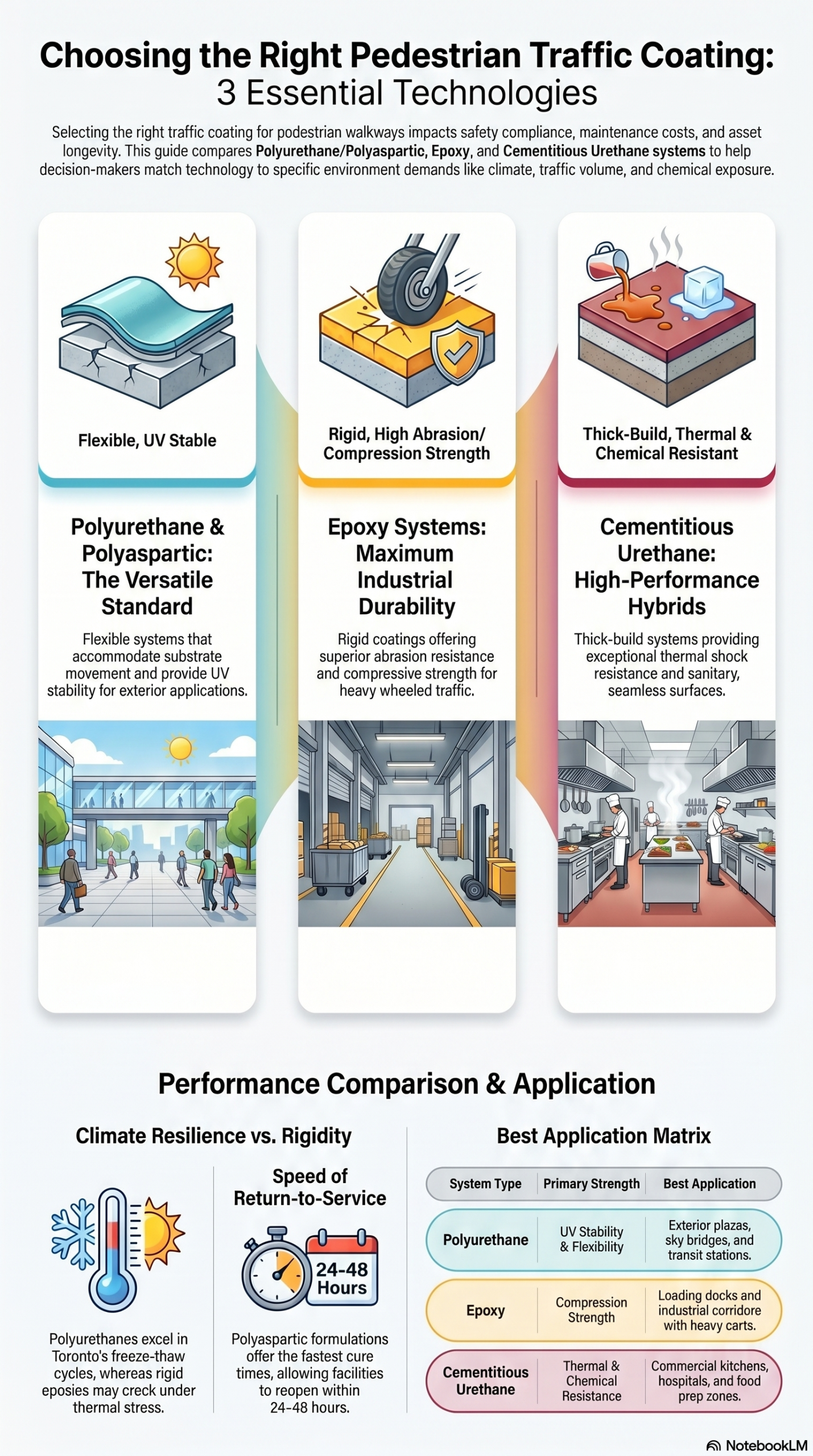
Polyurethane traffic coating toppings represent the most widely specified systems for commercial pedestrian walkways due to their balanced performance characteristics and proven track record across diverse applications. These systems use aliphatic polyurethane or polyaspartic polyurea chemistries creating flexible, durable wearing surfaces that accommodate substrate movement while resisting pedestrian traffic wear.
The typical polyurethane pedestrian coating system consists of surface preparation creating mechanical bond profile, epoxy or polyurethane primer penetrating and sealing the substrate, base coat polyurethane membrane providing waterproofing and flexibility, broadcast aggregate creating slip resistance and wear layer, and topcoat sealing aggregate and providing final wearing surface. Multiple topcoat layers build durability for high-traffic applications.
Performance Advantages:
Flexibility allows these systems to accommodate concrete substrate cracking and thermal movement without coating failure. UV stability maintains color and physical properties in exterior applications or interior spaces with significant natural lighting. Excellent chemical resistance handles de-icing salt exposure, cleaning chemicals, and occasional spills. Rapid cure polyaspartic formulations enable fast-track installation with return to service in 24 to 48 hours, critical for occupied facilities where extended closures disrupt operations. Available in numerous colors supporting wayfinding, branding, or aesthetic integration with architectural design.
Application thickness typically ranges from 60 to 120 mils (1.5 to 3 mm) providing substantial wearing depth for long service life. Broadcast aggregate selection affects slip resistance, with fine aggregates creating smoother surfaces for indoor applications and coarser aggregates providing enhanced traction for exterior or wet environments. Service life expectations reach 10 to 20 years in high-traffic commercial applications when proper maintenance protocols are followed.
Epoxy Coating Systems
Epoxy traffic coating toppings deliver maximum abrasion resistance and compressive strength, making them suitable for the most demanding pedestrian applications where durability outweighs all other considerations. Two-component epoxy resins cure through chemical reaction creating rigid, hard-wearing surfaces that resist heavy foot traffic, wheeled equipment, and impact.
Epoxy pedestrian systems build substantial thickness through aggregate-filled base coats creating structural coating depth, broadcast aggregate layers providing texture and wear resistance, and pigmented topcoats sealing the system and providing color. Some formulations incorporate metallic or decorative aggregates creating aesthetic enhancements beyond standard solid colors.
These systems excel in applications prioritizing maximum durability including industrial facility walkways serving manufacturing or warehouse operations, loading dock pedestrian corridors experiencing heavy equipment traffic, and institutional facilities with extremely high traffic volumes and limited maintenance budgets. The rigid coating provides excellent resistance to point loads from wheeled carts, dropped objects, and concentrated traffic patterns.
However, epoxy’s rigidity creates limitations for certain applications. Lack of flexibility means substrate cracks telegraph through coatings, and thermal cycling can cause coating cracks in exterior applications. UV sensitivity causes yellowing and chalking in high-light environments, limiting exterior application or requiring UV-stable aliphatic topcoats. The systems work best on stable substrates in controlled interior environments where flexibility and UV resistance are less critical than maximum abrasion resistance.
Cementitious Urethane Systems
Cementitious urethane traffic coating toppings combine Portland cement with polyurethane modification, creating hybrid systems offering unique performance characteristics particularly valuable for demanding commercial pedestrian environments. These thick-build systems (1/4 to 3/8 inch typical) provide thermal shock resistance, exceptional chemical resistance, and sanitary seamless surfaces.
The installation process involves substrate preparation creating sound bonding surface, slurry coat or primer ensuring adhesion, trowel-applied cementitious urethane base at specified thickness, and optional broadcast aggregate topcoat for enhanced slip resistance. The monolithic seamless installation eliminates grout joints present in tile or pavers, creating surfaces easy to clean and maintain.
Ideal Applications:
Food service areas including commercial kitchens, cafeterias, and food preparation zones benefit from cementitious urethane’s chemical resistance to acids, oils, and cleaning agents, impermeability preventing bacterial growth in coating, and steam cleanability tolerating high-pressure, high-temperature wash-down. Healthcare facilities value antimicrobial properties available in certain formulations, seamless surfaces facilitating rigorous cleaning protocols, and durability under wheeled equipment traffic.
Exterior applications exposed to extreme temperature fluctuations leverage cementitious urethane’s thermal shock resistance, which handles rapid temperature changes from -40°C to 120°C without degradation. The systems maintain slip resistance when wet, critical for safety in rain or snow conditions. However, installation complexity requiring skilled applicators, higher material costs compared to polyurethane systems, and longer cure times before return to service limit applications to projects justifying premium performance.
Decorative Concrete Overlays
For pedestrian walkways where aesthetics drive system selection while moderate traffic durability suffices, decorative concrete overlay systems provide attractive alternatives to standard traffic coatings. Polymer-modified cementitious overlays applied in thin profiles (1/16 to 1/4 inch) create custom colors, textures, and patterns transforming standard concrete walkways into architectural features.
These systems suit interior retail corridors where visual appeal attracts customers, corporate lobbies requiring refined aesthetics, institutional gathering spaces serving as architectural focal points, and exterior plazas where decorative surfaces define public realm character. Integral color pigments, reactive stains, stamped patterns, or stenciled designs create unlimited aesthetic possibilities.
Performance characteristics include moderate abrasion resistance suitable for pedestrian traffic, limited flexibility requiring stable substrates, and maintenance requirements including periodic sealer reapplication every 2 to 5 years. While these systems don’t match polyurethane or epoxy durability in extreme traffic conditions, they deliver adequate performance for many commercial pedestrian applications where design considerations warrant investment in enhanced aesthetics.
Selection Criteria for Pedestrian Walkway Coatings
Choosing appropriate traffic coating toppings for commercial pedestrian walkways requires evaluating multiple performance criteria, site conditions, and operational constraints specific to each application.
Traffic Intensity and Composition
Traffic volume fundamentally drives coating selection. Light pedestrian traffic (under 100 passes per day) occurs in secondary corridors, private courtyards, or low-occupancy areas where thin decorative systems or standard polyurethane coatings suffice. Moderate traffic (100 to 1,000 passes per day) characterizes typical office building corridors, retail center walkways, and institutional campus paths requiring durable polyurethane or light-duty epoxy systems. Heavy traffic (1,000 to 10,000+ passes per day) defines transit stations, major retail corridors, hospital main entrances, and stadium concourses demanding premium polyurethane, epoxy, or cementitious urethane systems.
Traffic composition affects wear patterns beyond simple volume considerations. Pedestrian traffic in professional environments with business shoes causes different wear than industrial facilities with safety boots. Wheeled traffic from shopping carts, luggage carriers, maintenance equipment, or medical gurneys accelerates coating wear requiring heavier-duty systems. Service vehicles or occasional light vehicular access demands coatings specified for vehicular rather than pedestrian-only traffic.
Slip Resistance and Safety Requirements
Commercial pedestrian walkways must satisfy safety standards preventing slip-and-fall incidents that create liability exposure and potential injuries. Ontario building codes and accessibility standards establish minimum slip resistance thresholds, typically requiring Static Coefficient of Friction (SCOF) of 0.60 for level surfaces and 0.80 for ramps under dry conditions. Wet condition testing verifies adequate traction when moisture is present from weather, tracked-in precipitation, or cleaning operations.
Slip Resistance Strategies:
Broadcast aggregate incorporated into coating systems provides mechanical texture creating traction. Aggregate selection balances slip resistance against cleaning difficulty—coarser aggregates provide maximum traction but collect dirt requiring intensive cleaning. Finer aggregates clean more easily but may provide marginal slip resistance when wet. For critical safety areas including ramps, stairs, and building entries where precipitation exposure occurs, maximum aggregate coverage and coarser particle sizes ensure adequate safety margins.
Certain coating chemistries inherently provide better wet traction. Cementitious urethane systems maintain slip resistance when wet better than smooth epoxy surfaces. Polyurethane topcoats formulated with traction additives enhance safety without visible aggregate texture affecting aesthetics. Property managers should specify testing protocols verifying slip resistance during installation and periodic re-testing confirming continued compliance as coatings age and wear.
Environmental Exposure and Climate Considerations
Exterior pedestrian walkways in the GTA face demanding environmental conditions requiring coating systems engineered for Toronto’s climate. Freeze-thaw cycling subjects coatings to repeated expansion and contraction as temperature fluctuates. Systems must maintain flexibility preventing cracking when temperatures reach -20°C to -30°C during winter extremes, then tolerate summer heat approaching 35°C without softening or degrading.
De-icing salt exposure from municipal snow removal programs affects exterior walkways as pedestrians track salt-laden snow onto coated surfaces. Chemical resistance to chloride salts, calcium chloride, magnesium chloride, and calcium magnesium acetate prevents coating degradation. UV exposure in exterior applications or interior spaces with extensive glazing requires UV-stable aliphatic polyurethane or specialized formulations preventing yellowing and chalking.
Moisture exposure from precipitation, snow melt, and tracked-in wetness demands waterproof coating systems preventing water infiltration to substrates below. For elevated walkways, sky bridges, or plaza decks over occupied spaces, waterproofing becomes critical protecting interior areas from damage. Even interior applications experience moisture from wet weather tracking, spill events, and cleaning operations requiring coatings tolerating periodic wetness without delamination or surface deterioration.
Aesthetic Requirements and Design Integration
Commercial pedestrian walkways often serve branding, wayfinding, or architectural functions beyond pure utility. Retail environments use colored coatings differentiating tenant spaces, guiding customer circulation, or creating visual interest supporting shopping experience. Corporate campuses implement color-coded pathways supporting wayfinding in complex buildings or defining different functional zones. Institutional facilities use traffic coatings integrating with overall architectural design language and campus identity programs.
Available coating colors range from neutral grays and beiges matching concrete aesthetics to vibrant custom colors achieving specific design objectives. Decorative options including metallic pigments, color flakes, quartz aggregates in custom colors, and multi-color broadcasting create visual interest. For premium applications, stenciled logos, patterns, or graphics can be integrated into coating systems. Property managers should balance aesthetic aspirations with maintenance realities—light colors show dirt requiring frequent cleaning, while heavily textured decorative surfaces complicate maintenance compared to smooth systems.
Installation Considerations for Occupied Commercial Facilities
Commercial pedestrian walkways rarely allow extended closures for coating installation. Occupied buildings, operational retail centers, and institutional facilities require construction strategies minimizing disruption while ensuring quality installation.
Phased Installation and Traffic Management
Large walkway areas are typically divided into manageable sections allowing sequential installation while maintaining partial access. Phase boundaries should align with natural divisions including building expansion joints, architectural transitions, or logical circulation breaks. Each phase proceeds through complete installation—surface preparation, primer, base coat, aggregate broadcast, and topcoat—before the next phase begins.
Traffic management during installation routes pedestrians around work zones using temporary barriers, directional signage, and alternate pathways. For critical circulation routes where complete closure proves impossible, rapid-cure polyaspartic systems enable weekend or overnight installation with return to service within 24 hours. Night shift installation during building closed hours suits 24/7 facilities where daytime disruption is unacceptable.
Property managers coordinating pedestrian coating contractor work should communicate installation schedules to tenants, building occupants, and visitors well in advance. Signage directing alternate routes, timeline information managing expectations, and real-time updates during installation reduce complaints and operational conflicts. For retail environments, scheduling during off-peak seasons or slower business periods minimizes revenue impact from reduced foot traffic.
Surface Preparation Requirements
Traffic coating topping performance depends critically on substrate preparation quality. Concrete surfaces must be cleaned removing all contaminants including oils, previous sealers or coatings, dirt and debris, and efflorescence or salt deposits. Mechanical surface profiling through shotblasting, scarification, or diamond grinding creates the mechanical bond profile necessary for coating adhesion, typically ICRI CSP 2 to 4 depending on coating system requirements.
Existing substrate defects require remediation before coating installation. Cracks exceeding 1/8 inch width should be routed and filled with flexible polyurethane sealants or epoxy injection depending on crack activity. Spalled or delaminated concrete requires removal and patching with polymer-modified repair mortars. Joint sealants in control joints and expansion joints must be in sound condition or replaced before coating installation, with coating systems terminating cleanly at joint edges rather than bridging active joints.
Moisture conditions critically affect coating adhesion and performance. Concrete substrates must be dry enough to accept coatings, typically requiring moisture vapor emission rates below 3 to 5 pounds per 1,000 square feet per 24 hours measured per ASTM F1869. Relative humidity within concrete measured per ASTM F2170 should remain below 75 to 85 percent depending on coating manufacturer specifications. Moisture-sensitive epoxy systems have stricter limits than moisture-tolerant polyurethane formulations.
Quality Control and Performance Testing
Commercial pedestrian coating installations should include comprehensive quality control protocols verifying system integrity before project completion. Adhesion testing using ASTM D4541 pull-off method confirms coating bond strength to substrate, with minimum values typically 200 to 250 psi for commercial traffic coating applications. Testing frequency of one test per 1,000 to 2,000 square feet provides statistical validation of adhesion quality throughout the installation.
Thickness measurements verify specified coating build has been achieved. Wet film thickness gauges during application confirm proper coverage rates, while dry film thickness testing on cured coatings validates final system thickness. Slip resistance testing using ASTM C1028 or equivalent methods documents compliance with safety requirements, particularly critical for exterior walkways, ramps, or environments where wet conditions occur.
Visual inspection examines coating uniformity checking for color consistency, surface texture regularity, proper aggregate distribution, and absence of defects including bubbles, pinholes, or thin spots. Edge details at terminations, penetrations, and transitions require particular attention ensuring clean, professional appearance and proper waterproofing continuity.
Maintenance and Lifecycle Cost Considerations
Pedestrian coating systems require ongoing maintenance achieving design service life and preserving appearance in high-visibility commercial applications. Routine cleaning protocols include daily or weekly sweeping or dust mopping removing tracked-in dirt and debris, periodic damp mopping with neutral pH cleaners, and occasional deep cleaning with mechanical scrubbers for heavily soiled areas. Aggressive cleaning chemicals not approved by coating manufacturers should be avoided as they can degrade coating surfaces or cause discoloration.
Preventative maintenance extends coating life significantly. Floor protection during construction or tenant improvement work prevents damage from dropped tools, equipment traffic, or construction debris. Entrance matting systems reduce tracked-in dirt, moisture, and abrasives that accelerate coating wear. Traffic pattern monitoring identifies high-wear zones that may benefit from early intervention through topcoat renewal before complete system failure.
Service Life and Recoating:
Expected service life varies by coating type and traffic conditions. Decorative overlays in light traffic provide 5 to 10 years before requiring restoration. Standard polyurethane systems in moderate traffic last 10 to 15 years. Premium polyurethane or epoxy systems in heavy traffic deliver 12 to 20 years. Cementitious urethane installations can exceed 20 years in demanding applications. These expectations assume proper maintenance and reasonable traffic intensity—extreme conditions or deferred maintenance shorten service life substantially.
Topcoat renewal provides cost-effective service life extension for polyurethane and epoxy systems showing surface wear but maintaining base coat integrity. Light surface preparation, cleaning, and application of fresh topcoat layers restores appearance and adds protection at 20 to 40 percent of complete replacement cost. For high-traffic commercial walkways, planned topcoat renewal every 7 to 10 years extends total system life to 20 to 25 years, optimizing lifecycle costs.
Nusite Group’s Commercial Pedestrian Walkway Expertise
With over 30 years of traffic coating and commercial flooring experience, Nusite Group has delivered durable walkway solutions on retail centers, office buildings, institutional campuses, transit facilities, and mixed-use developments throughout the GTA and Toronto. Our installations provide long-lasting performance under demanding pedestrian traffic conditions while maintaining aesthetic appearance and safety compliance.
We provide comprehensive pedestrian coating systems including polyurethane and polyaspartic traffic coatings, epoxy coating systems for maximum durability, cementitious urethane systems for demanding environments, decorative concrete overlays for aesthetic applications, and maintenance recoating extending system service life. Our technical approach as an experienced pedestrian coating contractor matches system selection to traffic intensity, environmental exposure, aesthetic requirements, and budget parameters ensuring optimal performance for each walkway application.
Our project teams execute pedestrian coating installations in operational commercial and institutional facilities throughout Toronto and the GTA, implementing phased construction maintaining building operations, coordinating with property management minimizing tenant disruption, and providing safety protocols for occupied environments. We work with property managers, facility directors, and general contractors delivering traffic coating toppings that balance durability, safety, aesthetics, and lifecycle costs.
Frequently Asked Questions
How long do pedestrian coating systems last in high-traffic commercial environments?
Service life depends on coating type, traffic intensity, and maintenance quality. In high-traffic commercial applications like retail corridors or transit stations, standard polyurethane systems typically provide 10 to 15 years before requiring replacement. Premium polyaspartic or epoxy systems extend service life to 12 to 20 years. Cementitious urethane installations can exceed 20 years in demanding environments. Decorative overlays in moderate traffic deliver 5 to 10 years. Critical factors affecting longevity include proper substrate preparation during installation, appropriate system selection for traffic conditions, routine cleaning and maintenance, and topcoat renewal at recommended intervals. Property managers implementing preventative maintenance programs and planned topcoat renewal extend coating life 30 to 50 percent beyond baseline expectations. Deferred maintenance or inadequate initial system selection for traffic conditions shortens service life significantly.
What’s the best coating system for exterior pedestrian walkways in Toronto’s climate?
Flexible polyurethane or polyaspartic systems provide optimal performance for exterior pedestrian walkways in the GTA. These coatings maintain elasticity during freeze-thaw cycling preventing cracking when temperatures drop to -20°C or lower. UV-stable aliphatic formulations resist yellowing and degradation from sun exposure. Chemical resistance tolerates de-icing salt exposure from tracked-in winter maintenance chemicals. The systems accommodate thermal expansion and contraction without delamination. For exterior applications requiring maximum durability, cementitious urethane systems offer superior thermal shock resistance and wet slip resistance, though at higher cost. Epoxy systems should generally be avoided for exterior Toronto applications due to UV sensitivity and rigidity causing cracking under thermal cycling. An experienced pedestrian coating contractor in the GTA can recommend system selection based on specific site exposure and performance requirements.
Can pedestrian coatings be installed during Toronto winters?
Limited winter installation is possible but generally not recommended. Most traffic coating toppings require minimum substrate and ambient temperatures of 10°C to 15°C during application and initial cure. Cold weather below these thresholds affects material viscosity, adhesive performance, cure rates, and ultimate coating properties. Some specialized polyaspartic formulations cure at lower temperatures enabling winter application, but substrate preparation through mechanical methods generates dust and requires climate control. Interior installations in heated buildings can proceed year-round. Exterior projects should be scheduled during spring through fall when consistent temperatures and lower precipitation probability provide optimal conditions. Emergency repairs can be executed during winter using rapid-cure materials and temporary enclosures providing climate control. Property managers planning pedestrian walkway coating projects should schedule work during favorable weather seasons ensuring quality installation and manufacturer warranty compliance.
How do we minimize disruption to building operations during pedestrian coating installation?
Several strategies minimize operational impact in occupied commercial facilities. Phased installation divides large walkway areas into sections, completing one phase before beginning the next while maintaining access through alternate routes. Rapid-cure polyaspartic systems enable weekend or overnight installation with return to service in 24 to 48 hours, critical for high-traffic facilities intolerant of extended closures. Night shift work during building closed hours suits 24/7 operations. Seasonal timing during slower business periods reduces impact in retail environments. Comprehensive communication including advance notice to tenants and occupants, clear wayfinding signage directing alternate routes, and real-time progress updates manages expectations and reduces complaints. Experienced pedestrian coating contractors in Toronto develop installation strategies balancing construction efficiency with operational continuity requirements. Property managers should engage contractors during planning stages developing phasing plans appropriate to building occupancy patterns and operational constraints.
Create Durable, Safe Pedestrian Environments
Nusite Group has delivered traffic coating toppings and durable walkway solutions on commercial retail centers, office buildings, institutional campuses, transit facilities, and mixed-use developments across the GTA and Toronto since 1990. Our installations provide long-lasting performance, safety compliance, and aesthetic appeal supporting property values and operational efficiency in demanding pedestrian environments.
Fully bonded, licensed across Ontario, and insured to $10 million in liability coverage, Nusite Group operates as a dependable pedestrian coating contractor for property managers, facility directors, and general contractors who require proven expertise and quality execution on commercial pedestrian walkway projects throughout Toronto and the Greater Toronto Area.
Request a consultation to discuss your pedestrian walkway coating requirements or explore how Nusite Group can support your project with durable polyurethane, epoxy, cementitious urethane, or decorative coating systems designed for high-traffic commercial applications.