Structural waterproofing is the protection of a building’s load-bearing elements — foundations, structural slabs, walls, and the reinforcing steel within them — from water and the deterioration it drives. It is distinct from finish or nuisance waterproofing, which keeps interiors dry and comfortable; structural waterproofing exists to preserve the integrity and capacity of the structure itself. Because water reaching structural concrete initiates the corrosion that cracks, weakens, and ultimately reduces the strength of load-bearing members, structural waterproofing is not an optional enhancement but a fundamental requirement for the durability and safety of any commercial building. Understanding what it is and why it matters is the starting point for protecting a building over its full service life.
For general contractors, project managers, property managers, and building owners across the GTA and Southern Ontario, structural waterproofing underpins the long-term value and performance of the asset.
What Structural Waterproofing Protects
Structural waterproofing safeguards the elements that carry a building’s loads. These include below-grade foundation walls and base slabs that resist soil and groundwater pressure, suspended structural slabs in parking structures and podiums, elevator pits and other deep localized structures, and the concrete and reinforcing steel throughout that provide the building’s strength. What these elements have in common is that their deterioration affects not just comfort or appearance but the building’s capacity to carry load safely — which is why protecting them warrants a different level of attention than waterproofing a finish or a non-structural surface.
How It Differs from Surface Waterproofing
It is useful to distinguish structural waterproofing from the broader category of water management. Surface or nuisance waterproofing addresses the comfort and usability of spaces — keeping a room dry, preventing dampness, protecting finishes. Structural waterproofing addresses the survival of the structure — keeping water and chlorides away from the concrete and reinforcing that carry the building. The two often overlap in a single system, but their purposes differ, and the consequences of failure differ accordingly. A failure of surface waterproofing produces discomfort and cosmetic damage; a failure of structural waterproofing produces corrosion, concrete deterioration, and, over time, loss of structural capacity. This distinction is why structural waterproofing justifies robust systems, careful detailing, and verification appropriate to the stakes.
Why Water Threatens Structure
The threat water poses to structure is specific and well understood. Reinforced concrete depends on the concrete’s alkalinity to maintain a passive protective layer on the embedded steel. Water — particularly water carrying chlorides from de-icing salts — penetrates the concrete and reaches the steel, and once chloride concentration at the reinforcing exceeds a critical threshold, the passive layer breaks down and corrosion begins.
Corroding steel expands to several times its original volume, generating internal stress that cracks and delaminates the surrounding concrete. Delaminated concrete spalls away, exposing more steel to attack, and section loss in the reinforcing progressively reduces the load-carrying capacity of the member. Water thus does not merely wet a structure; through this corrosion mechanism, it actively dismantles it. Structural waterproofing interrupts the process at its source by keeping water and chlorides out of the concrete in the first place.
Where Structural Waterproofing Is Needed
Structural waterproofing is required wherever load-bearing elements are exposed to water. The principal conditions include:
Below-grade structures. Foundation walls, base slabs, and elevator pits face continuous soil moisture and hydrostatic pressure, making below-grade waterproofing — positive-side, blindside, or underslab — a core structural protection.
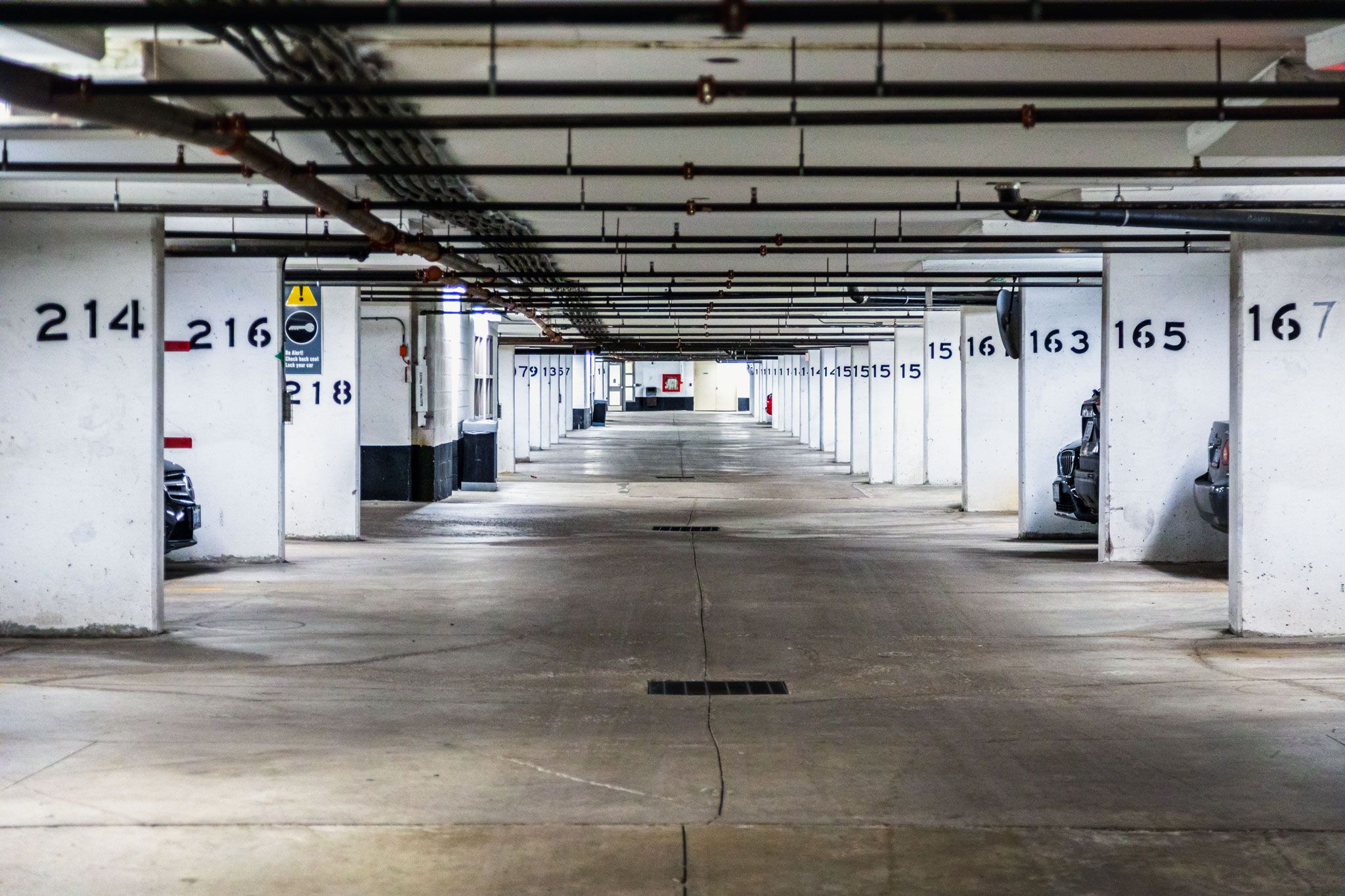
Parking structures. Suspended slabs and ramps exposed to chloride-laden water require traffic coatings and joint systems to protect the structural concrete.
Podium decks. Buried membranes protect the structural slab beneath landscaped and trafficked podium surfaces over occupied space.
Building envelope transitions. Terraces, balconies, and roof-to-wall interfaces protect the structure at the junctions where water most readily enters.
In each case, the waterproofing is protecting a load-bearing element, which is what makes it structural.
Why Every Commercial Building Depends on It
No commercial building is exempt from the need for structural waterproofing, because every building has load-bearing elements exposed to water somewhere — below grade, on a parking level, at a podium, or at an envelope transition. The consequences of neglecting it are severe and cumulative: corrosion and concrete deterioration that reduce structural capacity, repair scopes that escalate from protective systems to full structural rehabilitation, operational disruption as deterioration advances, and diminished asset value and safety. Because the deterioration develops out of sight and compounds over time, the cost of protecting the structure is always a fraction of the cost of restoring it once water has been allowed to act. Structural waterproofing is, in effect, the insurance that preserves the building’s most valuable and least replaceable component — its structure.
Protecting Existing Structures
For existing buildings, structural waterproofing is managed through assessment and timely intervention. Regular condition evaluation of below-grade areas, parking levels, podiums, and envelope transitions identifies deterioration while it is still confined to protective systems rather than the structure. Where water has already reached structural concrete, remediation combines structural repair — removing deteriorated concrete, treating reinforcing, restoring the section — with renewed waterproofing to protect the repair. Injection systems can restore waterproofing continuity at active leaks in below-grade and concrete elements from the interior. The guiding principle is the same as in new construction: keep water away from the structure, and where it has intruded, restore both the structure and its protection.
Structural Waterproofing with Nusite Group
Nusite Group delivers structural waterproofing across the full range of load-bearing elements — below-grade, parking, podium, and envelope — on high-rise, mid-rise, institutional, and industrial buildings throughout the GTA and Southern Ontario, with field experience since 1990. As a fully bonded specialty contractor, licensed across Ontario and insured to $10 million in liability coverage, we protect structures in new construction and restore them in existing buildings, integrating waterproofing with concrete and structural repair so the load-bearing structure is preserved for its full service life.
Request a consultation or building assessment to protect the structure of your project or property.